
Turtle Evolution: A Journey Through Time and Shell
Published on: December 13, 2025 | Last Updated: December 13, 2025
Written By: Matthew The
Have you ever wondered how a turtle, an animal that seems to move with deliberate slowness, has survived for hundreds of millions of years while faster, fiercer creatures have vanished? It’s a question that captivated me while watching my own tortoises, Austen and Bronte, methodically explore their enclosure. Their survival isn’t an accident; it’s the result of an epic evolutionary story.
In this article, we will explore the ancient origins of turtles, the development of their iconic shell, key evolutionary adaptations for survival, and their journey into the modern world.
The Ancient Origins of Turtles
Picture the Triassic period, a world of early dinosaurs and strange, new landscapes. This is where the first turtle-like reptiles made their appearance. The fossil record shows us creatures that were beginning to look like the turtles we know, but with crucial differences.
One of the most significant finds is Proganochelys, an early turtle ancestor. It had a fully formed shell on its back and belly, much like my Russian tortoise, Austen. What truly fascinates me is that this ancient creature couldn’t retract its head into its shell, a limitation its descendants would master over millions of years.
Early turtles are identified by their unique anapsid skull, which lacks the temporal openings seen in other reptiles. This solid skull structure is a defining characteristic of their lineage.
- Their limb evolution was gradual, with stout, strong legs suited for a terrestrial life.
- Fossils reveal robust ribs that were beginning to broaden and fuse, laying the groundwork for the iconic shell.
- These early forms were plant-eaters, a diet many of our pet tortoises still enjoy today.
Unraveling the Shell’s Evolutionary Journey
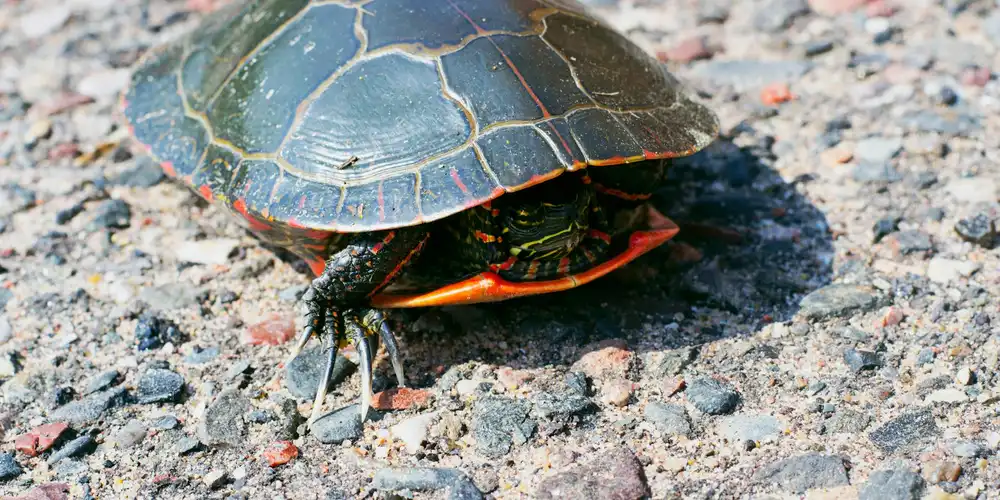
The turtle’s shell didn’t just appear one day. It was a masterpiece of evolutionary engineering, built piece by piece over eons. The carapace (top shell) and plastron (bottom shell) developed separately before uniting into the protective box we see now. In turtle anatomy, the shell is an integrated structure of bone and keratinized scutes. Its shell biology shows how growth, movement, and breathing are tied to this armor.
Looking at my box turtle, Orwell, I often think about his ancient relatives. Major transitional fossils help us understand this process.
- Eunotosaurus: This reptile had massively broadened ribs, creating a turtle-like torso. It represents a crucial early stage where the body plan was shifting.
- Odontochelys semitestacea: Known as the “half-shelled turtle,” this fossil is a game-changer. It had a fully formed plastron but only a partial carapace, suggesting the belly armor developed first for protection from underwater predators.
The shell provided an unparalleled defense against predators, a survival strategy so successful it has remained largely unchanged. It wasn’t just armor; it became a part of their skeleton, with vertebrae and ribs fused to the bony plates.
This incredible adaptation allowed turtles to thrive in a dangerous world. It’s the same defense mechanism that lets my gentle tortoises feel safe enough to amble slowly through their enclosures, a timeless behavior born from ancient necessity.
Turtle Lineages and Major Evolutionary Divergences
One of the most significant splits in turtle history occurred over 200 million years ago, giving rise to two distinct lineages. This fundamental division created the hidden-necked turtles (Cryptodira) and the side-necked turtles (Pleurodira), a difference that still defines their anatomy today.
- Cryptodira (Hidden-Necked Turtles): These turtles, which include most familiar species like sliders and tortoises, retract their heads straight back into their shells by folding their neck vertically into an S-shape.
- Pleurodira (Side-Necked Turtles): This group, including many African and South American species, bends their neck sideways to tuck their head under the edge of their shell, a motion I’ve always found charmingly awkward.
The environments turtles inhabited profoundly shaped their bodies. Life in the ocean demanded a radical redesign for buoyancy and propulsion, while life on land reinforced traits for defense and resource conservation.
- Marine Adaptations: Sea turtles evolved flippers instead of feet, lighter and more streamlined shells for swimming, and the ability to excrete salt through specialized glands near their eyes.
- Terrestrial Adaptations: Tortoises developed stout, column-like legs for walking, high-domed and heavy shells for protection from predators, and highly efficient kidneys to conserve water in arid environments.
Fossils provide a breathtaking window into this ancient world. Key discoveries like Proganochelys and Archelon show us the experimental beginnings and the spectacular extremes of turtle evolution.
- Proganochelys: Dating from the Late Triassic, this ancient turtle already had a fully formed shell. However, it couldn’t retract its head, and its tail was club-like and armored, features lost in its modern descendants.
- Archelon: This Late Cretaceous giant was a marine behemoth, reaching over 15 feet long. Its shell was not solid bone but a leathery, reduced framework, a perfect adaptation for a life of oceanic drifting.
Anatomical and Physiological Adaptations
-
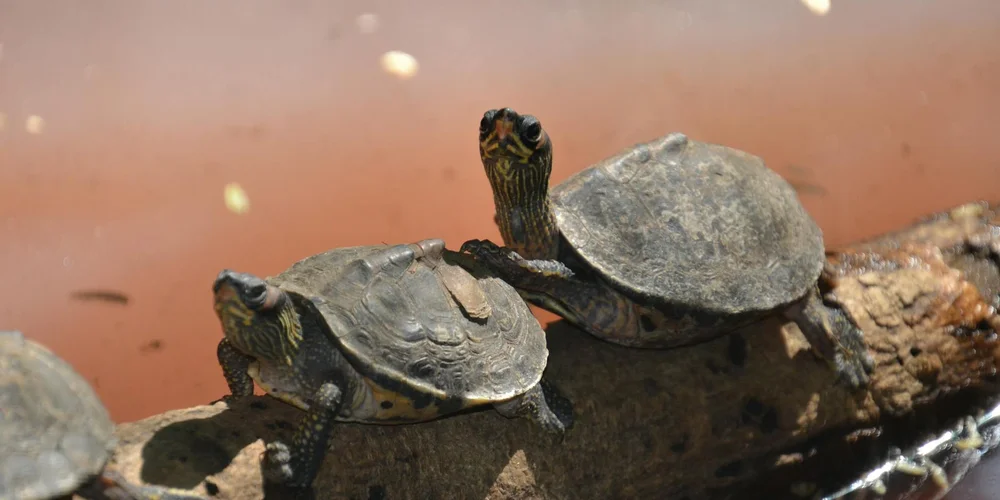
Turtles have developed incredible anatomical features that make them unique survivors over millions of years. Based on my experience caring for species like Austen and Bronte, I’ve seen how these adaptations play out in daily life. Here are five key turtle adaptations that highlight their evolutionary success:
-
Neck retraction lets turtles tuck their heads safely inside their shells when threatened. Some, like my Russian tortoise Austen, pull their necks straight back, while others fold them sideways for better concealment.
-
Specialized limbs are perfectly shaped for their environments, whether aquatic or terrestrial. Turtles live on both land and in water. This dual habitat shapes how their limbs function. Aquatic turtles have flippers for graceful swimming, whereas land-dwellers like Bronte use sturdy legs for digging and climbing.
-
Their bony shells act as mobile fortresses, fused with ribs for ultimate protection. I’ve noticed how Austen’s shell absorbs bumps without injury, thanks to this robust design.
-
Efficient water conservation helps species thrive in arid conditions by reducing fluid loss. This means they urinate less frequently, which is vital for desert tortoises in captivity.
-
Enhanced sensory systems, like acute smell and vision, aid in locating food and avoiding predators. Orwell, my box turtle, uses his sharp senses to find berries in our garden with ease.
-
-
The sex of many turtle hatchlings is determined by the temperature their eggs experience during incubation. Warmer temperatures typically produce females, while cooler ones yield males. In my own breeding attempts, I’ve had to monitor nest heat closely to influence outcomes, which underscores why protecting natural nesting sites is crucial for wild populations. Egg incubation conditions are at the heart of turtle reproduction, since hatchling gender hinges on these temperatures. Climate and nesting choices, therefore, can shift population sex ratios over time.
-
Girdles and the vertebral column integrate seamlessly with the shell to provide unwavering support. The shoulder and hip girdles are positioned inside the rib cage, fused to the carapace, creating a rigid yet flexible frame. Handling Orwell, I can feel how this structure distributes weight evenly, allowing him to carry his shell without strain while safeguarding his organs.
How Evolution Shapes Modern Pet Turtle Care
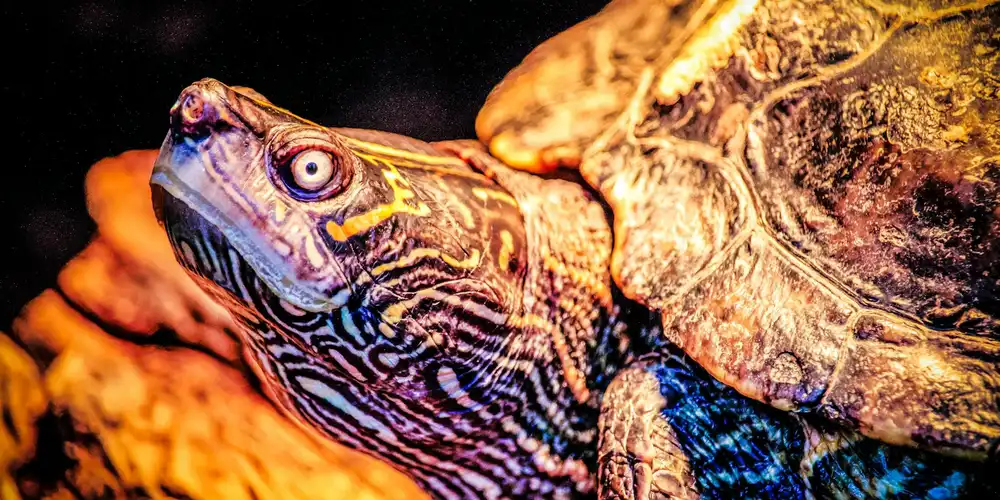
Evolution has fine-tuned turtles over millions of years, and those ancient traits directly influence how your pet behaves today. Observing my Russian Tortoise, Austen, I see his steady, deliberate movements-a trait honed for conserving energy in harsh environments, which means he thrives on predictable routines and minimal stress in captivity. Many pet turtles, like my graceful Greek Tortoise Bronte, display foraging behaviors rooted in their wild ancestors’ need to find sparse vegetation, so providing varied, leafy greens mimics their natural diet and keeps them engaged. Understanding these links helps you meet their core needs without guesswork.
- Shell adaptations for protection lead to behaviors like hiding or retreating when threatened, so always include secure hides in their enclosure to reduce anxiety.
- Dietary evolution from omnivorous or herbivorous ancestors means species-specific nutrition is key; for instance, Box Tuffs like Orwell need a mix of proteins and plants to stay healthy.
- Social traits, such as solitary tendencies in many tortoises, stem from evolutionary survival strategies, so housing turtles alone often prevents stress and aggression.
Grasping turtle phylogeny-the evolutionary relationships between species-transforms how you set up their habitat. When I designed Bronte’s enclosure, I researched her Greek Tortoise lineage to replicate the dry, rocky Mediterranean slopes she evolved in, using a mix of soil and sand for digging and basking spots under a heat lamp. Aquatic turtles, descended from species adapted to water, require ample swimming space and filtration, while terrestrial ones like Austen need arid setups with low humidity. This knowledge lets you create environments that support natural behaviors and prevent health issues. Understanding the specific habitat needs for different turtle species is essential for their well-being.
- Identify your turtle’s phylogenetic group to tailor temperature and humidity; for example, tropical species need higher moisture levels than desert-adapted ones.
- Use substrate and decor that mirror their ancestral habitats, like providing hiding spots for shy Box Tuffs to encourage exploration and security.
- Adjust lighting based on evolutionary sun exposure-UVB bulbs are essential for species that evolved basking in sunlight to synthesize vitamin D3.
Ancient defense mechanisms, like shell retraction or biting, inform safe handling practices for modern pets. My Box Turtle Orwell often pulls into his shell when approached, a relic of predator avoidance, so I handle him gently with slow movements to build trust over time. Many turtles have strong jaws from evolutionary needs to crush food or defend themselves, meaning sudden grabs can trigger bites; instead, support their body fully and avoid lifting them high. Recognizing these instincts helps you interact in ways that respect their welfare and reduce fear.
- Approach from the front to avoid startling them, as side movements can mimic threats from their evolutionary past.
- Limit handling duration to minimize stress, especially for species like tortoises that evolved for minimal social contact.
- Observe body language-if they retreat or hiss, give space to honor their natural defense responses.
Sea Turtles: Masters of Marine Adaptation
Watching my tortoises navigate their terrain, I’m always struck by the incredible journey their cousins took to conquer the oceans. Sea turtles represent one of evolution’s most dramatic reinventions, transforming land-dwelling reptiles into graceful ocean voyagers.
Specialized Aquatic Adaptations
Their bodies are a marvel of marine engineering. Let’s look at the key features that make life at sea possible.
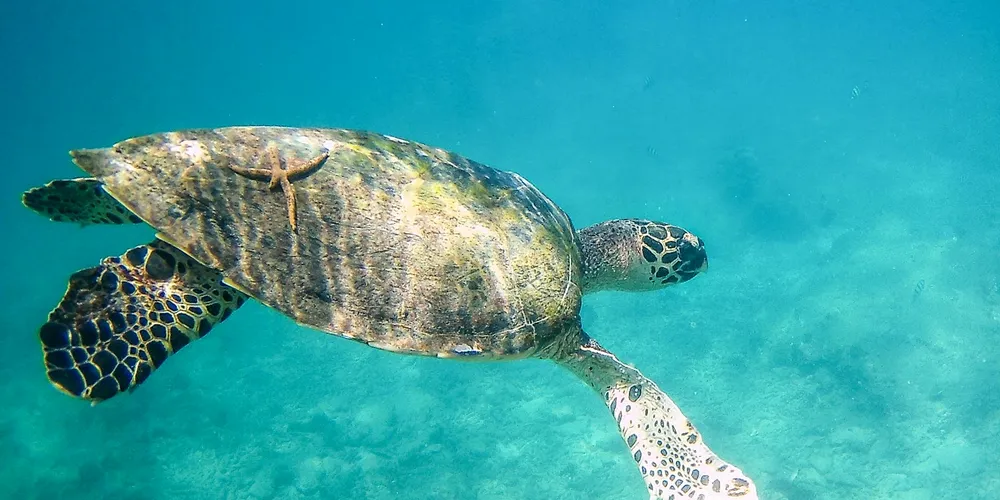
- Streamlined Flippers: Their legs evolved into long, paddle-like flippers. The front pair provides powerful propulsion, while the smaller hind flippers act as rudders for steering.
- Salt Excretion Glands: Living in saltwater creates a constant risk of dehydration. Sea turtles developed large glands near their eyes that actively pump excess salt from their bloodstream, which is why they sometimes appear to “cry.”
- Lightweight, Aerodynamic Shells: Unlike the high-domed shells of my tortoises, sea turtle shells are flattened and streamlined to reduce drag, allowing them to “fly” through the water with surprising agility.
- Efficient Lung Capacity: They can hold their breath for hours by slowing their heart rate to conserve oxygen, a feat that still amazes me when I consider my own pets’ more terrestrial pace.
The Power of Convergent Evolution
It’s fascinating that nature often finds the same solutions to similar problems. Convergent evolution is the process where unrelated species develop similar traits to thrive in comparable environments.
Sea turtles, marine iguanas, and penguins all evolved flipper-like limbs for swimming, despite coming from very different branches of the reptile and bird family trees. They never shared a recent common ancestor that looked like that. Instead, the relentless demands of the marine environment shaped their bodies in parallel, favoring a hydrodynamic form.
Linking Survival to the Broader Turtle Story
The success of sea turtles isn’t an isolated event; it’s a powerful chapter in the larger story of turtle evolution. Their survival underscores the core turtle strength: an unparalleled ability to adapt a fundamentally successful body plan to wildly different ecosystems. How do sea turtles and turtles survive in such varied environments?
From the hardy tortoises of arid deserts to the sleek sea turtles of the open ocean, the basic blueprint has been modified, not replaced. This flexibility is the true hallmark of their 200-million-year history. The same resilience that allows a box turtle to survive a winter freeze is what enables a leatherback to endure the icy depths of the ocean.
Reading the Fossil Record: What Bones Tell Us
Every new fossil discovery feels like turning a page in an ancient storybook. The field of paleontology constantly refines our picture of turtle history, proving that our current understanding is always a work in progress. I remember looking at my Russian Tortoise, Austen, and wondering how his basic body plan became so successful; the fossils provide the thrilling answers.
Our Shifting View of Turtle Origins
For a long time, the origin of turtles was a major puzzle. Early fossil interpretations placed them as anapsids, reptiles with solid skulls and no temporal openings. This classification created an evolutionary paradox, separating turtles from other major reptile groups in a way that didn’t make sense. Newer, exquisitely preserved fossils from the Triassic period have completely overturned this idea.
- Fossils like Pappochelys and Eunotosaurus show clear diapsid skull features in their ancestors.
- These “proto-turtles” had two holes behind their eye sockets, linking them to lizards, snakes, and crocodilians.
- The solid skull of modern turtles is now understood as a secondary adaptation for strength, not a primitive trait.
The Current Consensus: Diapsid Descendants
The weight of evidence now firmly places turtles within the diapsid lineage. This means your pet turtle shares a deep, ancient common ancestor with the monitor lizards and birds you see today. It’s a humbling connection that makes caring for my shelled companions feel even more special. Their unique body is a magnificent twist on a common reptilian blueprint.
Resolving the Phylogeny Debates
Fossils are the ultimate tie-breakers in scientific debates. For decades, genetic data and morphological studies clashed over where exactly turtles belong on the reptile family tree. The fossil record has been instrumental in reconciling these differing viewpoints, providing the physical “missing links.”
Key fossil finds have helped clarify two major relationships:
- Turtles and Archosaurs: Some evidence points to a closer relationship with the group that includes crocodilians and birds.
- Turtles and Lepidosaurs: Other analyses suggest a closer kinship with lizards and tuataras.
While the debate isn’t entirely settled, each new fossil brings us closer to a definitive answer. What’s clear is that turtles are not an evolutionary oddity but are deeply embedded within the rich history of reptile evolution. Their story is written in stone, and we are still learning to read it.
FAQs
What is the significance of Eunotosaurus in discussions of turtle ancestry?
Eunotosaurus had broadened ribs that represent an early step toward the turtle shell. This fossil helps bridge the evolutionary gap between early reptiles and true turtles.
What is the significance of Odontochelys semitestacea in understanding shell evolution?
Odontochelys semitestacea had a complete plastron but only a partial carapace. This indicates that the belly armor evolved before the full top shell, likely for aquatic protection.
Did turtles originate from anapsid ancestors or diapsids, and what is the current consensus?
Turtles were once classified as anapsids, but fossil and molecular evidence now support a diapsid origin. They share a common ancestor with lizards, snakes, and crocodilians.
How do stem turtles differ from crown-group turtles in anatomy and the fossil record?
Stem turtles, such as Proganochelys, had rigid shells but could not retract their heads or limbs. Crown-group turtles include all living species and feature more advanced traits like full neck retraction.
What does recent fossil evidence indicate about the timing of turtle diversification?
Recent fossils show that turtles began diversifying in the Late Triassic period. The split between hidden-necked and side-necked lineages occurred over 200 million years ago.
Honoring Their Ancient Legacy in Modern Care
By understanding the evolutionary journey that shaped your turtle’s unique biology, you can create a habitat that truly supports their needs. Their remarkable adaptations, like their shell and specialized diet, are a direct result of this long history. Replicate these conditions at home to help your pet thrive for years to come. Considering space habitat requirements for a pet turtle helps translate these ideas into a real-world setup. Even modest adjustments to tank size, basking space, and lighting support their natural history.
Caring for a turtle is a long-term commitment to a living relic of natural history. Let your appreciation for their ancient past inspire you to be a dedicated, ever-learning guardian for the unique animal in your care. Explore practical steps in the care land and aquatic turtles essential guide, covering habitat, diet, and health basics. It helps you tailor a long-term plan for land and aquatic turtles alike.
Further Reading & Sources
- Evolutionary History of Threatened Sea Turtles | AMNH
- Turtle – Evolution, Adaptation, Conservation | Britannica
- Evolution and the Repeating Turtle – STORAGE ROOM No. 2
- Turtle – Wikipedia
Matthew is a dedicated turtle enthusiast and conservationist with over 15 years of experience in reptile care. Known affectionately as "The Leatherback" among his peers, he combines his passion for turtles with a commitment to educating pet owners on responsible turtle care and environmental stewardship.
Mating Behavior