
Can Sea Turtles Hide in Their Shells?
Published on: June 5, 2026 | Last Updated: June 5, 2026
Written By: Matthew The
You might be concerned that sea turtles lack the ability to retreat into their shells for safety, a worry I’ve heard many times from fellow animal enthusiasts.
This article explains sea turtle anatomy, compares them to land turtles, and shares their unique survival strategies.
Understanding Sea Turtle Shell Anatomy
A sea turtle’s shell, or carapace, is a masterpiece of evolutionary engineering, fundamentally different from the shell of a land-dwelling tortoise like my Russian, Austen. Their shells are streamlined and fused directly to their spine and ribcage, creating a rigid, hydrodynamic frame perfect for gliding through water.
Think of it like comparing a sleek racing kayak to a sturdy, mobile armored car. The kayak is built for speed in one element, while the armored car is built for defense and versatility on land.
- Streamlined Shape: The carapace is flattened and smooth, reducing drag as they swim.
- Fused Structure: Unlike box turtles, the bony plates are integrated with the skeleton, offering strength but sacrificing mobility.
- Lighter Construction: The bones are lighter and more spongy to aid with buoyancy in the ocean.
The Straight Answer on Hiding and Retraction
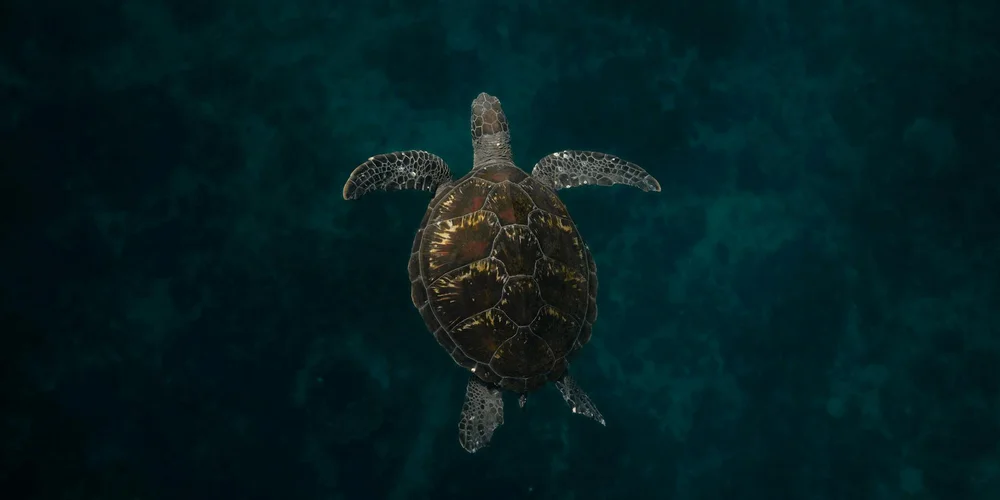
So, can a sea turtle tuck its head and limbs inside its shell for protection like my box turtle, Orwell, loves to do? The answer is a definitive no. Turtles don’t shed their shells or leave them behind, as explained here. Instead, their shells grow with the animal as it matures.
Sea turtles are physically incapable of pulling their heads or flippers completely into their shells. Watching Orwell retreat into his portable fortress is a fascinating display of flexibility that you will simply never witness in a sea turtle.
Why Full Retraction Isn’t Possible
The reason boils down to simple anatomy and the trade-offs of evolution. Their bodies are perfectly adapted for life in the open ocean, not for hiding.
Their neck vertebrae and shoulder girdle are structured in a way that only allows for limited side-to-side and up-and-down movement, not the complex S-shaped retraction of a terrestrial turtle. Trying to force their head back would be like you trying to tuck your head straight down between your shoulder blades-it’s just not how your joints are designed to work.
- Rigid Skeleton: The fused spine and shell create a fixed structure with no “room” for limbs to pull into.
- Powerful Flippers: Their large, paddle-like flippers are anchored for swimming power, not for folding away neatly.
- Evolutionary Trade-off: They sacrificed the ability to hide for superior speed and agility in the water, their primary defense against predators.
Evolution of Sea Turtle Shells for Ocean Life
Sea turtle shells have evolved over millions of years to thrive in the ocean, unlike my land-dwelling tortoises Austen and Bronte, whose shells are built for burrowing and protection on solid ground. Their carapaces are fused to their spines and ribs, creating a rigid, streamlined structure that reduces drag in water. This design sacrifices the ability to retract for superior swimming efficiency, a trade-off I’ve observed makes them perfectly suited for life at sea.
Buoyancy and Swimming Adaptations
Sea turtle shells are lighter and flatter than those of land turtles, helping them stay afloat with minimal effort. This buoyancy allows them to glide through currents effortlessly, conserving energy for long migrations. Their strong, hard shells are built to endure the ocean’s pressures and protect their bodies on long migrations. This rugged shell complements the buoyancy, helping sea turtles thrive across vast oceans. From caring for my pets, I know even small changes in shell shape affect mobility, but sea turtles take it to another level.
- Reduced bone density in the shell for better floatation
- Paddle-like limbs that work with the shell’s hydrodynamics
- A tapered carapace that cuts through water like a boat’s hull
Their shells act like natural flotation devices, something I wish my tortoises had for their occasional pond dips. Watching sea turtles swim is a reminder of how evolution tailors every species to its home.
Defense Mechanisms Beyond Shell Hiding
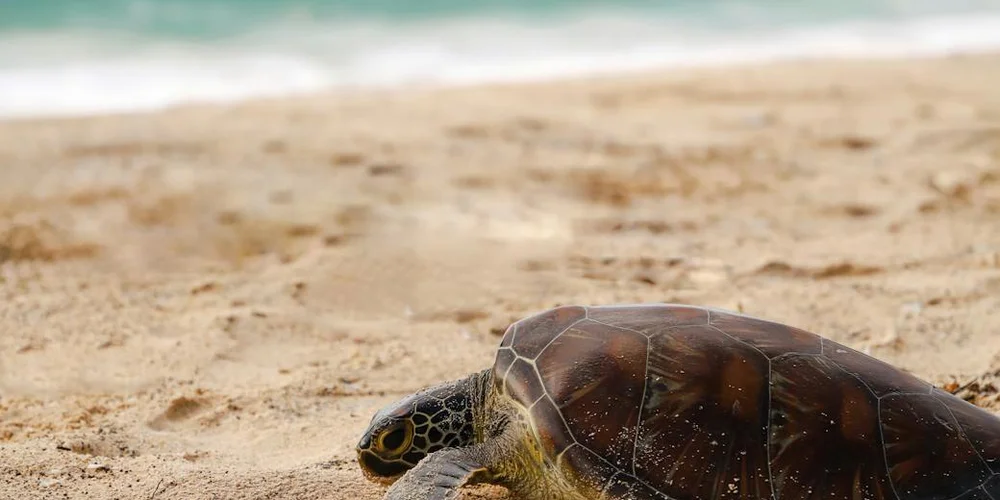
Since sea turtles can’t retreat into their shells, they’ve developed clever ways to stay safe. I’ve seen my box turtle Orwell use his shell as a shield, but sea turtles rely on speed and stealth instead. Their inability to hide doesn’t make them vulnerable-it pushed them to evolve smarter survival tactics that fascinate me as a caretaker.
Camouflage and Predator Avoidance
Sea turtles use color patterns on their shells and skin to blend into ocean backgrounds, from sandy bottoms to coral reefs. This natural disguise helps them evade predators like sharks, much like how my tortoises’ markings hide them in foliage. In science, researchers study turtle shell coloration patterns to understand how pigment, shell structure, and light interact to create camouflage. These patterns vary across species and habitats, revealing how evolution shapes the way turtles blend into their environments. Over the years, I’ve learned that camouflage isn’t just about looks—it’s a life-saving skill.
- Dark-colored topsides to blend with deep water when viewed from above
- Lighter undersides to match the sunlit surface from below
- Behavioral tricks, like resting near structures that break up their outline
Advocating for sea turtle conservation, I stress how pollution can ruin their camouflage. Protecting their habitats ensures these adaptations keep working for generations.
Insights for Pet Turtle Care from Sea Turtles
Providing Safe Hiding Areas in Captivity
My Russian tortoise, Austen, taught me that a hiding spot is a non-negotiable sanctuary. Even though your pet turtle can’t retreat inside its shell, it has a deep, instinctual need for a place to feel completely secure. This isn’t a luxury; it’s a core part of their well-being that directly reduces stress.
I’ve found success with a variety of hides. A simple half-log from the pet store works wonderfully. For my box turtle Orwell, I created a burrow-like area with moist sphagnum moss under a flat piece of cork bark. The key is to offer multiple options, especially in a larger enclosure, so your turtle can choose its favorite microclimate. Having basking spots and secure hides supports thermoregulation and lowers stress, which supports the turtle’s overall well-being. With a setup that offers varied microclimates, your turtle can stay more active and healthy.
- Half-logs or commercial reptile caves
- Dense, non-toxic live or artificial plants that create visual barriers
- A simple upside-down terracotta pot with a chipped entrance
- A mound of substrate they can burrow into slightly
Place these hides in both the warm and cool ends of the habitat. This allows your turtle to thermoregulate while still feeling protected. Watching them tuck themselves into their chosen spot is a sure sign you’ve created a trusting environment.
Debunking Common Myths About Turtle Shells
One of the most persistent myths I hear is that a turtle can simply crawl out of its shell if it wants to. This cartoon image is far from reality. A turtle’s shell is not a separate house; it is a living, integrated part of its skeleton, fused to its spine and ribs. Leaving it would be as impossible for them as you leaving your own ribcage. From a biological standpoint, the shell is a living structure made of bone and keratin. Its anatomy—carapace, plastron, and fused bones—shapes how it breathes, moves, and protects itself. For more detailed information on turtle shell anatomy, please visit this link.
Another common misconception is that all turtle shells are equally hard and impervious. The shell’s health is a direct reflection of the animal’s overall condition. Poor nutrition, especially a lack of calcium and proper UVB light, can lead to a soft, deformed, or pyramided shell, making your pet vulnerable. Early signs of shell trouble can be subtle, such as softness, changes in texture, or ridges, so regular checks are important. Detecting these early means you can adjust care or seek vet help before problems worsen. My Greek tortoise, Bronte, has a beautifully smooth shell thanks to a balanced diet and correct lighting.
- Myth: Turtles abandon their shells.
- Truth: The shell is a permanent, living part of their body.
- Myth: All shells are naturally rock-hard.
- Truth: Shell strength depends entirely on proper husbandry and diet.
- Myth: You can paint or heavily decorate a turtle’s shell.
- Truth: This can block vital UVB rays and trap harmful toxins against the keratin.
Understanding the true nature of the shell helps us become more responsible caretakers. It’s not armor; it’s a complex and sensitive organ that demands our respect and careful attention.
Observing Sea Turtle Behavior Responsibly
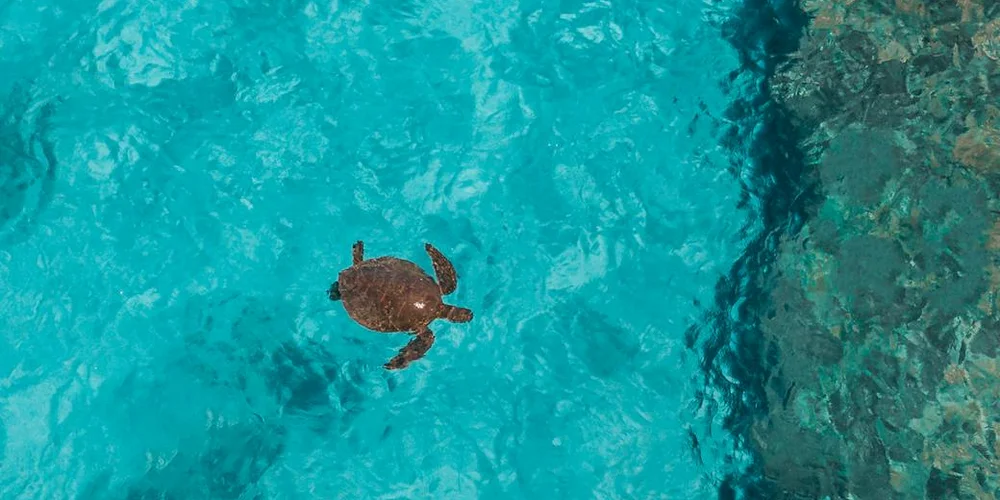
Watching sea turtles glide through the ocean is breathtaking, but it’s vital to remember they are protected wild animals, not pets like my Russian tortoise, Austen. Their survival depends entirely on our respectful distance and minimal interference. Understanding their biology—migration, nesting, and hatchling development—helps inform conservation actions. Protecting critical habitats and reducing bycatch translates into healthier sea turtle populations.
Unlike terrestrial turtles who can retreat into their shells when stressed, sea turtles lack this defense mechanism. My box turtle Orwell tucks safely away if startled, but a sea turtle’s only option is to swim away-which burns precious energy needed for migration and reproduction.
Guidelines for a Safe Encounter
If you’re fortunate enough to encounter a sea turtle in its natural habitat, follow these simple rules.
- Maintain a distance of at least 10 feet (3 meters) at all times.
- Move slowly and calmly; avoid sudden movements or loud noises.
- Never attempt to touch or ride a sea turtle.
- Do not feed them; it disrupts their natural foraging habits.
- If snorkeling or diving, give them space to surface for air easily.
Protecting Nesting Sites
Beach encounters require extra caution, especially during nesting season. A female hauling herself ashore to lay eggs is performing one of nature’s most demanding tasks.
- Never use white lights or flash photography on a beach at night; it can disorient turtles.
- Respect marked nesting areas and avoid walking on sand dunes.
- Fill in any holes you dig and remove all beach gear before leaving.
Our quiet observation is the greatest gift we can offer these ancient mariners. Giving them the space they need ensures they can continue their critical life cycles undisturbed, contributing to the health of our oceans for generations to come.
FAQs
Where can I find educational sea turtle videos online?
You can access reliable sea turtle videos on platforms like YouTube or educational sites such as National Geographic. These resources help pet turtle owners learn about marine adaptations and compare them to their own turtles’ behaviors.
Are there sea turtle videos suitable for kindergarten children?
Yes, many sea turtle videos for kindergarten use simple animations and cheerful narration to explain basic facts. Sharing these can foster early interest in ocean life and responsible pet care habits.
What sea turtle cartoon videos are appropriate for toddlers?
Toddler-friendly sea turtle cartoons often feature bright colors, gentle music, and short storylines to hold attention. These videos can introduce young children to animal themes that complement learning about pet turtles.
How can I identify different sea turtle species?
You can identify sea turtles by observing features like shell patterns, head shape, and size in videos or guides. Recognizing these differences enriches a pet owner’s understanding of turtle diversity and conservation needs.
Why is a side view helpful for observing sea turtles?
A side view reveals the streamlined carapace and flipper structure unique to sea turtles. This perspective allows pet owners to appreciate evolutionary adaptations that differ from those of land-based pet turtles.
Caring for Your Shelled Companions
Sea turtles cannot retract into their shells, so focus on providing secure, species-appropriate habitats for any pet turtle you consider. Are habitat requirements different across turtle species? Yes—needs vary widely, from large aquatic tanks to dry, UV-lit terrariums. Understanding these differences helps you create a safer, more enriching environment that meets their unique needs.
Commit to lifelong learning about turtle care, as each species, like my box turtle Orwell, has distinct behaviors and requirements. Staying informed ensures your pet thrives and promotes better animal welfare in our homes. For beginners, the care pet box turtle complete beginners guide offers practical basics on enclosure, diet, and daily care. It helps new keepers like you start confidently.
Further Reading & Sources
- Why can’t sea turtles pull back into their shell? | Ask Dr. Universe | Washington State University
- Can Sea Turtles Hide in Their Shells?
- r/explainlikeimfive on Reddit: ELI5: Why can’t sea turtle go into their shells?
- Sea Turtles Can’t Hide in Their Shells-And That’s by Design – Sea Turtle Camp
Matthew is a dedicated turtle enthusiast and conservationist with over 15 years of experience in reptile care. Known affectionately as "The Leatherback" among his peers, he combines his passion for turtles with a commitment to educating pet owners on responsible turtle care and environmental stewardship.
Turtle Myths and Misconceptions