
The Science of Turtle Shell Coloration and Patterns
Published on: February 17, 2026 | Last Updated: February 17, 2026
Written By: Matthew The
Have you ever gazed at your turtle’s shell and questioned why it displays such unique hues and designs, or worried if changes in color signal health issues? In my years of caring for tortoises like Austen, Bronte, and Orwell, I’ve learned that each shell tells a gentle story of genetics and environment, offering clues to their well-being and natural history.
This article explores genetics, camouflage, environmental influences, and personal observation tips. You’ll gain insights to better appreciate and care for these remarkable creatures, drawing from both science and my hands-on experiences.
The Building Blocks of Turtle Shell Colors
Turtle shells get their stunning hues from a mix of pigments and light-reflecting cells. Melanin creates deep browns and blacks, offering protection from harsh sunlight. Carotenoids, which come from foods like leafy greens, add bright yellows and oranges. Structural colors from iridophores make shells shimmer with blues or greens by reflecting light in unique ways.
Pigment deposition happens as the turtle grows, with colors settling into scutes, the carapace, and plastron. In my Russian tortoise Austen, melanin concentrates in dark markings on his brown and tan shell, while carotenoids might lighten other areas. This process gives each shell its one-of-a-kind look, much like a painter adding layers to a canvas.
| Pigment | Role | Visual Effects |
|---|---|---|
| Melanin | Provides dark colors and UV protection | Browns, blacks, and deep patterns |
| Carotenoids | Adds vibrant hues from diet | Yellows, oranges, and reds |
| Structural Colors (Iridophores) | Reflects light for iridescence | Blues, greens, and shiny effects |
How Genetics Shape Your Turtle’s Unique Shell
Genes act as the blueprint for your turtle’s shell patterns and colors. Specific genetic codes determine whether a turtle develops spots, stripes, or uniform shades. Color morphs, like the golden brown on my Greek tortoise Bronte, arise from inherited traits that can vary even within the same species.
Phenotypic plasticity means the environment can influence how genes express themselves. Factors like temperature, diet, and sunlight can brighten or dull shell colors over time. For example, I’ve seen Orwell’s yellow patterns become more vivid when he spends extra time basking under his UV lamp.
Inheritance plays a big role in traits like the dark markings on Austen’s shell. These patterns are often passed down through generations, showing how genetics ensure consistency in species appearances. By understanding this, you can appreciate the natural diversity in your pet’s shell and provide care that supports their unique genetic makeup.
Environmental Influences on Shell Appearance
The Role of Diet in Shell Coloration
What you feed your turtle directly impacts the canvas of their shell. I’ve watched my own tortoises, Austen and Bronte, develop richer, more vibrant shell colors when their diet includes specific, pigment-boosting foods. To translate this into feeding choices, focus on a complete, safe list of vegetables turtles can eat. The secret lies in carotenoids, natural pigments that many animals, including turtles, cannot produce themselves.
- Foods rich in carotenoids that enhance reds, oranges, and yellows include dandelion greens, carrots, sweet potatoes, red-leaf lettuce, and certain aquatic plants like duckweed.
- For maintaining vibrant, healthy shell colors, offer a varied diet, ensure all foods are fresh and properly washed, and avoid over-reliance on commercial pellets that may lack these natural pigments. A colorful plate truly does lead to a colorful shell over time.
Sunlight, Temperature, and Shell Color Changes
Your turtle’s relationship with the sun is a delicate dance that paints its shell. UVB light acts as a trigger for melanin production, the same pigment that gives our skin a tan and provides natural UV protection for your turtle. You might notice a turtle basking frequently develops a slightly darker, more robust-looking shell. That’s why UVB isn’t optional in a turtle setup—without it, calcium can’t be utilized properly, risking shell problems. A proper UVB setup is essential for healthy growth and long-term vitality.
- UV exposure stimulates the shell to produce more melanin, which acts as a built-in sunscreen, protecting the turtle and the living bone beneath the keratin scutes from harmful radiation.
- Incubation temperature plays a fascinating role in hatchling coloration for thermoregulation. Warmer nests often produce darker hatchlings, which can absorb heat more efficiently, while cooler nests yield lighter-colored babies who reflect more sunlight. This is one of nature’s most elegant temperature control systems, set for life before the turtle even hatches.
Shell Patterns Across Different Turtle Species
No two turtle shells tell the same story. Observing the distinct patterns on my turtles, from Orwell’s intricate box turtle designs to Bronte’s graceful Greek blotches, has shown me how species-specific these markings truly are.
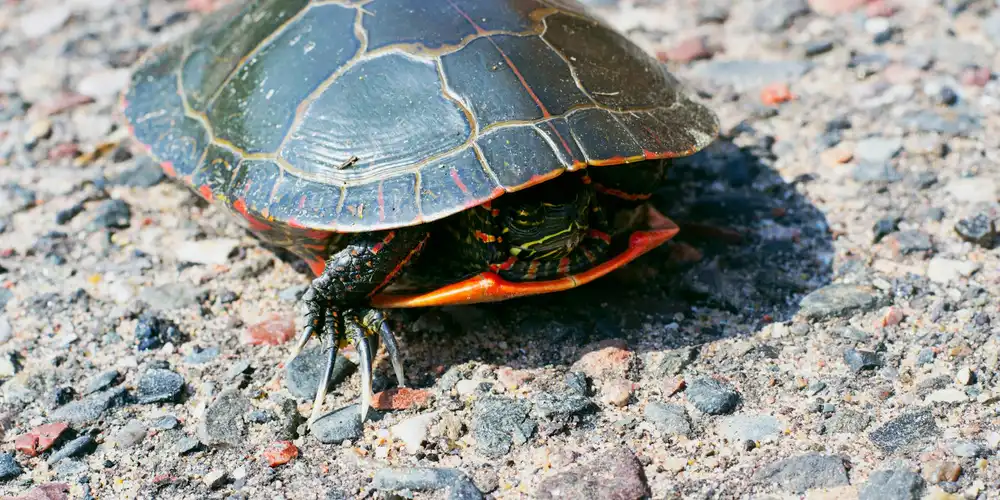
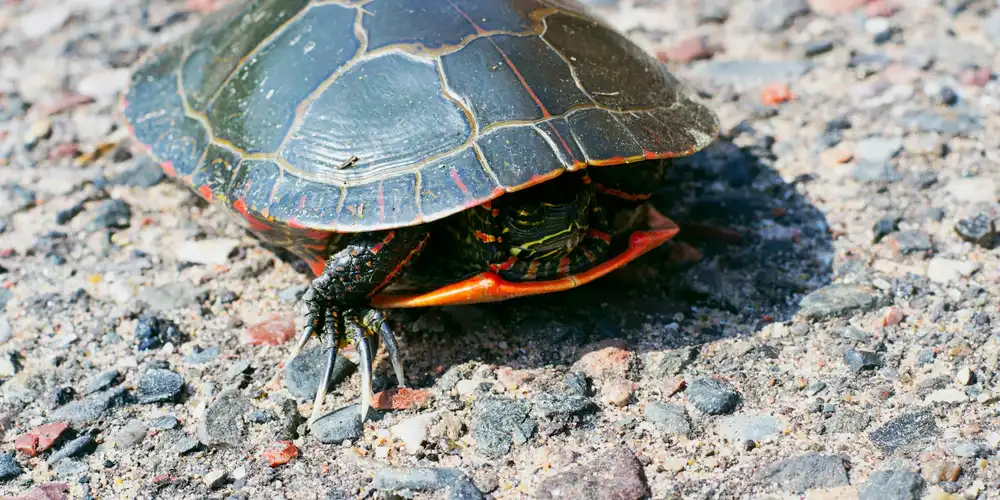
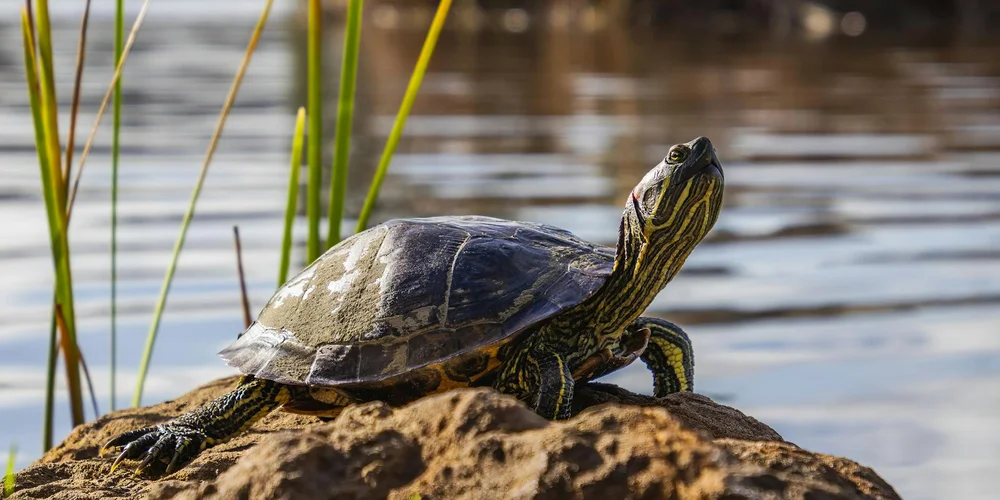
- Pattern formation varies significantly. A Painted Turtle often sports dazzling red and yellow plastron markings against a dark carapace, while a Red-Eared Slider typically features a simpler, dark green shell with the iconic red ear stripe, focusing its visual flair elsewhere.
- Geographic variation is a masterclass in camouflage. Turtles from densely vegetated, dark-water habitats tend toward darker, muddier shells for blending in, while species from rocky or sandy areas develop lighter, more mottled patterns to break up their outline against the ground.
- Sexual dimorphism in shell patterns can be subtle but distinct. In some species, like certain map turtles, males may retain more vibrant, complex juvenile patterns into adulthood, while females, who grow larger, often develop plainer, more uniform coloration. This is nature’s way of tailoring appearance to the different life roles of males and females.
What Your Turtle’s Shell Color Can Tell You
Age-Related Changes in Shell Coloration
A turtle’s shell is a living diary, and its color entries change subtly with each passing year. The vibrant, high-contrast patterns of a young turtle often mellow into richer, more uniform tones as they age. Pigments can fade from sun exposure or darken from hormonal changes, much like how human hair grays. Across a pet turtle’s yearly life, the changing seasons shape growth and activity. Watching season to season helps owners anticipate gradual color shifts and aging.
- Detail how pigments fade or darken over a turtle’s lifespan.
- Share observations from my older turtles, Bronte and Orwell, showing mature color shifts.
My Greek tortoise, Bronte, once had a shell with sharp, dark blotches on a bright golden field. Now at twelve, her shell tells a different story. The golden background has deepened to a warm honey-brown, and the dark blotches have softened, blending into the scutes like watercolor. My box turtle Orwell, at seven, shows a different path. His youthful yellow patterns are now a deeper, more mustard hue, a sign of his steady progression into adulthood.
Shell Color as a Health Indicator
Your turtle’s shell color is one of the most honest health reports you will ever receive. Sudden or patchy discoloration is rarely just a cosmetic issue; it’s often a distress signal from within. A healthy shell should feel solid and look consistent for its species and age. This is why understanding turtle body language and coloration changes is crucial for any pet owner.
- List signs of disease or nutritional issues visible through shell discoloration.
- Offer care advice for maintaining shell integrity and vibrant colors.
Watch for these warning signs in shell color:
- White, chalky patches or fuzzy spots often indicate a fungal infection.
- Pinkish undertones or red spots can signal septicemia, a serious bloodstream infection.
- A generally dull, faded shell might point to nutritional deficiencies or inadequate UVB lighting.
- Unusual darkening or soft spots can be a symptom of shell rot.
To keep that shell strong and its colors true, focus on the fundamentals. Providing a balanced diet rich in calcium, proper UVB light for vitamin D3 synthesis, and clean, dry basking areas is non-negotiable. To maximize those benefits, create the perfect basking area for your aquatic turtle. Use a dry, stable platform with a gentle incline and a warm, reachable spot. I always check my turtles’ shells during their soaks, ensuring they are hard, smooth, and free of any suspicious spots.
The Evolutionary Story Behind Shell Colors and Patterns
Every splash of color and intricate line on a turtle’s shell is a page from a million-year-old survival guide. These designs weren’t created for our enjoyment but were forged in the fires of evolution for camouflage, communication, and temperature regulation. Across deep time, turtle evolution produced key adaptations—armor-like shells, beaked jaws, and limb reshaping—that helped them survive in diverse environments. This history of adaptations anchors every color and pattern we see today.
- Connect shell traits to evolutionary biology needs like predator avoidance and mating signals.
- Discuss how spectral reflectance studies help understand wild survival advantages.
- Relate these wild traits to observable behaviors in pet turtle care.
A mottled brown and tan shell, like my Russian tortoise Austen’s, allows him to vanish against leaf litter and soil. This is cryptic coloration at its finest. Brighter patterns can serve as mating signals or even warnings. Scientists use spectral reflectance to measure how shell colors interact with light in a natural habitat. This research reveals that what looks like simple brown to us is a complex signal of invisibility to a predator’s eyes.
You see these ancient instincts in your pet turtle every day. When your turtle seeks out a sunny spot, its dark-shelled ancestors were doing the same to absorb warmth efficiently. When it hides under a plant, it’s enacting a primordial drive for concealment. Understanding this deep-seated biology helps us create enclosures that respect their natural history, reducing stress and promoting natural behaviors. To support these behaviors in daily life, focus on creating basking spots and safe hiding areas. This is essential for turtle well-being, helping with thermoregulation and stress reduction.
FAQs
What methods are used to study turtle shell coloration?
Researchers employ techniques like spectral reflectance to analyze how shell colors interact with light in natural settings. Genetic studies and field observations also help identify the roles of pigments and environmental factors in coloration.
How does habitat affect turtle shell coloration?
Turtles in densely vegetated or dark-water habitats often develop darker shells for effective camouflage. Those in open, sandy areas tend to have lighter, mottled patterns to blend with their surroundings and avoid predators. To translate this to a home setup, use a habitat diagnosis checklist to verify your lighting, basking heat, and water conditions. A quick check helps ensure you’re providing perfect lighting, heat, and water for your turtle.
Are there differences between male and female turtle shell coloration?
In certain species, males may display more vibrant or complex patterns to attract mates, while females often have duller, uniform colors. This sexual dimorphism supports roles in reproduction and can aid in visual identification.
Can shell coloration indicate health or disease in turtles?
Sudden changes like white, fuzzy patches may point to fungal infections, while pinkish hues could indicate septicemia. Consistent, species-appropriate coloring typically reflects good health and proper care.
What role does shell coloration play in camouflage or signaling?
Shell patterns help turtles conceal themselves from predators by matching environmental elements like soil or vegetation. Bright or distinct markings can also serve as signals for mating or territorial displays among individuals. In the broader web of life, turtles can be both predators and prey, helping control insect and plant communities while also being prey for larger animals. Understanding these predator-prey roles highlights how turtles fit into ecosystem balance and energy flow.
A Final Word on Your Turtle’s Living Art
Your turtle’s shell is a functional masterpiece, where its unique colors and patterns serve as camouflage and a health indicator. The shell is part of the turtle’s skeleton, with the carapace and plastron formed by fused ribs and vertebrae. Its outer layer, keratinous scutes, adds color and protection. You can best support this living canvas by providing proper UVB lighting, a nutrient-rich diet, and a habitat that mimics their natural environment. For more information on turtle shell anatomy, explore additional resources.
Committing to a turtle means committing to a lifetime of learning about their specialized needs. I encourage you to view every new piece of information as a way to deepen the bond with your shelled companion and ensure their well-being for years to come.
Further Reading & Sources
- 18 Colors Of Turtles (Rarest to Most Common)
- Do Turtles Change Colors? (with Pictures) – TurtleOwner.com
- All About Sea Turtles – Physical Characteristics | United Parks & Resorts
- Bruce Explains Box Turtles: Shell Color – Love & Feathers & Shells
Matthew is a dedicated turtle enthusiast and conservationist with over 15 years of experience in reptile care. Known affectionately as "The Leatherback" among his peers, he combines his passion for turtles with a commitment to educating pet owners on responsible turtle care and environmental stewardship.
Understanding Turtle Behavior