
Turtle Egg Laying and Nesting: Your Friendly Guide
Published on: July 15, 2026 | Last Updated: July 15, 2026
Written By: Matthew The
If you’ve ever worried about how turtles find safe spots to lay their eggs or what threats their nests face, I’ve been there too-after years with my own turtles like Austen and Bronte, I know how vital it is to protect these delicate moments.
In this article, we’ll cover nesting site selection, egg laying steps, incubation details, and simple ways to aid turtle conservation.
Understanding Natural Turtle Nesting and Oviposition
In the wild, the drive to lay eggs is a powerful, ancient instinct. My Russian tortoise, Austen, once spent an entire afternoon meticulously testing different spots in her enclosure. This process, called oviposition, is a deeply ingrained ritual for all female turtles, whether they’ve mated or not. They can produce infertile eggs much like chickens, so don’t be surprised if your solitary female starts showing signs.
The nesting sequence is a precise dance. A gravid turtle will first search for the perfect location. She uses her senses to find a spot with the right sun exposure, soil texture, and security. She needs loose, well-draining substrate that she can dig into without it collapsing. Once she selects her spot, the real work begins.
The Stages of Nesting Behavior
- Site Selection: You’ll notice her pacing, sniffing the ground, and testing different areas with her front legs. This can last for hours or even days.
- Test Digging: She’ll dig several shallow “test pits” before committing to one. My Greek tortoise, Bronte, is particularly fussy about this stage.
- Excavation: Using her powerful hind legs in an alternating motion, she carves out a flask-shaped chamber. This is a slow, methodical process that requires significant energy.
- Egg Laying: She’ll position her cloaca over the hole and deposit her eggs one by one. She often enters a trance-like state during this phase.
- Covering and Disguising: After laying, she meticulously backfills the nest, packs the soil down, and may scatter debris to camouflage the location from predators.
Providing an environment that supports this natural behavior is one of our most important responsibilities as caretakers. A stressed turtle forced to retain her eggs can become egg-bound, a serious and life-threatening condition.
Recognizing the Signs Your Pet Turtle is Gravid
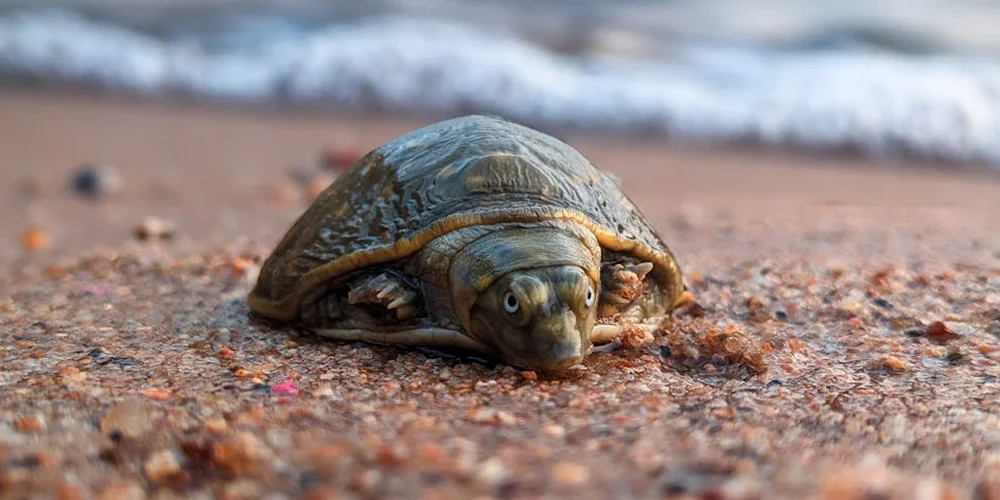
Spotting the early signs of a gravid turtle can help you provide the support she needs. I first noticed something was different with Austen when her normally steady appetite vanished. A sudden loss of appetite is often one of the first and most telling clues that your turtle is carrying eggs. Her energy was focused inward, not on food.
Her behavior became restless. Instead of her usual basking routine, she was constantly on the move, pacing the perimeter of her habitat. She was clearly looking for something. This restlessness is a classic sign of the nesting instinct kicking in.
Physical Signs to Watch For
- Swollen Body: Her body may appear fuller or more rounded, especially just before the hind legs.
- Leg Poking: You might be able to gently feel the distinct, round shapes of eggs near her back legs. Always be extremely gentle and do not apply pressure.
- Changes in Basking: She may bask more frequently to keep her body warm, aiding egg development, or she might avoid her usual spots entirely.
- Digging Motions: Even without suitable substrate, you may see her making digging motions with her hind legs in a corner.
Behavioral Changes
- Increased Agitation: A normally placid turtle might become defensive or try to escape her enclosure.
- Nesting Attempts: She will desperately try to dig in any available substrate, or even on hard surfaces.
- Decreased Activity: In some cases, a turtle may become unusually lethargic, which is a red flag for potential egg-binding.
Watching Bronte go through this, I learned that each turtle is an individual. Trust your knowledge of your pet’s normal habits; any significant deviation warrants closer attention. If you suspect your turtle is gravid, the single most important thing you can do is provide a proper nesting area immediately. That kind of odd behavior is exactly when a quick behavioral diagnostic checklist is useful. Track changes in eating, activity, posture, and enclosure conditions to spot patterns and guide next steps.
Creating the Perfect Nesting Site in Captivity
Your turtle needs a private, secure spot to lay her eggs, much like she would seek out in the wild. I learned this firsthand when my Greek tortoise, Bronte, became restless and started pacing her enclosure. A proper nesting area isn’t just a luxury; it’s a necessity to prevent egg-binding, a serious and potentially fatal condition.
You can create an ideal nesting box inside her main habitat or as a separate temporary enclosure. The goal is to replicate the soft, diggable earth she instinctively craves.
Choosing the Right Substrate
The substrate must be deep enough for her to completely bury her clutch and moist enough to hold a tunnel’s shape without collapsing.
- Topsoil is my top choice. It’s natural, holds moisture well, and packs nicely.
- Peat Moss or Coco Coir are excellent alternatives, offering great moisture retention.
- A Sand and Soil Mix (about 50/50) can provide the perfect consistency for digging.
I always make sure the substrate is at least twice as deep as my turtle is long. For Bronte, that’s a solid 10-12 inches. You should be able to stick your arm into the substrate up to your elbow without hitting the bottom of the enclosure.
Setting Up the Nesting Box
- Select a large, shallow but deep container, like a plastic storage bin.
- Fill it completely with your chosen moistened substrate. It should feel like a damp sponge-clumpy but not dripping.
- Place the box in a warm, quiet, and semi-private part of the room.
- Ensure the sides are low enough for your turtle to climb in and out easily.
- Provide a shallow dish of fresh water nearby, as the digging process is dehydrating.
I’ve found that offering this box to a gravid (egg-carrying) female for a few hours each day can encourage her to use it. Patience is your greatest tool; she will investigate and dig on her own schedule.
The Egg-Laying Process: What to Expect and How to Assist
Witnessing a turtle lay her eggs is a profound, quiet miracle. It’s a process that requires immense energy and focus from her. Your role is to be a supportive, unobtrusive guardian.
You’ll know the time is near when she becomes intensely interested in the nesting site. She will sniff the ground, test-dig with her back legs, and may refuse food. This exploratory phase can last for hours or even a day before she commits to a spot.
The Stages of Egg Laying
- Excavation: Using her powerful back legs in an alternating motion, she will dig a flask-shaped hole. This is exhausting work and she will take frequent breaks.
- Laying: Once the hole is to her satisfaction, she will begin depositing eggs. You may see her tail lift slightly with each egg. She will appear to be in a trance-like state.
- Covering and Disguising: After the last egg is laid, she will meticulously use her back legs to fill the hole, pack the soil down, and often scatter debris over the top to hide the nest.
My box turtle, Orwell, is a master of disguise. He spends as much time covering his nest as he does digging it. The entire process, from first dig to final pat-down, can take an entire afternoon.
How You Can Help (And What Not to Do)
Your primary job is to provide a stress-free environment. This is not the time for handling or loud noises.
- Do not stare directly at her or make sudden movements. I often observe from a distance or through a slightly ajar door.
- Ensure the ambient temperature is warm, around 80-85°F (27-29°C), to keep her muscles from stiffening.
- Have that water dish readily available for when she finishes.
- Under no circumstances should you try to “help” by digging the hole for her or pulling eggs out. This can cause severe stress, injury, or cause her to abandon the nest, leading to egg retention.
Once she has finished and wandered away, you can carefully mark the nest’s location. After she has left the area completely, you can then gently excavate the eggs for incubation if you choose to hatch them. If not, you can remove and dispose of the eggs to prevent them from rotting in the enclosure.
| Substrate Material | Pros | Cons |
|---|---|---|
| Topsoil (Organic, No Additives) | Natural, excellent for digging, holds shape | Can be messy; must ensure it’s chemical-free |
| Coco Coir | Sterile, great moisture retention, sustainable | Can be too loose if not packed well |
| Sand & Soil Mix | Ideal consistency, mimics natural beaches/riverbanks | Sand can cause impaction if ingested separately |
Maternal Behavior: Do Turtles Care for Their Eggs?
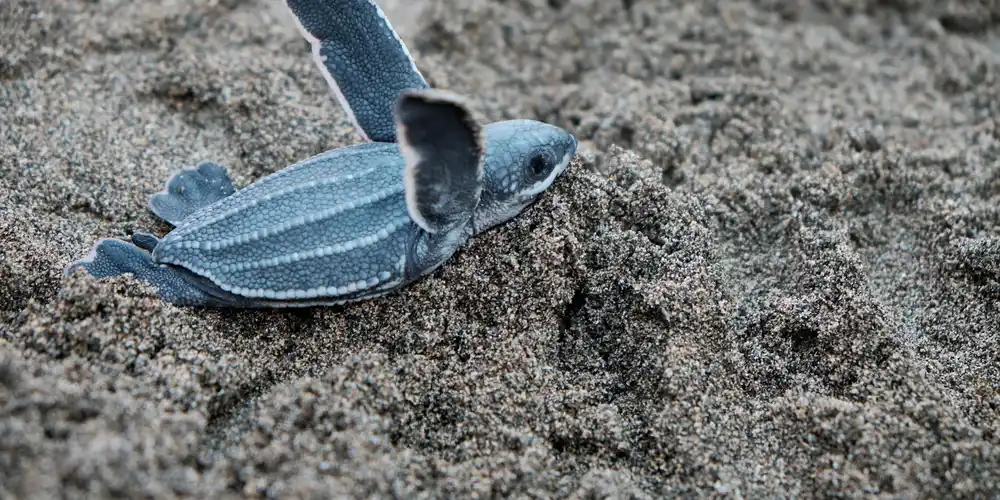
After a female turtle lays her clutch, she covers the nest meticulously, packing the soil down with her plastron. She may even create a false nest nearby to confuse predators. This is the extent of her maternal care; once she leaves the site, she will not return to guard, warm, or tend to the eggs. Her parenting journey is complete.
I’ve watched my Russian tortoise, Austen, perform this final ritual with a quiet finality. Her work is done, and she ambles off, her focus returning to basking and eating. This behavior is rooted in survival strategy. A lingering mother would only attract attention to the vulnerable nest. In the wild, a turtle’s greatest gift to her offspring is a well-hidden nest and a swift departure.
Post-Laying Care: From Egg Collection to Incubation
For us as caretakers, the real work begins the moment the turtle walks away. The eggs are now entirely in your hands. Your first step is to collect them with extreme care. Should any egg prove unfertilized, this guide explains how to identify and handle them properly. Proper handling is crucial when caring for a solo female turtle.
How to Safely Collect Turtle Eggs
Gently brush away the substrate to expose the clutch. You must avoid rotating or tilting the eggs.
- Use a soft-bristled brush to carefully uncover the eggs.
- Take a non-toxic pencil or marker and make a small, faint “X” on the top of each egg.
- This mark ensures you can always keep the egg in its original orientation.
- Carefully lift each egg, keeping the marked side up, and place it into your incubation container.
Rotating a turtle egg can drown the developing embryo by detaching it from its air sac. I learned this the hard way with my first clutch from Bronte, a heartbreaking but vital lesson in the fragility of new life.
Setting Up Your Incubator
A simple setup is often the most reliable. You don’t need the most expensive equipment to succeed.
- Container: A plastic container with a tight-fitting lid works perfectly.
- Medium: Fill it with several inches of slightly moistened vermiculite or perlite.
- Moisture: The medium should feel damp to the touch but not wet enough to wring out water.
- Egg Placement: Bury each egg about halfway into the medium, ensuring they do not touch each other.
The two most critical factors you will control are temperature and humidity.
Temperature Dictates Sex
For many turtle species, the incubation temperature determines the sex of the hatchlings.
- Cooler temperatures often produce males.
- Warmer temperatures typically produce females.
- A middle-range temperature can yield a mix of both.
You must research the specific temperature-dependent sex determination for your turtle’s species. Maintaining a stable temperature within your chosen range is more important than hitting an exact number.
Maintaining Proper Humidity
Humidity prevents the eggs from drying out and collapsing. I check my incubators daily.
- Aim for a humidity level between 70% and 80%.
- If condensation beads on the lid, you have enough moisture.
- If the vermiculite looks dry, add a small amount of water to the corners of the container, not directly on the eggs.
Patience is your greatest ally during the incubation period, which can last from 60 to 120 days depending on the species and temperature. Resist the urge to constantly check on them; stability is what they need most.
Troubleshooting Common Egg-Laying Challenges
Watching a turtle prepare to lay eggs is amazing, but sometimes things don’t go smoothly. Recognizing the signs of distress early can make all the difference for your shelled friend. I’ve had my own heart-in-my-throat moments with my Russian tortoise, Austen, which taught me to stay calm and act decisively.
Identifying and Addressing Egg-Binding (Dystocia)
Egg-binding is a serious medical emergency where a turtle cannot pass her eggs. A turtle straining for hours with no results, showing lethargy, or refusing food needs immediate veterinary attention. I once noticed Austen was unusually still and hadn’t touched her favorite dandelion greens, which was my first clue something was wrong.
- Visible Straining: Persistent pushing and digging with no egg production.
- Lethargy and Weakness: Lack of movement or inability to support her own weight.
- Swollen Cloaca: The vent area may appear puffy or inflamed.
- Loss of Appetite: A complete refusal to eat for more than a day.
If you suspect egg-binding, do not try to manipulate the eggs yourself. Your vet may administer calcium injections to strengthen contractions or, in severe cases, perform surgery. Providing a shallow warm water soak can sometimes offer temporary relief during the trip to the clinic.
Inadequate Nesting Site Conditions
Turtles are very particular about where they lay their eggs. If the conditions aren’t just right, they may simply hold onto them. The nesting area must feel secure, private, and have the perfect soil consistency. My Greek tortoise, Bronte, will abandon a site if she feels watched or if the substrate is too compacted. A loose, well-drained substrate supports their digging and nest-building instincts. With the right depth and texture, they can excavate a secure nest rather than abandon a site.
- Substrate Depth: It should be at least as deep as the turtle is long.
- Soil Texture: A mix of topsoil and play sand that holds its shape when squeezed is ideal.
- Privacy: Ensure the area is in a quiet, low-traffic part of the enclosure.
- Temperature: The spot should be warm, but not directly under a basking lamp.
Nutritional Deficiencies Impacting Egg Health
A turtle’s body works incredibly hard to produce eggs, and it needs the right building blocks. Insufficient calcium is one of the most common causes of soft-shelled eggs and laying difficulties. I make sure to dust my tortoises’ food with a calcium supplement several times a week, especially during the breeding season.
Offer a cuttlebone in the enclosure for them to gnaw on as needed. A balanced diet rich in dark, leafy greens provides essential vitamins and minerals that support reproductive health. Avoid overfeeding high-oxalate foods like spinach, which can bind to calcium and make it unusable.
Environmental Stressors
Turtles need to feel completely safe to proceed with egg-laying. Loud noises, frequent handling, or the presence of other pets can cause enough stress to halt the entire process. I’ve learned to give my box turtle, Orwell, complete privacy when he’s showing nesting behaviors; even just walking by his enclosure too often can make him retreat into his shell.
- Minimize all handling and disturbances.
- Place a visual barrier around the nesting area.
- Maintain consistent day/night light cycles.
- Keep other household pets away from the enclosure.
When to Intervene and When to Wait
It’s a delicate balance knowing when to step in. As a general rule, if your turtle is active, digging test holes, and seems generally calm, it’s best to be patient and let nature take its course. The process can take many hours. In your turtle’s first 24 hours, follow a step-by-step acclimation guide to ease the transition. This patient, measured approach is exactly what your new turtle needs during that critical first day.
Intervention is necessary if she shows clear signs of distress, pain, or has been actively straining without success for an extended period. If you notice additional warning signs—such as not eating, lethargy, swelling, or trouble breathing—these are reasons to consult a veterinarian. Early veterinary input can prevent conditions from worsening. Trust your instincts; you know your turtle’s normal behavior better than anyone. When in doubt, a call to your exotics veterinarian is always the safest choice.
FAQs
How can understanding mapped turtle nesting behaviors benefit pet turtle care?
It helps pet owners replicate natural habitat conditions in captivity. This can reduce stress and support healthy egg-laying behaviors in pet turtles.
What resources show turtle nesting behaviors on a map?
Online conservation tools and interactive maps display nesting sites for various turtle species. Pet owners can use these to learn about ideal nesting environments and seasonal patterns.
Which turtle species have unique nesting behaviors in California?
The western pond turtle, native to California, often nests in loose, sandy soils near water sources. Pet owners can apply this knowledge to create suitable nesting areas for similar captive species.
How does Florida’s environment influence turtle nesting behaviors?
Florida’s warm, humid climate supports year-round nesting for some species, like the gopher tortoise. Pet owners can mimic these conditions by ensuring warm, moist substrate in nesting boxes.
What is the general nesting behavior pattern for turtles across the USA?
Nesting typically peaks in spring and summer, varying by region and species. Understanding these patterns helps pet owners anticipate and prepare for egg-laying in their turtles.
Caring for Your Egg-Laying Turtle
To support your turtle, providing a dedicated, deep, and moist nesting area is the single most important thing you can do. Watch for signs of restlessness and decreased appetite, as these are clear indicators she is preparing to lay her eggs. In a complete pre-laying guide, you’ll find step-by-step advice on preparing the nesting site, managing humidity and temperature, and what to expect during the laying process.
Responsible pet ownership means committing to understanding these complex natural behaviors throughout your turtle’s life. I encourage you to keep learning and connect with a reptile-savvy veterinarian to ensure you’re always providing the best possible care for your shelled friend.
Further Reading & Sources
- Advisory Guidelines for Creating Turtle Nesting Habitat
- Sea Turtle Nesting – Clearwater Marine Aquarium
- Sea Turtle Nesting: Step-by-Step | obxforever.org
- Sea Turtle Nesting | FWC
Matthew is a dedicated turtle enthusiast and conservationist with over 15 years of experience in reptile care. Known affectionately as "The Leatherback" among his peers, he combines his passion for turtles with a commitment to educating pet owners on responsible turtle care and environmental stewardship.
Nesting Requirements