What Is a Terrapin and How Is It Different from a Turtle?
Published on: May 6, 2026 | Last Updated: May 6, 2026
Written By: Matthew The
You’ve probably heard the words “turtle” and “terrapin” used and wondered if they’re just different names for the same creature. It’s a common point of confusion, and using the wrong term can make you feel unsure when you’re trying to identify the amazing animal you’re looking at.
In this article, we’ll clarify the distinctions by covering: terrapin definition, habitat, key physical traits, and how they compare to turtles and tortoises.
Understanding Terrapins: A Closer Look
So, what exactly is a terrapin? Terrapins are a specific type of turtle that thrive in the unique mix of fresh and saltwater known as brackish water. They are the coastal dwellers of the turtle world, perfectly adapted to life in estuaries, salt marshes, and mangrove swamps.
The name “terrapin” itself comes from an Algonquian word, “torope,” which simply means a small turtle. Scientifically, the most famous example, the Diamondback terrapin, belongs to the family Emydidae and the genus Malaclemys. This places them in a fascinating group of mostly aquatic and semi-aquatic turtles.
I vividly remember the first time I spotted a Diamondback terrapin in a coastal estuary. It was a master of its environment, navigating the murky, brackish water with a graceful purpose my land-loving tortoise, Austen, would never comprehend. Seeing one in its natural habitat drives home how specialized these creatures truly are.
Key Differences Between Terrapins and Turtles
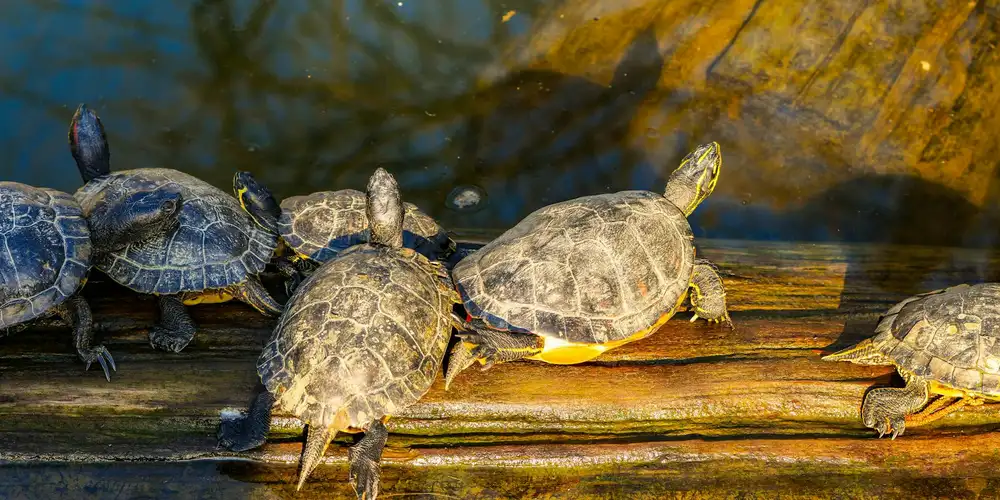
Think of “turtle” as the big umbrella term. The most significant difference lies in their chosen homes: terrapins are specialists of brackish water, while other turtles can be found in a vast range of fresh or fully marine environments. My box turtle, Orwell, for instance, would be completely out of place in the salty waters a terrapin calls home. Choosing the right habitat for your aquatic turtle is crucial for their well-being.
Physically, terrapins have evolved for their semi-aquatic, brackish lifestyle. Their shells are often more streamlined than a tortoise’s high-domed carapace but sturdier than the flatter, more hydrodynamic shells of sea turtles. That points to the value of a strong, hard turtle’s shell. It acts as a shield against predators and rough substrates in brackish waters. Their skin and scales are also tougher, helping them cope with the harsher saline conditions.
Here is a quick comparison from my own observations caring for various shelled friends:
| Feature | Terrapin (e.g., Diamondback) | Other Turtles (e.g., My Pets) |
|---|---|---|
| Primary Habitat | Brackish water (estuaries, salt marshes) | Freshwater ponds, land, or fully marine |
| Shell Shape | Low to medium dome, streamlined | Varies widely (high dome for tortoises, flat for sea turtles) |
| Limb Adaptation | Strong, webbed feet for swimming and climbing muddy banks | Stout legs (tortoises) or flippers (sea turtles) |
| Salt Glands | Present, to excrete excess salt | Absent in most freshwater species |
Observing my Russian and Greek tortoises on land versus imagining a terrapin’s life shows a clear evolutionary split based on environmental needs. Each is perfectly built for its own world.
Terrapin vs. Turtle vs. Tortoise: Clearing the Confusion
Picture chelonians like a family with different lifestyles, and you will grasp the distinctions easily.
Aquatic turtles thrive almost entirely in water, from ponds to oceans, relying on it for everything. Do they need water to survive? Yes—though they breathe air, they must stay in or near water to stay hydrated, regulate their body temperature, and find food.
Semi-aquatic terrapins split their time between land and water, often in brackish or freshwater areas.
Terrestrial tortoises, like my Russian Tortoise Austen, live solely on land and avoid deep water entirely.
- Aquatic turtles: Think sea turtles or red-eared sliders-they swim most of the day.
- Semi-aquatic terrapins: Diamondback terrapins are a classic example, needing both dry basking spots and water to swim.
- Terrestrial tortoises: Species like my Greek Tortoise Bronte roam on solid ground, munching on plants.
Common names shift depending on where you live, which adds to the mix-up.
In the United States, “turtle” often serves as a catch-all, while “terrapin” points to specific semi-aquatic types.
Across the pond in the United Kingdom, “tortoise” typically refers to land-dwellers, and “turtle” is reserved for marine varieties. In other words, the difference between turtles and tortoises is primarily where they live and how they move. This distinction also helps explain variations in their shell shapes and limb designs.
From raising Orwell, my Box Turtle, I see how he blurs lines-he is semi-aquatic but frequently labeled a turtle in the US.
Imagine it like housing preferences: aquatic turtles are the swimmers, terrapins are the amphibious adventurers, and tortoises are the grounded homebodies.
Terrapins as Pets: What to Consider
Choosing a terrapin as a pet means weighing species suitability with their welfare and legal status in mind.
Not all terrapins adapt well to captivity; Diamondback Terrapins can fare okay with expert care, but many suffer in improper setups.
Always verify local regulations-some species are protected to curb overcollection and ensure ethical ownership.
Reflecting on my years with tortoises, I urge you to prioritize the animal’s natural needs over convenience.
Here is a quick list of pros and cons from hands-on reptile care.
- Pros: Terrapins display captivating behaviors and can form bonds with attentive owners.
- Cons: They demand significant space, precise water quality, and may live for decades, requiring long-term commitment.
Costs can sneak up on you, so plan ahead.
Initial setup for a terrapin habitat often runs $300 to $600, covering tanks, filters, and heaters.
Ongoing expenses include specialized food, utilities, and vet care, with check-ups averaging $50 to $100 annually. Understanding turtle vet costs helps owners plan for routine check-ups and other common medical expenses. Regular check-ups can catch issues early and prevent more costly treatments later.
Veterinary needs are vital for their health.
- Schedule regular visits to a reptile-savvy vet to catch issues like shell rot or respiratory infections early.
- In my experience, preventative care for Orwell has spared him many common ailments.
Responsible ownership hinges on habitat mimicry, replicating their natural environment to support their well-being.
Provide a mix of land and water areas with proper filtration, much like a terrapin would find in the wild.
I have seen how mimicking nature reduces stress and promotes longevity in my own pets.
Caring for a Terrapin: Habitat and Diet Essentials
Creating the right home for a terrapin is your most important job as an owner, and it centers on one key element: brackish water. Brackish water is a specific mix of fresh and saltwater that mimics their natural coastal habitats, and getting it wrong is the number one reason terrapins get sick. I learned this the hard way early on, which is why I’m so passionate about sharing what works.
Building the Perfect Brackish Enclosure
Your setup needs a careful land-water balance. Aim for a tank that is about 75% water and 25% dry, basking land. The water must be deep enough for your terrapin to swim and fully submerge.
- Start with the Tank. A 75-gallon tank is a good starting point for one adult terrapin. Bigger is always better.
- Create the Basking Area. Use a stable platform, like a large piece of driftwood or a commercial turtle dock, that rises completely out of the water. This is non-negotiable for their health.
- Install Powerful Heating. You need two heat sources: an underwater aquarium heater to keep the water at a steady 75-80°F, and a basking lamp over the dry area that creates a hot spot of 85-90°F.
- Add Filtration for a Tidal Effect. Terrapins are messy. A canister filter rated for a tank twice your water volume is essential to handle their waste and keep the water clean.
- Mix the Brackish Water. Use a marine salt mix from a pet store, never table salt. A specific gravity of 1.005-1.010 is ideal, which you measure with a hydrometer. I mix the salt in a separate bucket of warm water before adding it to the tank to ensure it dissolves completely.
Feeding Your Terrapin for Vibrant Health
Terrapins are opportunistic omnivores with a strong preference for protein. A varied diet prevents nutritional deficiencies and keeps them engaged and active. I rotate between these options for my crew.
- Staple Protein: High-quality commercial turtle pellets, live or frozen ghost shrimp, and chopped earthworms.
- Healthy Greens: Offer leafy greens like romaine lettuce and dandelion greens, though they may be ignored in favor of protein!
- Occasional Treats: Small pieces of cooked, unseasoned fish or a single pinky mouse for adults.
Juveniles need daily feeding, while adults do well eating every other day.
Common Health Issues to Monitor
Even with perfect care, be vigilant. Regular observation is your best tool for catching problems early, when they are easiest to treat. Watch for these common signs.
- Shell Rot: Soft, discolored, or foul-smelling patches on the shell. This is often a sign of poor water quality or incorrect salinity.
- Respiratory Infection: Bubbles from the nose, wheezing, or lethargy. Usually caused by incorrect basking temperatures or drafts.
- Swollen Eyes: Often linked to a Vitamin A deficiency from a poor diet.
Identifying Terrapins: Features and Behaviors
Once you know what to look for, telling a terrapin apart from its turtle cousins becomes second nature. Their unique look is a direct result of their life in the dynamic zone where rivers meet the sea.
Distinctive Physical Markings
Terrapins have a beauty that is all their own. Their shells are not just brown; they often have concentric rings or stunning patterns.
- Shell Patterns: Look for intricate, web-like patterns in grey, black, brown, or even white. Each scute (the individual plate on the shell) often has a dark center with lighter, radiating lines.
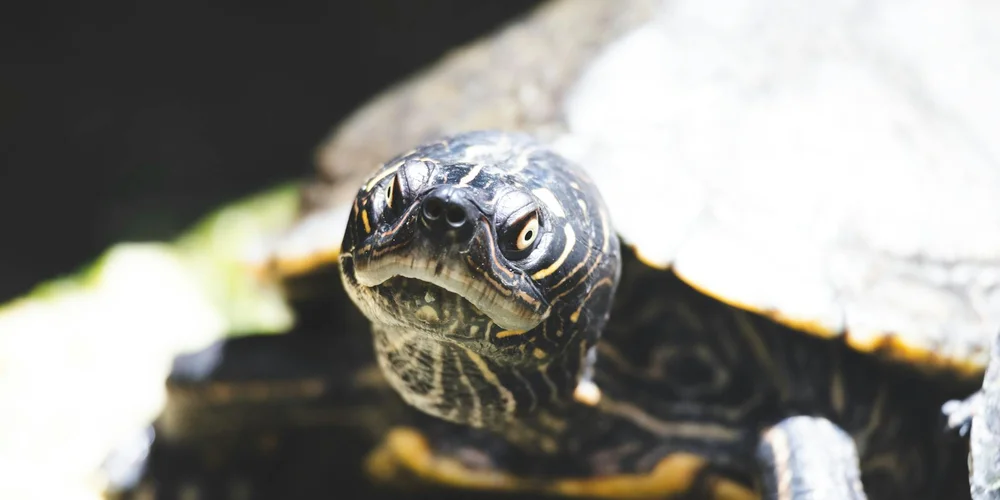
- Skin and Head: Their skin is typically a light grey with dark speckles or spots. The most telling feature is their head, which often has beautiful dark streaks or patterns on a lighter background.
- Body Shape: They are built for powerful swimming, with streamlined shells and strongly webbed back feet.
How They Compare to Other Turtles
It’s all in the details. While my Russian tortoise, Austen, has a high-domed, stout shell for life on land, a terrapin’s shell is flatter and more hydrodynamic.
- Vs. Sea Turtles: Terrapins have clawed, webbed feet for scrambling onto muddy banks; sea turtles have flippers and rarely leave the ocean.
- Vs. Freshwater Turtles: Most common pet turtles, like sliders, live in purely freshwater and lack the specialized salt glands that allow terrapins to process brackish water.
- Vs. Tortoises: Tortoises are terrestrial with stout, elephant-like legs and cannot swim. This is the easiest distinction.
Behavioral Clues from My Observations
Watching a terrapin tells you just as much as looking at one. They are alert, active swimmers and surprisingly intelligent, often recognizing the person who feeds them. During my daily checks, I notice they are most active in the morning and late afternoon, basking intensely under their lamp to regulate their body temperature. They are more skittish than my tortoises and will quickly slide into the water at the first sign of a sudden movement, a behavior that keeps them safe in the wild.
Regional Names and Misconceptions About Terrapins
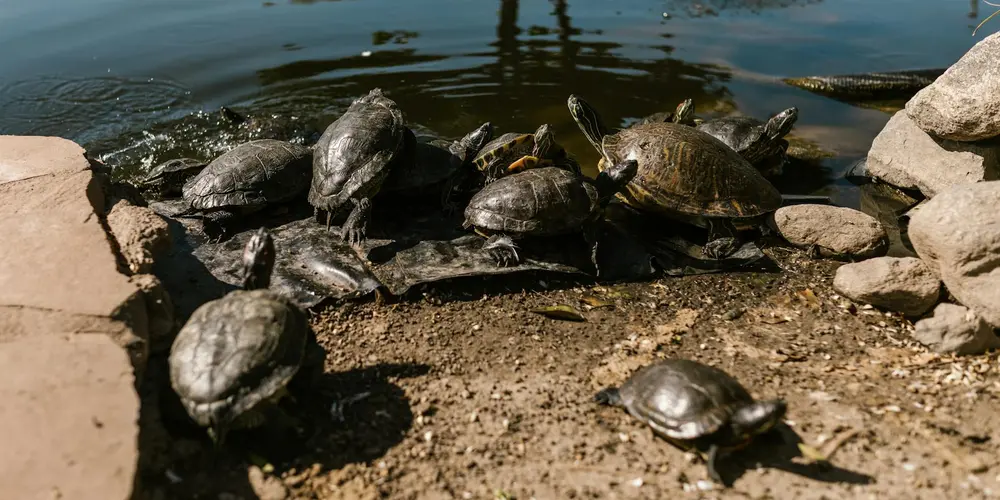
Depending on where you are in the world, the word “terrapin” can mean something entirely different. This regional naming is a major source of confusion, but it’s simpler than it seems once you know the local lingo. In the United Kingdom, for example, “terrapin” is often used as a general term for any freshwater turtle kept as a pet.
Picture someone in London talking about their new terrapin; they’re likely referring to a common red-eared slider. Across the pond in the United States, the name is far more specific. Here, “terrapin” almost exclusively refers to the beautiful, brackish-water diamondback terrapin native to coastal marshes. It’s a classic case of the same word having two different passports.
Common Myths We Need to Gently Dispel
Let’s clear up a few misunderstandings that I’ve encountered time and again in my years of caring for these wonderful creatures.
- Myth: A terrapin is just a type of tortoise. This is a very common mix-up. From living with my Russian and Greek tortoises, I know they are strictly land-dwellers with stout, club-like feet for walking. Terrapins, however, are aquatic turtles with webbed feet for swimming. They are built for a life split between water and land.
- Myth: All turtles are the same. This is like saying all dogs are the same! The turtle world is wonderfully diverse. Tortoises live on land, sea turtles live in the ocean, and terrapins and other turtles prefer fresh or brackish water. Their habitats directly shape their bodies, diets, and the care they require.
- Myth: “Turtle,” “terrapin,” and “tortoise” are interchangeable. While the lines can blur in casual conversation, these terms have distinct biological meanings. Think of it this way: all terrapins are turtles, but not all turtles are terrapins. It’s a category within a category.
Navigating these names can feel like learning a new dialect. The key takeaway is to focus less on the label and more on the specific animal’s natural needs. Whether you call it a turtle, a terrapin, or your new shelled friend, understanding its true nature is what leads to a happy, healthy life together.
FAQs
How does the size of a terrapin compare to other turtles?
Terrapins like the Diamondback species typically reach 5-9 inches in shell length, making them medium-sized. In contrast, many sea turtles grow much larger, while some freshwater turtles can be similar or smaller depending on the species (see how big pet turtles get).
What visual differences can I see in pictures of terrapins vs. other turtles?
In pictures, terrapins often display unique patterns like concentric rings on their shells and speckled skin. Other turtles may have plainer shells or flatter, smoother appearances suited to their specific aquatic or terrestrial habitats. These patterns interest scientists studying evolution and camouflage. Researchers examine how genetics and environment shape shell coloration across species.
Are terrapins aggressive and likely to fight with other turtles?
Terrapins are generally not aggressive but can show territorial behavior, especially in confined spaces. It’s advisable to house them alone or with careful monitoring to prevent stress or injuries from conflicts.
What does it mean when we say a terrapin is a turtle?
Scientifically, “turtle” is the broad term for all shelled reptiles in the order Testudines, which includes terrapins. This means terrapins are a specific type of turtle adapted to brackish water, not a separate category. All turtles, including terrapins, are reptiles.
What are some common questions about terrapins vs. turtles on forums like Reddit?
On Reddit, users often ask if terrapins are good pets and how their care differs from freshwater turtles. Many responses highlight the need for brackish water setups and their distinct size and habitat preferences.
Guiding Your Journey with Shelled Friends
Knowing that terrapins thrive in semi-aquatic setups with brackish water, while other turtles may need fully aquatic or land-based homes, helps you create a tailored habitat. From caring for my steady Russian tortoise Austen, I’ve seen how matching their environment to natural needs boosts their well-being and reduces health risks. Turtles live on land and in water, and most species need a balance of both to thrive. A setup that provides dry basking spots plus accessible water helps support their natural behaviors and health.
Commit to regular vet visits and species-specific diets to show true responsibility for your pet’s life. During visits, collaborate with your vet to establish a monthly turtle health check routine. Learn what signs to monitor at home and what to report when you see the vet. Your ongoing curiosity about turtle care, like observing behaviors in my graceful Greek tortoise Bronte, deepens the bond and ensures a thriving companion for years.
Further Reading & Sources
- What’s the difference between turtles, tortoises and terrapins? – Africa Geographic
- r/askscience on Reddit: What’s the difference between a turtle and a terrapin?
- 3 Ways to Tell the Difference Between a Tortoise, Terrapin and Turtle
- What Is Smarter, A Turtle Or A Terrapin? – General Turtle Discussions – Turtle Forum
Matthew is a dedicated turtle enthusiast and conservationist with over 15 years of experience in reptile care. Known affectionately as "The Leatherback" among his peers, he combines his passion for turtles with a commitment to educating pet owners on responsible turtle care and environmental stewardship.
Turtle Myths and Misconceptions