
Can Turtles Breathe Underwater? (The Surprising Truth)
Published on: December 23, 2025 | Last Updated: December 23, 2025
Written By: Matthew The
If you’ve ever seen a turtle like my Russian tortoise Austen slowly submerge in water, you might have held your breath, worried they can’t breathe down there-and you’re not alone in that thought.
In this article, we’ll explore how turtles breathe, their unique adaptations for survival, and common myths, all drawn from my years of caring for turtles like Austen, Bronte, and Orwell.
The Basic Breathing Truth for Turtles
All turtles are air-breathing reptiles with lungs, just like us.
No turtle truly breathes underwater like a fish, pulling dissolved oxygen from the water through gills.
Think of their lungs like yours-they need to surface for a fresh gulp of air to fuel their bodies.
How Turtles Breathe: Lungs and Special Adaptations
Primary Lung Breathing in Turtles
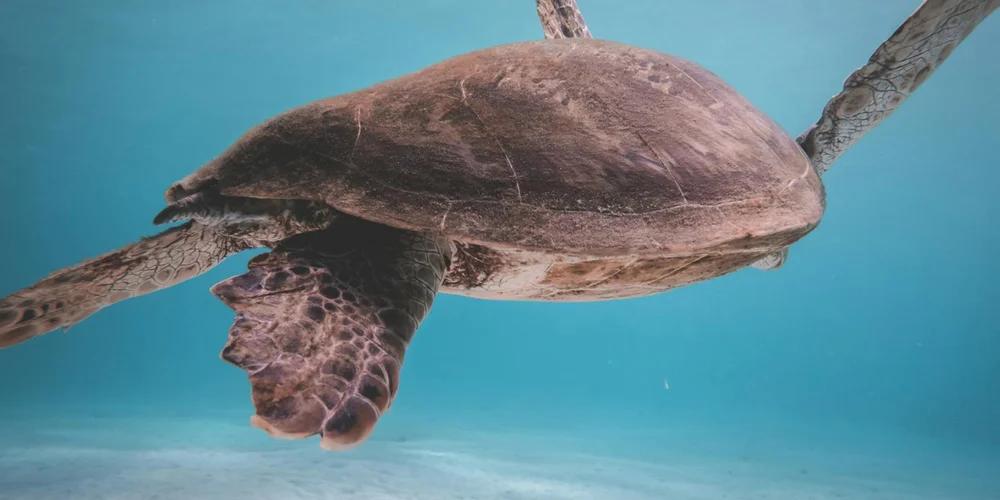
Turtle lungs are located high up inside their shell, and they work by expanding and contracting muscles around the cavity to draw air in and push it out. When studying the anatomy of turtles and shell biology, it’s fascinating to understand how these unique adaptations function.
The rigid shape of their shell means they can’t use a diaphragm like we do, so they rely on specialized muscle groups to power their breathing.
- Air enters through the nostrils and travels down the windpipe into the lungs.
- Oxygen transfers into the bloodstream, and carbon dioxide is expelled.
- The shell’s unique structure directly influences how these muscles move and function.
Supplementary Breathing Methods
Some freshwater species have developed incredible backup systems for when they can’t reach the surface.
Cloacal respiration involves absorbing oxygen directly from the water through highly vascularized tissues in their cloaca-essentially, they can “breathe” through their rear end.
- This is common in species like the Fitzroy River turtle and some softshell turtles.
- It allows for extended underwater stays during hibernation or rest.
Buccal respiration uses the lining of the mouth and throat to exchange gases, while cutaneous respiration occurs directly through the skin.
Many common pet turtles, like red-eared sliders and painted turtles, utilize some buccal or cutaneous respiration, especially in well-oxygenated water. However, unlike fish, these turtles can’t rely solely on gills. They are air-breathers and must surface to inhale. This is just one interesting aspect of turtle anatomy and biology.
- My Russian tortoise, Austen, being a land-dwelling species, relies solely on his lungs.
- My box turtle, Orwell, occasionally benefits from cutaneous respiration in his humid enclosure.
Breath-Holding Abilities Across Turtle Types
Factors Influencing Dive Duration
Think of your turtle’s body like a tiny, efficient submarine. Its metabolic rate is the engine, and a slower engine uses less oxygen, allowing for longer dives. When my tortoises, Austen and Bronte, are basking, their systems idle, but if they were aquatic and active, their oxygen would deplete much faster. These ideas feed into sea turtle conservation biology. Protecting habitats and minimizing disturbances helps turtles maintain energy balance for long migrations.
- Metabolic rate and activity directly control oxygen consumption; a resting turtle in cool water can hold its breath far longer than one swimming or foraging.
- Oxygen is stored in their blood, thanks to a high red blood cell count, and within their muscle tissues, creating a vital reserve for underwater excursions.
Typical Submergence Times by Habitat
Where a turtle lives shapes its relationship with air. Sea turtles are the marathon champions, with some species resting on the ocean floor for hours, while their freshwater cousins operate on a quicker schedule. I’ve spent countless afternoons watching my box turtle, Orwell, in his aquatic setup, and his patterns reflect this perfectly. It’s always reassuring to observe and understand when turtles are floating as a part of their normal behavior versus when it might indicate a health issue.
- Sea turtles, built for the open ocean, can remain submerged for several hours during rest, a necessity for their deep-diving lifestyle.
- Freshwater turtles like the common red-eared slider typically surface for air every 20-30 minutes when active, but may rest underwater for a few hours.
- Snapping turtles are impressive bottom-dwellers, often staying submerged for 40-50 minutes as they lie in wait for prey.
- Observing Orwell, I notice his breathing rhythm is calm and infrequent; he’ll often tuck into a favorite spot and not move for nearly an hour, a testament to his efficient physiology.
Special Cases and Common Misconceptions
Turtles That Push Breathing Limits
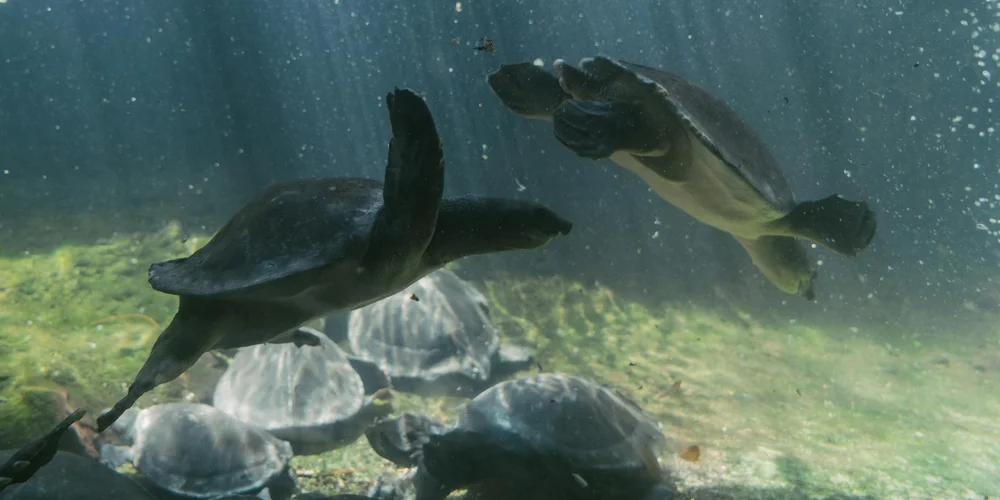
Nature always has its exceptions, and some turtles have developed truly unique survival strategies. The Fitzroy River turtle has mastered a form of respiration that seems almost alien, absorbing oxygen directly from the water through specialized glands in its cloaca. This remarkable adaptation is a key reason many people develop the mistaken belief that all turtles can breathe underwater. These kinds of respiratory tweaks highlight how turtle lineages diverged and acquired crucial adaptations through their long evolutionary history. Studying them helps reveal the key steps in turtle evolution.
- Certain species, including the Fitzroy River turtle and some Australian white-throated snapping turtles, can perform cloacal respiration, essentially “breathing” through a vascularized chamber in their rear end.
- People often see turtles resting peacefully on the bottom of a pond or tank for extended periods and logically, but incorrectly, assume they are breathing water like fish.
Debunking Breathing Myths
Let’s clear the water on a particularly quirky-sounding topic. While “butt breathing” is a catchy and somewhat accurate term for cloacal respiration, it’s not true breathing in the mammalian sense; it’s a supplemental form of gas exchange that helps in oxygen-poor environments. It does not replace the need for lungs.
- The science behind cloacal respiration involves the movement of oxygen-rich water over highly vascularized tissues in the cloaca, where oxygen diffuses into the blood-it’s a brilliant supplement, not a replacement for air.
- Every single turtle, from the deepest-diving leatherback to my own box turtle, must eventually come to the surface to fill its lungs with air; no turtle is truly aquatic in the way a fish is.
Pet Turtle Care: Supporting Healthy Breathing
Essential Habitat Setup for Proper Respiration
Creating the right home is your first step to ensuring your turtle can breathe comfortably.
- Provide a tank with a long, shallow slope or a sturdy ramp for easy climbing. My Russian tortoise, Austen, appreciates a gently sloped river rock area that he can navigate without slipping.
- Ensure the basking platform is completely dry, large enough for the turtle to fully exit the water, and heated by a dedicated lamp. This dry area is non-negotiable, as it allows their shell and skin to dry completely, which is vital for preventing infections and enabling them to take deep, satisfying breaths of air.
Monitoring Safe Submersion Times
While turtles are adapted for aquatic life, they are not fish and have clear limits.
- Most common pet turtles, like sliders and cooters, can comfortably hold their breath and stay submerged for 20 to 30 minutes during normal activity. During sleep or brumation, this can extend to several hours.
- Maintain a water depth that allows your turtle to easily touch the bottom with its hind legs and push off to the surface. Excellent water quality is paramount, as dirty water can irritate their respiratory system and force them to surface more frequently, causing unnecessary stress. I always use a water conditioner to remove chlorine, which I found made my box turtle, Orwell, much more relaxed in his soaks.
Recognizing Breathing Issues in Pet Turtles
Signs of Respiratory Distress
Turtles are masters of hiding illness, so you must become a keen observer of subtle changes.
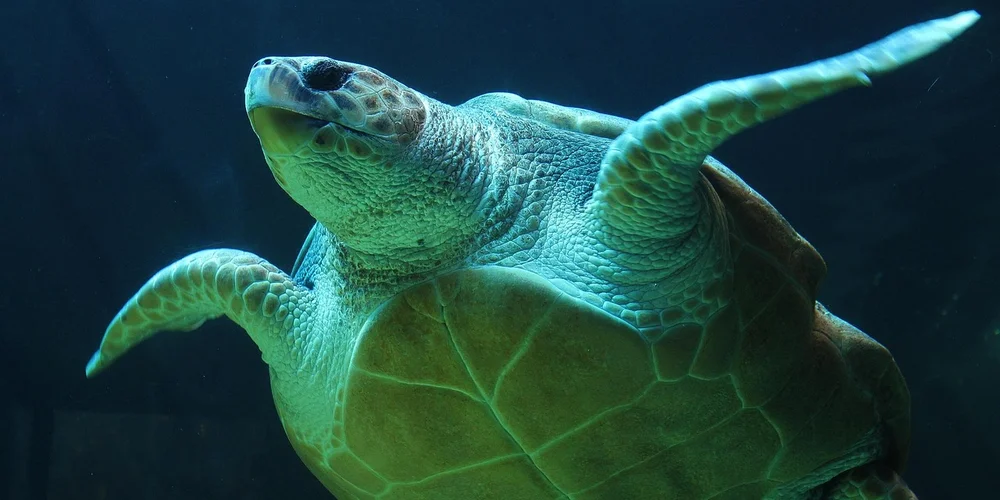
- Watch for a runny nose or bubbles coming from the nostrils, especially when the turtle is submerged. Lethargic, lopsided floating or a persistent tilt to one side are also major red flags.
- I once noticed my Greek tortoise, Bronte, was keeping her head lower than usual and seemed to be working harder to breathe. Catching this early sign of a respiratory infection allowed for a quick vet visit and a full recovery, underscoring how vital daily observation truly is.
Preventing Respiratory Illness
An ounce of prevention is worth a pound of cure, especially with reptile health.
- Stick to a strict tank maintenance routine, performing partial water changes weekly and a full habitat clean monthly to prevent the buildup of harmful bacteria and ammonia.
- Carefully control the temperature gradient, with a warm basking spot (around 90-95°F for most species) and a cooler water area. Proper humidity levels for your specific turtle species are critical, as too much moisture in a terrestrial tortoise’s enclosure can be as dangerous as poor water quality is for an aquatic turtle.
FAQs
Can turtles breathe underwater in the ocean?
No, turtles cannot breathe underwater in the ocean or any other body of water. They are air-breathing reptiles that must surface to inhale air through their lungs. Proper care for turtles involves understanding their respiratory needs.
Is there a video that shows turtles breathing underwater?
No, videos cannot show turtles breathing underwater because they do not actually breathe water like fish. Any footage of turtles submerged typically depicts them holding their breath or using cloacal respiration as a temporary aid. Understanding how turtles breathe is key to aquatic turtle safety and preventing drownings. This is why proper water depth, clean environments, and careful supervision are important when keeping or observing turtles around water.
Can turtles breathe underwater in Minecraft?
In the game Minecraft, turtles can breathe underwater indefinitely as a fictional game mechanic. In reality, pet turtles cannot breathe underwater and need access to air in their habitat to survive. For captive turtles, choosing a filter is key for water quality. People often compare canister vs internal filters to decide which best suits their turtle habitat.
The Final Dive
Remember, turtles are incredible air-breathers who have adapted to hold their breath for impressively long periods, but they still need access to clean, dry air to survive. Providing a proper basking area in their habitat is non-negotiable for their health and well-being. To create the perfect basking area for your aquatic turtle, set up a dry, accessible platform with proper lighting and heat. A well-designed basking spot helps them dry off, thermoregulate, and stay healthy.
Owning a shelled friend is a long-term commitment that requires a dedication to understanding their unique biology. Are pet turtles easy or hard to care for? The answer varies by species and your commitment to providing proper habitat and daily care. Always keep learning about your specific turtle’s needs, and you’ll be rewarded with a healthy, fascinating companion for years to come.
Further Reading & Sources
- Nature curiosity: Why and how do turtles breathe with their butts? | Forest Preserve District of Will County
- Can sea turtles breathe underwater? | Olive Ridley Project
- How Long Can Sea Turtles Hold Their Breath? – The State of the World’s Sea Turtles | SWOT
- How Do Sea Turtles Breathe? Fun Facts You Should Know about Sea Turtles. | Scuba Diving
Matthew is a dedicated turtle enthusiast and conservationist with over 15 years of experience in reptile care. Known affectionately as "The Leatherback" among his peers, he combines his passion for turtles with a commitment to educating pet owners on responsible turtle care and environmental stewardship.
Aquatic Turtles