
Common Turtle Feeding Mistakes and How to Avoid Them
Published on: January 27, 2026 | Last Updated: January 27, 2026
Written By: Matthew The
Feeding your turtle might seem straightforward, but many pet owners worry they are accidentally harming their shelled friend with simple dietary errors. I’ve cared for turtles like Austen and Bronte for years, and I’ve learned that even small mistakes can impact their health and happiness.
This guide covers overfeeding, improper food choices, lack of dietary variety, incorrect feeding schedules, and easy steps to correct them.
Understanding Overfeeding and Underfeeding Risks
Getting the portion size right is a delicate dance, one I’ve fumbled more than once. Overfeeding is a quiet, creeping danger that can shorten your turtle’s lifespan and diminish their quality of life. It’s not about love; it’s about health.
The Heavy Toll of Overfeeding
An overfed turtle faces serious health challenges. Their bodies aren’t built to process constant excess.
- Obesity: This isn’t just about a heavy shell. Fat deposits can put immense strain on their internal organs and make it difficult for them to retract into their shell for safety.
- Pyramiding: A shell deformity where the scutes rise into pyramid-like shapes, often linked to diets too rich in protein and overall calories.
- Digestive Issues: Just like us, they can suffer from constipation or other gastrointestinal distress when overfed.
- Fatty Liver Disease: A severe, often fatal condition where the liver becomes overwhelmed by fat.
The Quiet Struggle of Underfeeding
On the flip side, underfeeding starves your turtle of the energy and nutrients they need to thrive.
- Lethargy and lack of interest in their environment.
- Noticeable weight loss and a shell that feels light or hollow.
- Soft spots on the shell, indicating a critical lack of calcium.
- Weakened immune system, making them susceptible to infections.
A Lesson in Portion Control
I learned this lesson with my Russian tortoise, Austen. I was offering him a heaping pile of greens daily, thinking his enthusiasm was a good sign. He started to become less active, and his shell growth seemed off. My vet explained I was essentially giving him an all-you-can-eat buffet every day. We scaled back to a portion the size of his shell, and his energy and perfect shell shape returned.
Monitoring Your Turtle’s Body Condition
You can be your turtle’s best health monitor. Follow these steps regularly.
- Observe their shape from above. You should see a gentle curve from head to tail, not bulging sides.
- Gently feel the area where their legs meet their shell. It should be firm, not squishy with fat.
- Weigh them monthly using a small kitchen scale. Keep a log to track any gradual changes.
- Watch their behavior. A healthy turtle is alert, curious, and moves with purpose.
Selecting Safe and Nutritious Foods
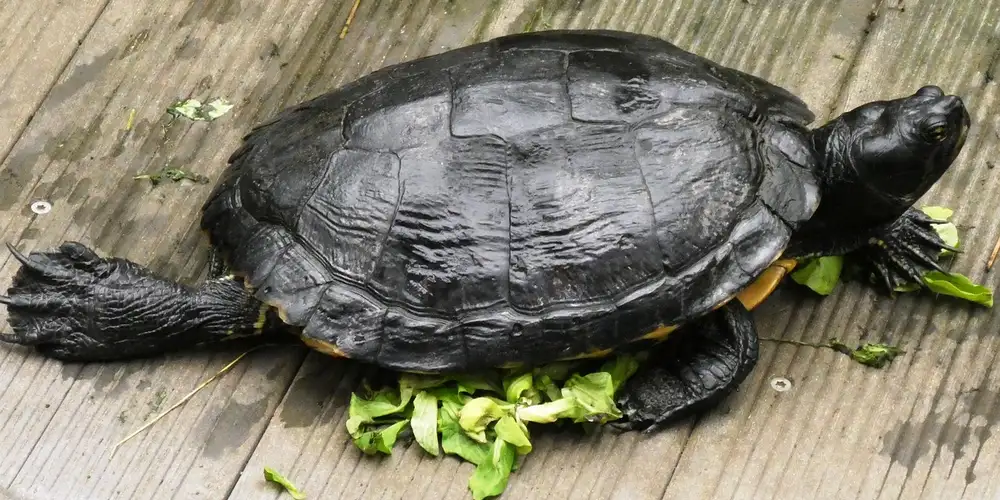
What goes into the food bowl is just as critical as how much. Many common household foods are toxic or unhealthy for turtles, and feeding them can have immediate or long-term consequences. If you offer human foods, choose turtle-safe options and keep portions small. Knowing which human foods are safe for turtles helps you feed them confidently and safely.
Foods to Keep Far From the Tank
Resist those pleading eyes. Some foods can cause serious harm.
- Human snacks: Chips, bread, and processed foods offer zero nutritional value and are packed with salt and fats.
- Dairy products: Turtles cannot digest lactose.
- Avocado and rhubarb: These are toxic to many reptiles.
- Iceberg lettuce: It’s mostly water and can cause diarrhea.
- High-fat proteins: Fatty cuts of meat or dog food can lead to kidney problems and shell deformities.
The Protein and Greens Balancing Act
This is the core of a good diet. Most adult turtles are primarily herbivores.
Too much protein puts immense strain on their kidneys and is a primary cause of pyramiding. My box turtle, Orwell, thrives on a diet that is about 80% plant-based. A lack of fibrous greens, on the other hand, can lead to constipation and vitamin deficiencies. It’s about finding the right ratio for your specific species.
Turtle-Safe Superfoods
Stick to this list for healthy, happy meals.
Excellent Vegetables and Greens:
- Collard greens, dandelion greens, and turnip greens
- Endive and escarole
- Shredded carrots and squash
- Aquatic plants like duckweed or anacharis (for aquatic turtles)
Safe Protein Sources (in moderation):
- Earthworms and nightcrawlers
- Small, gut-loaded insects like crickets or dubia roaches
- Occasional bits of cooked, unseasoned fish or chicken
Checking Your Turtle’s Food for Freshness
Stale or expired food loses nutritional value and can grow harmful bacteria.
- For pellets, check the expiration date and smell them. They should have a faint, earthy scent, not a rancid odor.
- Fresh greens should be crisp and vibrant, not wilted or slimy.
- Live food should be active. Avoid feeding dead insects to your turtle.
- Store all food in a cool, dry place to maintain its quality.
Addressing Nutritional Deficiencies
I’ve learned from caring for my Russian tortoise Austen that nutritional gaps can sneak up on you. Calcium deficiency often shows as a soft, pliable shell or lethargy, while vitamin A deficiency might cause swollen eyes or frequent respiratory infections. To fix this, I dust their food with a calcium supplement a few times a week and include vitamin A-rich veggies like grated carrots.
Getting the calcium-to-phosphorus ratio right is crucial for strong bones and shells. Aim for a 2:1 ratio of calcium to phosphorus in their diet to prevent metabolic bone disease, which I’ve avoided with my Greek tortoise Bronte by balancing leafy greens with occasional fruits. Too much phosphorus, found in many commercial pellets, can bind calcium and make it unusable.
UVB light exposure is a game-changer for shell health. Providing 10-12 hours of UVB daily helps turtles synthesize vitamin D3, which allows them to absorb calcium from their food effectively. That’s why getting the UVB setup right is critical. Use a reptile-rated UVB bulb placed at the manufacturer-recommended distance from the basking area and replace it annually to keep the output strong. I use a dedicated UVB bulb for Orwell, my box turtle, and notice his shell stays smooth and hard.
- Shell deformities like pyramiding or soft spots
- Lethargy or reluctance to move
- Swollen eyes or nasal discharge
- Poor growth or weight loss
Establishing a Consistent Feeding Routine

Setting a feeding schedule depends heavily on your turtle’s species and age. For young, growing turtles like Orwell was, I fed daily, but for adults like Bronte, every other day works better to mimic their natural foraging habits. Research your specific type to avoid over or underfeeding.
Inconsistent feeding or too many meals can lead to obesity or digestive issues. Sticking to a routine reduces stress and helps maintain a healthy weight, something I prioritize for all my turtles’ long-term welfare. Skipping meals occasionally is fine, but erratic patterns confuse their metabolism. It’s also important to monitor their weight regularly to catch any signs of imbalance early.
- Observe your turtle’s head size-food pieces should be smaller than the space between their eyes.
- Offer an amount they can finish in 5-10 minutes to prevent overeating and choking hazards.
- Adjust portions based on activity level; for example, Austen eats less in cooler weather.
Transitioning from old habits takes patience. Gradually shift feeding times or diet types over 7-10 days, mixing new foods with familiar ones to ease the change. When I switched Bronte to a new pellet, I started with a small mix and increased it slowly, watching for any refusal or discomfort.
Tailoring Diets to Species and Life Stages

A young, growing turtle has very different nutritional needs than a wise, older one. Think of a turtle’s life like building a house: hatchlings need more protein for structure, while adults need fiber for long-term maintenance.
How Age Changes Everything
Baby and juvenile turtles are building bone and shell at a rapid pace. They need a diet richer in protein to support this explosive growth. You can find more information on how to feed them the right diet in our baby turtle diet guide.
- Hatchlings & Juveniles: Aim for a diet of about 50% protein and 50% plant matter.
- Adults: Their growth has slowed dramatically. Shift to a diet of about 25% protein and 75% plant matter.
- Seniors: Continue with a high-fiber, low-protein plant-based diet to keep their digestive system running smoothly.
One Diet Does Not Fit All
My Russian Tortoise, Austen, would be very ill if he ate the same dinner as my Box Turtle, Orwell. Understanding your turtle’s natural diet is the single most important step in getting their nutrition right. You can start by learning about the dietary needs of box turtles to ensure they receive the proper nutrition.
| Turtle Type | Primary Diet | Key Considerations |
|---|---|---|
| Russian & Greek Tortoises (like Austen & Bronte) | Strictly Herbivorous | Their diet should be 100% leafy greens, grasses, and edible flowers. Never offer animal protein. |
| Box Turtles (like Orwell) | Omnivorous | They thrive on a balanced mix of protein (insects, worms) and plants (berries, mushrooms, greens). |
| Aquatic Turtles (e.g., Red-Eared Sliders) | Omnivorous (Carnivorous as Juveniles) | Young ones need more fish and insects. Adults shift to about 50/50 plant and animal matter. |
Sample Nutrition Plans
Here is what a balanced week might look for different turtles.
For an Adult Herbivorous Tortoise (Austen’s Menu)
- Monday: Dandelion greens, a sprinkle of hibiscus flowers.
- Tuesday: Endive and romaine lettuce.
- Wednesday: Collard greens and a bit of cactus pad.
- Thursday: Mix of clover and plantain weeds.
- Friday: Kale and carrot tops.
- Saturday: Escarole and a strawberry treat.
- Sunday: A fast day (mimics natural foraging).
For an Adult Omnivorous Box Turtle (Orwell’s Menu)
- Monday: A few earthworms and some chopped mushrooms.
- Tuesday: A mix of berries (blueberries, raspberries) and dark leafy greens.
- Wednesday: Small slugs or snails from the pesticide-free garden.
- Thursday: Finely chopped mixed vegetables (squash, bell pepper).
- Friday: A protein fast, only offering leafy greens.
Common Beginner Mistakes with Mixed Diets
Watching my turtles over the years, I have seen these errors happen often.
- The Protein Overload: Feeding an adult omnivore too much meat, which leads to rapid, unhealthy growth and shell pyramiding.
- The Lettuce-Only Trap: Offering iceberg or romaine lettuce as a primary green. It is mostly water with little nutritional value.
- Ignoring Species Needs: Giving a herbivorous tortoise dog food or cat food, which is far too high in protein and fat and will cause severe health issues.
- Inconsistent Ratios: Not adjusting the protein-to-plant ratio as the turtle ages, leading to lifelong deficiencies or excesses.
Correcting Past Feeding Errors

Realizing you have been feeding your turtle incorrectly can feel overwhelming, but do not worry. Turtles are resilient, and with patience, you can guide them back to a path of vibrant health. Plus, many common feeding myths can actually harm your pet. Our guide debunks eight of these myths about turtle diets.
Shifting to a Balanced Diet
You cannot change a turtle’s diet overnight. Their digestive systems are slow and need time to adapt.
- Identify the primary mistake. Is it too much protein? Not enough variety?
- Introduce one new, correct food item at a time, in very small quantities.
- Mix the new food thoroughly with their old, familiar food.
- Over 2-4 weeks, gradually increase the portion of the new, healthy food while decreasing the old, problematic food.
Reintroducing Greens and Reducing Pellets
If your turtle is hooked on commercial pellets, weaning them onto fresh greens is a test of your patience.
I had to do this with Bronte when I first adopted her. Start by crumbling a high-quality pellet over a bed of finely chopped, dark leafy greens. The smell and tiny pieces of the pellet will encourage them to accidentally taste the greens.
Each week, use fewer pellets and more greens. Soon, the vibrant colors and textures of the fresh food will become more appealing than the uniform pellet.
Monitoring for Digestive Upset
Any diet change can cause temporary digestive issues. Keep a close watch.
- Check their stool. It should be firm and well-formed. Loose or unusually smelly stool can indicate the change is happening too fast.
- Observe their energy levels. A turtle adjusting well will remain active and alert. Lethargy is a sign to slow down.
- Ensure they are staying hydrated. Soaking your turtle in warm, shallow water can aid digestion and prevent impaction.
A Personal Story of Diet Adjustment
When Orwell came to me, his previous owners fed him almost exclusively canned cat food. He was lethargic and his shell was starting to show abnormal bumps.
The transition was slow; for weeks he would turn his nose up at the earthworms and berries I offered. I did not give up. I kept presenting the healthy options, sometimes hand-feeding him a piece of mushroom to build trust.
After about a month, I saw him actively hunt a pill bug in his enclosure. That was the turning point. Today, he has a gleaming shell and the curious, intelligent personality I always knew was hiding under that poor diet. It is never too late to make a change.
FAQs
Are commercial turtle diets sufficient, or should they be supplemented with greens?
Commercial diets offer convenience but often lack the fiber and nutrients found in fresh greens. Supplementing with dark leafy vegetables like collard greens helps prevent deficiencies and supports overall health.
What are the risks of feeding wild-caught prey to pet turtles?
Wild-caught prey may carry parasites, pesticides, or diseases that can sicken your turtle. Using captive-bred or store-bought alternatives reduces these risks and ensures a safer diet. To help prevent parasites in your turtle habitat, regularly clean the enclosure and quarantine any new items before they go in. A clean, well-maintained habitat reduces parasite spread and protects your turtle’s health.
How can improper feeding contribute to obesity in turtles?
Overfeeding high-calorie foods like fatty meats or excessive pellets leads to unhealthy weight gain. This excess fat strains their organs and can cause mobility issues and shell deformities.
What is the correct calcium to phosphorus ratio for turtle diets?
A 2:1 calcium to phosphorus ratio is ideal for maintaining strong bones and shells. Imbalances can result in metabolic bone disease, leading to soft shells and other health problems.
How does age affect feeding requirements and potential mistakes?
Juvenile turtles need more protein for growth, while adults require more fiber to avoid obesity. Feeding an adult like a juvenile can lead to overfeeding and related health issues. In the hatchling and juvenile stages—the first year of a turtle’s life—protein needs are higher to support growth. Pay careful attention to their diet during this period to ensure healthy development.
Caring for Your Turtle’s Long-Term Health
Based on my years with Bronte and Orwell, I’ve found that avoiding overfeeding and offering a balanced, varied diet are the simplest ways to prevent common issues. Focus on portion control and nutritional diversity to support their shell strength and overall vitality.
Responsible turtle ownership means always staying open to learning more about their unique needs and behaviors. Ethical considerations are central to the decision to keep a turtle as a pet, including appropriate housing and humane sourcing. Staying mindful of these ethics helps ensure the animal’s welfare. Your dedication to continuous education ensures a thriving, joyful life for your shelled companion.
Further Reading & Sources
- 5 Common Turtle Care Mistakes – Turtle Rescue League
- How Much (and how often) to Feed a Turtle? – TurtleHolic
- 9 Common Mistakes Made by Turtle Parents and How To Avoid Them | PetMD
- r/turtle on Reddit: How often should I be feeding my turtle?
Matthew is a dedicated turtle enthusiast and conservationist with over 15 years of experience in reptile care. Known affectionately as "The Leatherback" among his peers, he combines his passion for turtles with a commitment to educating pet owners on responsible turtle care and environmental stewardship.
Common Turtle Foods