
Do Turtles and Sea Turtles Have Teeth?
Published on: June 4, 2026 | Last Updated: June 4, 2026
Written By: Matthew The
If you’ve ever worried about a turtle biting you with sharp teeth, let me put your mind at ease-these gentle creatures have a surprising and toothless way of handling their meals. From my years caring for tortoises like Austen and Bronte, I’ve felt their smooth, hard beaks firsthand, which are nothing like the teeth you might imagine.
In this article, you’ll learn about their unique mouth anatomy, how they eat without teeth, key differences between species, and simple ways to support turtle welfare.
The Simple Truth About Turtles and Teeth
Modern turtles and sea turtles do not have teeth. This simple fact is one of the first things I explain to new turtle owners, as it fundamentally shapes how they interact with their food.
Instead of teeth, they use a specialized keratinous beak to grasp, cut, and process their meals. This beak is a marvel of evolutionary adaptation, perfectly shaped over millions of years to suit their specific lifestyles.
Meet the Keratin Beak: A Turtle’s Versatile Tool
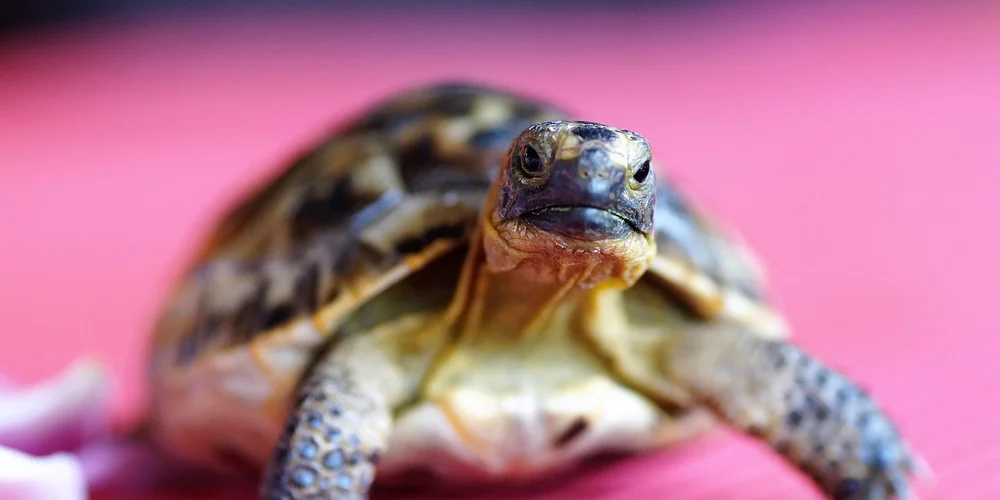
A keratin beak is a hard, smooth structure made from the same protein that forms our fingernails and a bird’s beak. If you gently run your finger along the edge of a turtle’s mouth, you’ll feel that hard, continuous surface-it’s surprisingly uniform and tough.
It feels smooth yet unyielding, much like a polished stone. Watching my Russian tortoise, Austen, methodically clip a piece of dandelion green with his beak is a lesson in quiet efficiency.
My Greek tortoise, Bronte, uses hers with such delicate precision on flower petals it’s easy to forget there’s immense power in that gentle-looking mouth.
How a Toothless Mouth Still Gets the Job Done
This beak is incredibly versatile and adapts to different diets. Strong jaw muscles provide the crushing force that teeth would in other animals, making the beak a surprisingly effective tool.
- Herbivores like the green sea turtle have serrated beak edges. They act like the teeth on a saw, perfect for scraping algae off rocks or slicing through tough seagrass.
- Carnivores like the alligator snapping turtle possess a sharp, hooked beak. It functions like a pair of shears, designed to ambush and snip prey like fish and frogs with startling speed.
- Omnivores like many box turtles, including my own Orwell, have a general-purpose beak. It can crush a worm, slice a berry, and tear a leaf with equal competence.
The absence of teeth is not a limitation. It is a brilliant evolutionary trade-off, favoring a single, durable, and constantly growing tool over a set of individual teeth that could break or wear down.
A Look at Specialized Mouths: Sea Turtles and Snapping Turtles
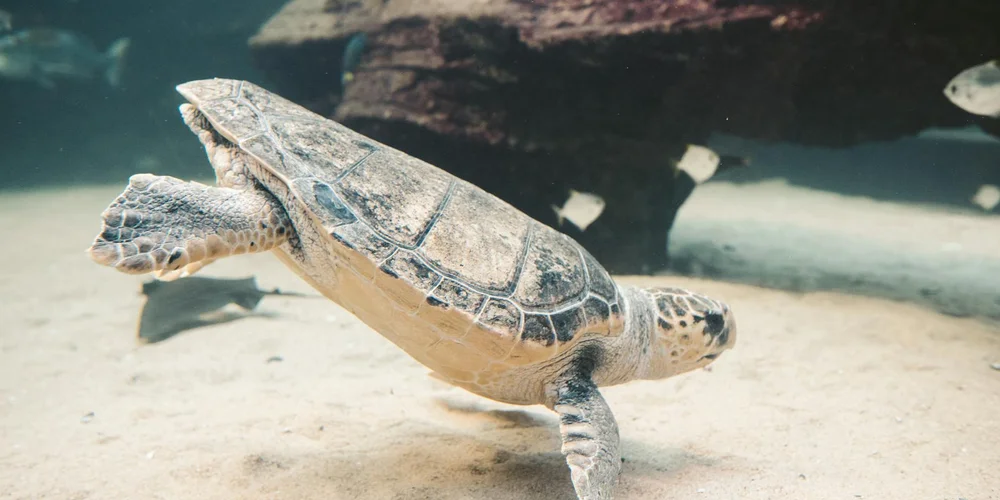
Sea turtles showcase some of the most incredible feeding adaptations in the reptile world. Each species has a beak uniquely shaped for its specific diet, making them specialists in their marine environments. Loggerhead turtles, for instance, possess massive, powerful jaws perfectly designed for crushing the hard shells of crabs, conchs, and whelks. These feeding relationships unfold within a broader context of predators that target both their prey and the turtles themselves. From hatchlings to adults, loggerheads face predators that influence when and where they feed and how they forage for food.
Hawksbill turtles have a distinctly different tool. Their narrow, pointed beaks, resembling a bird of prey’s, allow them to reach into crevices in coral reefs to extract sponges, their primary food source. This delicate but effective beak prevents damage to the coral while they forage. Beaks in turtles are made of keratin and grow throughout life, staying functional as they wear down with feeding. So yes, turtles have beaks, and they work even as they grow.
Then there’s the magnificent leatherback, the giant of the sea turtles. Leatherbacks are jellyfish specialists, and their bodies are fine-tuned for this slippery, gelatinous prey. Their jaws feature sharp, scissor-like cusps that can cleanly slice through a jellyfish, but the real marvel lies further down.
In stark contrast, the common snapping turtle is a freshwater powerhouse. Equipped with a sharp, strongly hooked beak and immense jaw strength, a snapper is a formidable predator. I’ve seen my friend’s snapper, Brutus, effortlessly snap a thick carrot in half. Their beak is a versatile tool for catching fish, amphibians, and even surprising amounts of aquatic vegetation. Do snapping turtles eat wild prey? In the wild, they feed on fish, frogs, crayfish, and other small animals.
The Curious Case of Throat “Teeth”
Let’s clear up a common point of confusion. Those spine-like structures in a leatherback’s throat are not true teeth; they are called papillae. True teeth are made of dentin and enamel and are rooted in the jawbone, while papillae are made of keratin, the same protein that makes up our fingernails and a turtle’s beak.
The function of these keratinous papillae is brilliantly practical. They act as a one-way conveyor belt, guiding slippery jellyfish toward the stomach while preventing escape. Imagine trying to swallow a giant, wobbly jelly-these spines ensure it only moves in one direction: down.
This adaptation is vital for the leatherback’s survival. Since jellyfish provide little nutritional value, leatherbacks must consume vast quantities, and the papillae make this efficient feeding possible. It’s a perfect example of evolution crafting a specialized solution for a unique dietary challenge.
Ancient Giants: When Turtles Did Have Teeth
Travel back in time millions of years, and you would find turtles that looked quite different. Fossil evidence reveals that some prehistoric turtles, like the late Triassic *Proganochelys*, possessed small, peg-like teeth on the roof of their mouth. They didn’t have the sharp, prominent teeth of a dinosaur, but the structures were undeniably there.
The evolutionary journey favored efficiency. Over millennia, natural selection favored the development of a keratinous beak over true teeth. A beak is continuously growing and self-sharpening, unlike teeth which can break, wear down, or become infected. For an animal that often eats tough, abrasive plants or crushes hard-shelled prey, a durable beak is a superior and lower-maintenance tool.
This shift was a monumental adaptation. The move from teeth to a beak was a key evolutionary step that contributed to the turtles’ remarkable longevity as a group. It simplified their dental anatomy while providing a versatile and resilient feeding apparatus perfectly suited for a wide range of diets and habitats. In turtle evolution history, this beak transition in turtle evolution is seen as a defining adaptation. It explains their broad ecological success.
Caring for Your Pet Turtle’s Beak
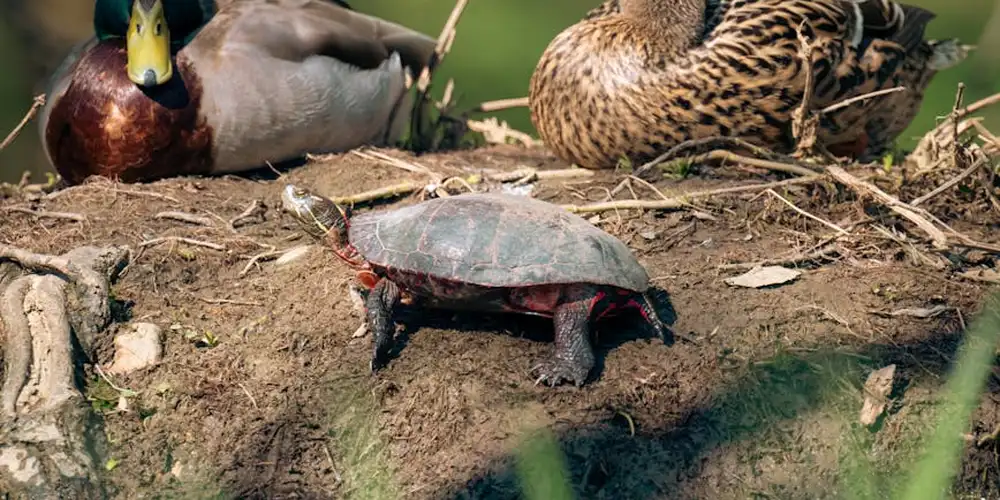
Your turtle’s beak is its primary tool for eating, and keeping it in good shape is a fundamental part of pet ownership. A healthy, properly worn beak allows your turtle to grasp and tear its food effectively, which is vital for its nutrition and overall well-being. Understanding turtle anatomy and health is crucial for proper care.
From my years with Austen and Bronte, I’ve learned that the best care is often preventative. Their beaks stay trim through their natural diet.
- Offer a variety of crunchy vegetables like romaine lettuce, zucchini, and carrots.
- Provide calcium-rich cuttlebones; they gnaw on them for minerals, which files the beak down.
- Include hard-shelled insects, like crickets, for protein and a good workout for the jaw.
- Avoid a diet of only soft, mushy foods, as this does not provide the necessary abrasive action.
Watch for signs that something is wrong. You should consult an exotic veterinarian if you notice the beak becoming visibly long, misshapen, or if your turtle is having difficulty eating. This overgrowth can lead to malnutrition and requires professional trimming. Knowing when to bring your turtle to a vet is crucial for their health and well-being.
Understanding and Preventing Bites
Turtles are not naturally aggressive, but a bite can happen. It’s usually a reaction, not an attack. They may bite out of fear if they feel threatened or cornered. More commonly, they mistake your brightly painted fingernail or a wiggling finger for a tasty worm. To reduce risk, know the typical bite pain level and practical prevention tips. Stay calm, move slowly, and let the turtle approach your hand rather than reaching for it.
Building trust is your best defense against nips. Gentle, predictable handling teaches your turtle that your hands are not a threat. Move slowly and deliberately around their enclosure.
- Always approach your turtle from the front so it can see you coming.
- Wash your hands before and after handling to remove any food smells.
- Support their entire body securely; feeling unstable makes them anxious.
- Feed them with tongs or a small dish instead of from your fingers.
I’ve felt the surprising pressure of a turtle’s beak firsthand. A bite from a smaller species like my Russian or Greek tortoises is a quick, sharp pinch-more startling than painful. It feels like a firm snap from a sturdy pair of pliers. There’s no tearing, just immediate, concentrated pressure that releases quickly. It certainly gets your attention and reminds you to be more mindful next time.
FAQs
Do turtles have teeth in their throat?
No, turtles do not have true teeth in their throat. Some species, like leatherback sea turtles, have keratinous papillae that aid in swallowing slippery prey like jellyfish.
Do turtles have teeth and gums?
Turtles lack teeth, so they do not have gums in the same way mammals do. Their beak is made of keratin and does not require gum tissue for support.
Do turtles have teeth and tail?
Turtles do not have teeth, and their tail is unrelated to feeding. The tail serves purposes like balance, mating, and species identification, but it plays no role in chewing or biting. If you’re curious about tails, here are a couple of tail facts. In many species, males have longer tails than females, and tails aid in balance and steering.
Gentle Care for Your Toothless Friends
From my time with tortoises like Austen and Bronte, I’ve seen how turtles rely on strong beaks to crush food instead of teeth. Choose soft, varied diets like leafy greens and chopped veggies to match their natural feeding habits. For a complete safe list of vegetables turtles can eat, consult a trusted care guide. Common safe options include romaine lettuce, collard greens, kale, and dandelion greens, plus squash and carrots in moderation.
Responsible pet ownership means always learning more about your turtle’s needs and behaviors. Stay curious and seek out reliable resources to ensure your shelled companion thrives in a caring home, especially when considering the ethical considerations of keeping a pet turtle.
Further Reading & Sources
- Turtles DO NOT Have Teeth! #shorts – YouTube
- Do Turtles Have Teeth? The Answer is Complicated | Delta Dental of New Jersey
- 37 Turtle Facts for Kids – Do Turtles Have Teeth and More – Little Passports
- Sea Turtles Don’t Have Teeth – So How Do They Eat? – Sea Turtle Camp
Matthew is a dedicated turtle enthusiast and conservationist with over 15 years of experience in reptile care. Known affectionately as "The Leatherback" among his peers, he combines his passion for turtles with a commitment to educating pet owners on responsible turtle care and environmental stewardship.
Turtle Myths and Misconceptions