
Safe Turtle Handling for Children: A Complete Guide
Published on: June 16, 2026 | Last Updated: June 16, 2026
Written By: Matthew The
Watching your child’s eyes light up at the sight of a turtle is pure magic, but it’s often quickly followed by a wave of parental worry about safety for both your child and the animal.
From my years of living with my own shelled companions-Austen, Bronte, and Orwell-I’ve learned that a joyful and safe interaction is entirely possible with the right knowledge.
This guide will walk you through proper holding techniques, essential hygiene practices, and how to read a turtle’s body language.
Understanding Turtle Behavior and Potential Risks
Observing your turtle’s daily habits is the first step to safe interaction. Learning to read their body language helps you recognize when they feel comfortable and when they need space. Color changes in their skin or shell can signal mood or stress, so noticing coloration is a key part of understanding turtle body language. By combining posture cues with color changes, you gain a fuller picture of when your turtle is comfortable or needs space. You’ll notice they spend hours basking under their heat lamp to regulate their body temperature.
When a turtle hides in its shell or retreats to a dark corner, it’s signaling it feels threatened or stressed. This is their primary defense mechanism, and it’s a clear sign they want to be left alone. During feeding time, you might see increased activity, but this isn’t an invitation for handling. If your turtle is hiding all the time, use a quick stress and sickness checklist to track changes in behavior. This helps you know when to seek veterinary advice.
Even the gentlest turtle can bite if frightened or mishandled. The key to minimizing bite risks is replacing eager handling with patient observation. My Russian tortoise, Austen, has never attempted to bite, but he always pulls his head in if approached too quickly.
Each turtle possesses a distinct personality that guides your interaction style. My Greek tortoise, Bronte, enjoys watching family activities from her enclosure but becomes visibly stressed when lifted. Orwell, my box turtle, will sometimes approach the glass when we talk softly, showing curiosity without direct contact.
Step-by-Step Guide to Gentle Turtle Handling
-
Active adult supervision is non-negotiable during all turtle interactions with children. This prevents accidental drops and helps children interpret the turtle’s signals correctly.
-
Teach children to approach turtles slowly from the front where the turtle can see them. Sudden movements from above mimic predator behavior and trigger defensive reactions.
-
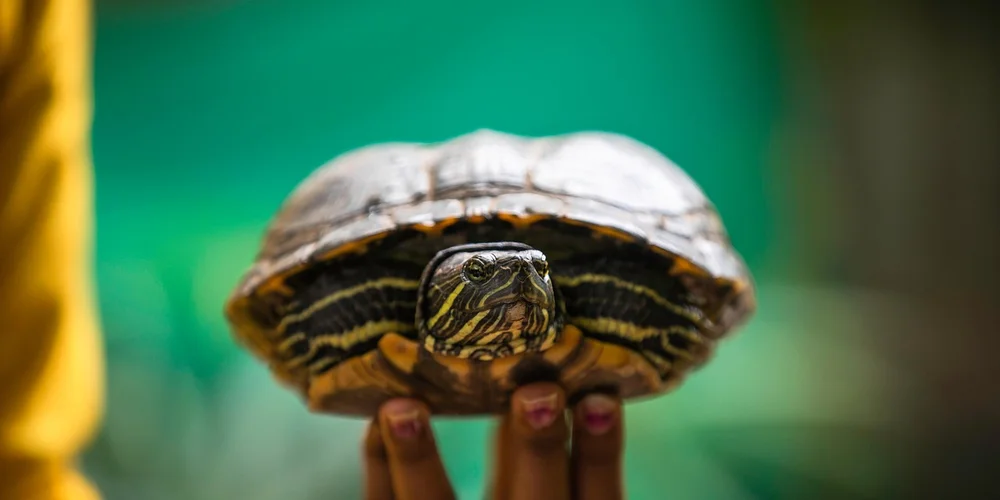
Demonstrate how to support the entire shell with both hands, keeping the turtle level and secure. Never let a turtle dangle its legs, as this causes distress and potential injury.
-
Keep handling sessions brief-under five minutes-to prevent excessive stress. Watch for signs like frantic scrambling or shell retraction as cues to end the session immediately.
-
Choose a quiet, enclosed space like a carpeted floor for handling sessions. This minimizes escape risks and creates a calmer environment for both child and turtle.
Remember that some turtles simply prefer observation over handling. Respecting your turtle’s individual personality creates a more positive experience for everyone involved. My tortoises have taught me that sometimes the deepest connections come from quiet companionship rather than physical interaction.
Hygiene Practices to Prevent Salmonella and Other Illnesses
Reptiles, including our beloved turtles, can naturally carry Salmonella bacteria without showing any signs of illness. This makes impeccable hygiene the absolute cornerstone of safe interaction, especially for children whose immune systems are still developing. Safe turtle handling practices, such as washing hands thoroughly after contact and avoiding eating or drinking near the animals, help minimize Salmonella risk. Supervise children during interactions to reinforce these habits.
- Detail handwashing steps with soap and water after any turtle contact.
- Wet hands with clean, running water.
- Apply soap and lather thoroughly for at least 20 seconds. Sing the “Happy Birthday” song twice to time it perfectly for kids.
- Scrub the backs of your hands, between your fingers, and under your nails.
- Rinse completely under running water.
- Dry hands using a clean towel or air dry them.
- List hygiene gear like dedicated towels or gloves for added safety.
- Designate a specific, colorful towel just for post-turtle handling.
- Keep a pair of inexpensive disposable gloves for tank cleaning sessions.
- Have a separate sponge or brush used only for cleaning turtle habitats and supplies.
- Advise on keeping turtles away from food areas to avoid cross-contamination.
Your turtle should never have a tour of the kitchen counter or dining table. I established a firm rule in my home: turtle playtime happens in a designated zone far from where we prepare or eat food. This simple boundary drastically reduces any risk of cross-contamination.
- Share personal routines for maintaining cleanliness with my own turtles.
After handling Austen or Bronte, we make a little ceremony of walking directly to the sink. My routine includes washing my hands and then wiping down the surfaces where the tortoise was exploring with a pet-safe disinfectant. It becomes a seamless part of the interaction, not a chore.
Setting Up a Hand-Washing Station
Convenience is key to building consistent habits for children and adults alike.
- Suggest easy-to-access sinks or sanitizer stations near the turtle habitat.
If your turtle’s enclosure isn’t near a bathroom, set up a small table with a bottle of alcohol-based hand sanitizer containing at least 60% alcohol as a temporary measure. The goal is to make cleaning up the very next step after any contact. Additionally, to keep the habitat safe, extend this habit to the enclosure itself: clean and disinfect the turtle or tortoise habitat safely after any handling. Use turtle-safe cleaners, follow label directions, and rinse surfaces thoroughly before returning your pet.
- Include child-friendly reminders or charts to encourage consistent habits.
I created a simple, laminated poster with picture-based handwashing steps right above the sink we use. A fun, visual reminder works wonders for making hygiene an automatic and non-negotiable part of pet care.
Choosing Kid-Friendly Turtle Species

Not all turtles are created equal when it comes to cohabiting with a bustling family. Selecting a species with a naturally placid disposition is your first and most important step toward ensuring years of safe, joyful interactions. Beyond temperament, key factors to consider when choosing turtle species include size, enclosure needs, diet, and lifespan. Being aware of these helps you pick a species that will fit your home and lifestyle.
- Compare species like Russian or Greek tortoises for their calm temperaments.
From my experience, tortoises like my Russian (Austen) and Greek (Bronte) are fantastic candidates. Russian Tortoises are often steady and tolerant, while Greek Tortoises tend to be a bit more thoughtful and graceful in their movements, both traits that suit a child’s sometimes-awkward handling.
- Highlight factors like size, activity level, and care requirements for family suitability.
- Size: A medium-sized tortoise is less fragile than a tiny hatchling and less intimidating or potentially dangerous than a very large one.
- Activity Level: Look for species that are not overly skittish or fast-moving, which can be easily dropped.
- Care Requirements: Choose a species whose habitat and dietary needs your family can consistently meet. Complexity can lead to stress for both the pet and the owners.
- Use examples from your turtles to show how species traits affect handling safety.
My box turtle, Orwell, is wonderful but more reserved. His instinct to retreat into his shell quickly means I supervise child interactions with him much more closely than with my always-out-and-about tortoises. Knowing your specific turtle’s personality, bred from its species’ general traits, is everything.
Creating a Safe Turtle Habitat for Family Interaction

A secure habitat is the foundation for any safe interaction between your child and a pet turtle. It sets clear boundaries and keeps everyone protected. Ensuring that your turtle’s living space meets the space and habitat requirements is an essential part of this.
- Always use an enclosure with a secure, locking lid. Turtles are surprisingly strong and persistent climbers; a simple screen won’t always contain them.
- Check all edges and decor for sharp points or rough surfaces. I learned this after my Greek tortoise, Bronte, snagged her shell on a piece of driftwood. Smooth, rounded edges prevent painful scratches for both the turtle and curious little fingers.
Water quality and a proper basking spot are non-negotiable for turtle health. They also let kids observe natural behaviors without needing to hold the animal. To that end, create a perfect basking area for your aquatic turtle—warm, dry, and accessible. Such a setup supports health and makes daily care easier.
- Maintain clean, filtered water to prevent the spread of salmonella, a bacteria turtles can carry. A good filter keeps the water clear for watching your turtle swim.
- Provide a spacious, easy-to-access basking area under a heat lamp. This allows children to see the turtle resting and warming up, which is a fascinating lesson in reptile biology.
The habitat’s placement and layout can significantly influence your turtle’s stress levels.
- Position the enclosure in a quiet part of your home, away from loud TVs and high-traffic runways. My box turtle, Orwell, always retreats into his shell if things get too noisy.
- Include plenty of hides and visual barriers, like half-logs or plant clumps. These safe spaces give your turtle a place to retreat if it feels overwhelmed, which is vital for its welfare.
Optimal Tank Setup for Safe Handling
The right tank setup minimizes risks during necessary care tasks, making the experience calmer for everyone involved.
- For most common aquatic turtles, a 40-gallon tank is a good starting minimum. Larger species need 75 gallons or more. A spacious tank reduces territorial behavior and makes the turtle feel less cornered during maintenance.
- Design the layout with specific interaction points. I created a “feeding corner” in my tank using a large, flat terracotta saucer, which keeps hands away from the turtle’s mouth during mealtimes.
The materials you choose inside the tank are just as important as the tank itself.
- Use large, smooth river rocks for substrate that are too big for the turtle to accidentally eat. Avoid small, sharp gravel entirely.
- Select decorations and hides with smooth, solid surfaces. Rough, resin hides can sometimes have tiny, sharp seams. Opting for ceramic or smooth plastic hides drastically reduces the risk of accidental scratches during cleaning.
Teaching Age-Appropriate Turtle Care Tasks
- For toddlers and younger children, assign simple, supervised jobs. They can help drop a few pre-portioned leafy greens or pellets into the tank. The key is supervision. This teaches responsibility while keeping the child at a safe distance from the turtle itself. They can also be fantastic “turtle watchers,” quietly observing and reporting on what the turtle is doing.
- As children grow older, around 7-10, you can introduce more complex tasks. They can assist with partial water changes or scrubbing algae off tank walls (with the turtle temporarily in a separate holding container). This is the perfect time to hammer home hygiene. Washing hands thoroughly with soap and water for 20 seconds before and after any tank interaction must become an unbreakable rule.
- Make learning fun with educational tools. Create a colorful “Turtle Care Chart” with stickers for completed tasks. Play a game of “Turtle Vet” where they help you do a visual health check from outside the tank-are the eyes bright? Is the shell smooth? This turns care into an engaging activity, not a chore.
First Aid and Veterinary Care Basics

In my years caring for turtles like Austen and Bronte, I’ve found that prompt first aid can prevent minor issues from becoming serious. Always keep a reptile first aid kit handy with items like mild soap, sterile gauze, and reptile-safe antiseptic.
-
Common injuries such as bites or shell scratches need immediate attention. Follow these steps:
- Wash your hands thoroughly with soap and water.
- Gently clean the injury with warm water and a mild, unscented soap.
- Pat the area dry with a clean cloth and apply a reptile-specific antiseptic.
- Place the turtle in a clean, quiet habitat to reduce stress and monitor for changes.
-
Watch for signs that mean a vet visit is necessary. These include:
- Lethargy or lack of movement for extended periods
- Loss of appetite lasting more than a few days
- Swelling, discharge, or unusual behavior like hiding constantly
- Changes in shell texture or color that suggest infection
- Finding a reptile-savvy veterinarian makes a huge difference. Start by searching online for local vets with reptile expertise and read reviews from other turtle owners. Call ahead to ask about their experience with species like Russian or Greek tortoises. Prepare for exams by bringing notes on your turtle’s diet, behavior, and any symptoms you’ve noticed.
Handling Minor Bites and Scratches
When Orwell once nicked his shell on a rough surface, I learned that gentle cleaning is key to healing. Minor wounds usually heal well with proper care, but always prioritize your turtle’s comfort. If the shell cracks or sustains injuries, seek veterinary care. Shell injuries can heal with proper treatment and time.
-
Clear steps for cleaning wounds and knowing when to seek help:
- Calmly restrain the turtle to avoid further stress-use a soft towel if needed.
- Rinse the bite or scratch under lukewarm running water for a minute.
- Apply a vet-recommended antiseptic and cover with a non-stick bandage if necessary.
- Seek medical help if the wound shows redness, pus, or if the turtle seems in pain after a day.
- Reminders about zoonotic disease risks and prevention: Turtles can carry bacteria like salmonella, so wash hands with soap after every handling session. Teach children to avoid touching their face or mouth until hands are clean to reduce infection risks. Keep habitats sanitized and avoid handling turtles if you have open cuts on your hands.
FAQs
Are there any state-specific laws in California regarding turtle handling for children?
California prohibits the sale of small turtles under 4 inches to reduce salmonella risks. Always check local regulations and ensure proper supervision and hygiene during any interactions.
Where can I find a reliable PDF guide on safe turtle handling practices?
Many veterinary websites and reptile care organizations offer free, downloadable PDFs with detailed handling instructions. Look for resources from accredited sources to ensure accurate and safe information.
What is the ideal frequency for handling a turtle to minimize stress?
Limit handling to a few times per week for short durations to avoid overwhelming the turtle. Always watch for signs of distress, like hiding or frantic movements, and adjust accordingly. You can learn more about identifying stress in turtles and how to help them at Shell Sanctuary.
How can I safely transport a turtle in a vehicle with children present?
Use a secure, well-ventilated carrier placed on a flat surface to prevent tipping or escape. Keep the car environment calm and avoid loud noises to reduce stress for both the turtle and children.
Are there any special considerations for handling turtles in households with immunocompromised individuals?
Strict hygiene, such as using gloves and dedicated handling gear, is crucial to prevent disease transmission. Consult a veterinarian for personalized advice and consider limiting direct contact to observation only.
Your Family’s Turtle Journey Begins
Always supervise your children closely and teach them to handle turtles with calm, gentle movements. Proper handling keeps both your child and your shelled friend safe and stress-free. For first-time turtle handlers, avoiding the five critical mistakes is essential. Keeping these in mind can help ensure safe, stress-free handling.
Remember that caring for a pet turtle is a long-term commitment to their health and happiness. Keep exploring and learning about their specific needs, because a well-cared-for turtle is a joyful addition to any family.
Further Reading & Sources
- The Dos and Don’ts of Turtle Care – PetHelpful
- Turtle Care and Sick Turtle Help – Babies, Children, and Turtles
- Turtles and small children | Tortoise Forum
- Turtle Handling and Interaction
Matthew is a dedicated turtle enthusiast and conservationist with over 15 years of experience in reptile care. Known affectionately as "The Leatherback" among his peers, he combines his passion for turtles with a commitment to educating pet owners on responsible turtle care and environmental stewardship.
Safe Handling Techniques