
They Stay Small in a Small Tank and 9 Other Dangerous Growth Myths
Published on: March 27, 2026 | Last Updated: March 27, 2026
Written By: Matthew The
Have you ever heard that confining a pet to a tiny tank will keep it small and manageable? This belief is not only false but can lead to suffering, stunted development, and shortened lifespans for creatures relying on your care.
In this article, we explore myths including: ‘They stay small in a small tank’, ‘Overfeeding accelerates healthy growth’, ‘All species grow at the same rate’, ‘Lack of UV light has no impact’, ‘Handling frequency doesn’t affect growth’, ‘Growth spurts are always normal’, ‘Supplements are unnecessary’, ‘Color changes indicate good health’, ‘Age doesn’t influence diet needs’, and ‘Solitary living promotes better growth’.
The Truth About Turtle Growth Stunting
What Actually Happens in Small Tanks
Many people believe a small tank physically prevents a turtle from getting bigger, like a goldfish in a bowl. That’s not quite accurate. The turtle’s body continues to try to grow, but the confined, stressful environment disrupts its normal metabolic processes. It’s a physiological response to poor living conditions, not a simple physical barrier.
I’ve seen this with my own Greek tortoise, Bronte. When I first got her, her previous home was far too cramped. She wasn’t “small for her tank”; she was lethargic and showed little interest in food. Her body was conserving energy just to cope with the stress, not investing it in healthy growth.
Why Growth Stunting Isn’t Healthy
Calling it “stunting” makes it sound almost intentional or neat, but it’s a sign of a deeply unwell animal. This isn’t a harmless size control method; it’s a form of chronic suffering that leads to systemic health failures. The shell and skeleton may become soft and deformed, a condition known as Metabolic Bone Disease.
More dangerously, the internal organs don’t get the memo to stop growing. Imagine a turtle’s body as a studio apartment where the furniture (the organs) keeps arriving, but the walls (the shell) aren’t expanding. This creates immense internal pressure and can lead to organ failure. My box turtle, Orwell, was rescued from such a situation, and his recovery was a long road of careful nutrition and spacious habitats.
Common Tank Size Misconceptions
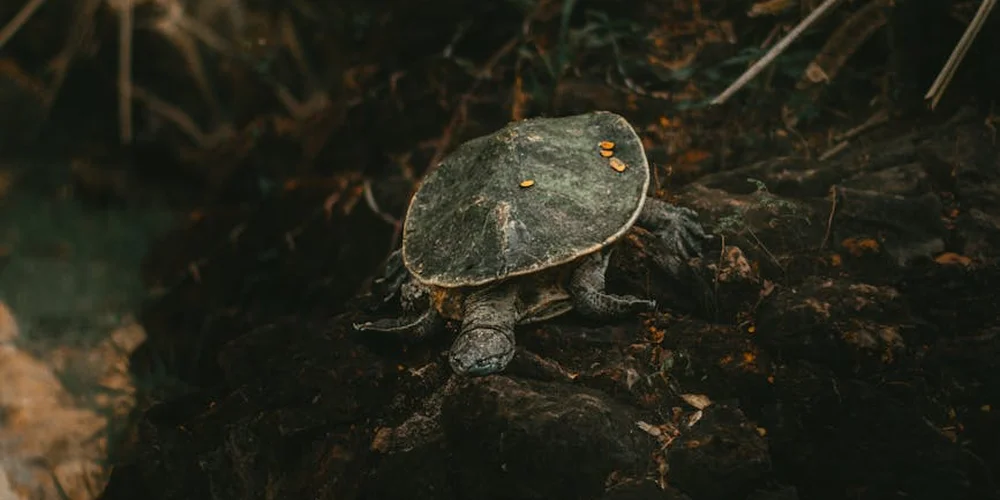
Myth: Small Tanks Are Easier for Beginners
This myth is pervasive and understandable, but it’s backward. A smaller volume of water becomes polluted with waste much faster, leading to ammonia spikes that can quickly harm or kill your turtle. A larger tank acts as a giant buffer, diluting toxins and providing a much more stable, forgiving environment for a new keeper. This is especially important when you’re unsure of the exact amount of water to use for your setup.
When I started with my Russian tortoise, Austen, I made the mistake of thinking a smaller enclosure would be simpler to manage. I quickly learned that maintenance in a small, filthy tank is far more difficult and frequent than in a large, well-filtered one. The initial setup for a proper-sized habitat requires more effort, but the long-term daily care is significantly easier.
Myth: Young Turtles Don’t Need Big Spaces
It’s tempting to buy a small tank for a hatchling, planning to upgrade “when it gets bigger.” This is a critical error. A turtle’s first year of life is its most rapid growth period, setting the foundation for its entire adult health. Denying it space during this phase is like denying a child proper nutrition during a growth spurt.
The consequences are lifelong. Providing a full-sized enclosure from day one allows for proper muscle development, encourages natural exploratory behaviors, and reduces stress. A good rule I follow is a minimum of 10 gallons of water per inch of shell length, and I always plan for the turtle’s adult size, not its current baby size.
Water Quality and Filtration Facts
The Python Water Changer Advantage
I’ve found that using a Python water changer transforms routine maintenance from a chore into a simple, efficient task. This tool hooks up to your sink, allowing you to drain and refill the tank without heavy lifting or stressing your turtle. Regular water changes with a Python system prevent toxin buildup, which is vital for healthy growth and debunking the myth that small tanks control size. In my years caring for aquatic turtles, this device has cut my cleaning time in half, ensuring I never skip a water change. It mimics natural water flow, reducing shock to your pet and promoting active, normal development.
Beyond ease, the Python minimizes mess and disruption. You can target waste in substrate without full tank breakdowns. Consistent use supports stable environments, directly countering stunted growth claims by maintaining optimal conditions. I recall how my red-eared slider thrived once I adopted this method-his shell hardened beautifully, and he grew to his full, expected size. Always pair it with a good filter for best results.
Maintaining Stable Water Parameters
Keeping water parameters steady is non-negotiable for turtle health. Fluctuations in pH, ammonia, or temperature can cause stress, illness, or even death—not the mythical “stunting” some believe in. Test water weekly with a reliable kit, aiming for ammonia at 0 ppm, nitrites at 0 ppm, and nitrates below 20 ppm. These are the essential water quality parameters that indicate a healthy turtle tank. Keeping them in the recommended ranges is how you maintain a healthy environment for your turtles. I use liquid test strips for accuracy, and over time, I’ve learned that small, frequent adjustments beat drastic changes. For instance, a sudden pH shift can weaken a turtle’s immune system, making them susceptible to infections.
Implement a routine to check and adjust parameters. Start with these steps:
- Perform 25-50% water changes weekly using your Python system.
- Monitor temperature with an aquarium thermometer, keeping it species-specific-often 75-85°F for most aquatic turtles.
- Use a biological filter to break down waste naturally, and clean it monthly in tank water to preserve beneficial bacteria.
Stable parameters encourage natural behaviors and growth, proving that cramped spaces don’t limit size-poor water quality does. In my experience, consistent care led my painted turtle to reach a robust 6 inches, far from the stunted size myths suggest.
Species-Specific Growth Expectations
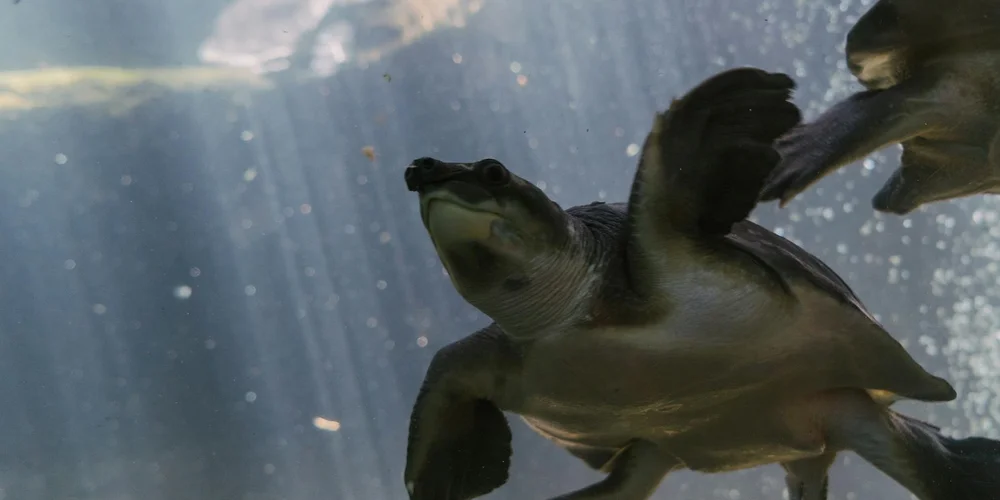
Popular Aquatic Turtle Sizes
Aquatic turtles have innate size ranges that no tank can alter without harm. Believing they’ll stay small in a confined space is dangerous and untrue. Red-eared sliders typically grow to 8-12 inches as adults, requiring large enclosures to swim and bask properly. In other words, they get big. If you’re considering one, plan for a sizeable, well-equipped enclosure. I’ve seen many cases where inadequate tanks led to shell deformities or lethargy, not controlled growth. Here’s a quick guide to common species:
- Painted Turtle: 4-10 inches, depending on subspecies
- Musk Turtle: 3-5 inches, but still needs space for activity
- Map Turtle: 4-10 inches, with males smaller than females
Providing a tank that’s 10 gallons per inch of shell length is a good rule of thumb for healthy development. So, does a turtle need a specific tank size? The rule provides a baseline, but bigger is generally better for growth and health. My own map turtle expanded to a full 7 inches in a spacious setup, debunking any notion that limited space equals limited size.
Land Turtle and Tortoise Growth Patterns
Land turtles and tortoises follow gradual growth curves influenced by diet, habitat, and genetics-not tank size. My Russian tortoise, Austen, has grown steadily over 10 years to about 8 inches, thriving in a large outdoor pen that allows natural foraging. Confining them to small enclosures can cause stress, obesity, or metabolic bone disease, not the mythical “stunting.” For instance, Greek tortoises like my Bronte reach 6-8 inches over a decade or more, needing room to roam for muscle and shell health. It’s important to provide them with adequate space.
Box turtles, such as my Orwell, show varied growth based on environment. Orwell’s dark brown shell with yellow patterns has filled out beautifully in a humid, spacious habitat, emphasizing that proper space supports natural, healthy enlargement. Advocate for enclosures that mimic their wild territories-this isn’t just about size; it’s about welfare. I’ve learned that even “small” species deserve room to express innate behaviors, preventing the suffering behind growth myths.
Proper Nutrition for Healthy Development

Beyond Commercial Turtle Pellets
Many new keepers believe a diet of only commercial pellets is sufficient. This is one of the most pervasive and harmful myths in turtle care. In my years with Austen, Bronte, and Orwell, I’ve learned that variety isn’t just nice; it’s a biological necessity for proper shell and bone development.
Think of pellets as a daily multivitamin, not the main course. Your turtle’s plate should be a colorful mosaic. I rotate through these fresh options for my shelled family:
- Dark, leafy greens like dandelion greens and endive
- Finely chopped carrots and squash for vitamin A
- Occasional edible flowers like hibiscus
- For my aquatic turtles, live or frozen bloodworms as a protein treat
A monotonous diet leads directly to a monotonous, and often shortened, life.
Signs of Nutritional Deficiencies
Your turtle’s body will communicate its dietary needs long before a serious illness sets in. Learning this silent language is your most powerful tool as a caretaker. I first noticed a problem with Bronte when her shell lost its luster. It made me wonder: How can I tell if my turtle is sick?
Watch for these subtle and not-so-subtle cues that something is missing from their meals:
- A soft or spongy shell indicates a severe lack of calcium
- Swollen eyelids can signal a Vitamin A deficiency
- Lethargy and a lack of appetite are general signs of poor nutrition
- Pyramiding, where the scutes on the shell rise into pyramid-like shapes
Correcting these issues often involves simple dietary tweaks, like adding a cuttlebone for chewing or dusting food with a reptile-specific calcium powder.
Setting Up the Right Habitat
Aquatic Turtle Tank Essentials
The “small tank” myth is particularly cruel for aquatic turtles who need room to swim, dive, and explore. An aquatic turtle’s tank is its entire world, and that world needs to be vast and varied. Choosing the right tank size and shape is essential to provide them with the space they need. A cramped space doesn’t just stunt growth; it crushes their natural instincts.
For a healthy, active aquatic turtle, your setup must include these non-negotiable elements:
- A tank that provides 10 gallons of water per inch of shell length
- A powerful canister filter rated for twice the tank’s volume
- A basking platform completely out of the water, warmed by a heat lamp
- A separate UVB lamp positioned over the basking area for shell health
- A submersible water heater to maintain a stable, warm temperature
This isn’t an extravagant setup; it’s the bare minimum for a life of dignity.
Land Turtle Enclosure Requirements
While my Russian and Greek tortoises don’t need a swimming pool, their need for space is just as profound. A land turtle’s enclosure should mimic the freedom of a meadow, not the confines of a box. Watching Austen patrol his territory is a lesson in the importance of room to roam.
A proper tortoise table or outdoor pen is built on a foundation of choice and enrichment. Here is what my enclosures always include:
- Enough floor space for the tortoise to walk several body lengths in any direction
- A shallow water dish for soaking and drinking
- A humid hide box filled with slightly damp sphagnum moss
- A basking spot under a heat lamp and a cooler area for self-regulation
- Substrate deep enough for burrowing, like a coconut coir and topsoil mix
This complex environment allows for natural behaviors, which is the very essence of healthy growth.
Recognizing Healthy Growth Patterns
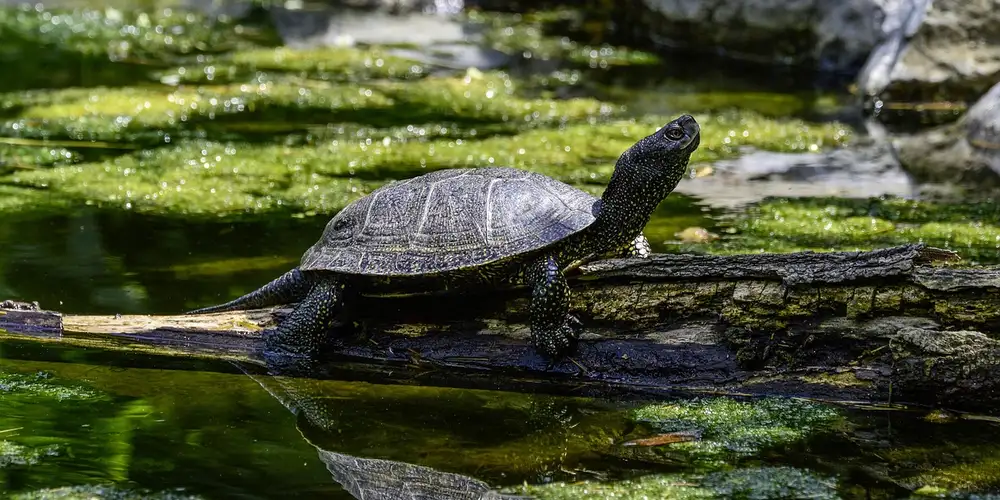
Watching a turtle grow is a slow, beautiful process, much like a tree adding rings. Healthy growth is steady and proportional, not a race to a finish line. My Russian tortoise, Austen, has taught me that a smooth, even shell expansion over months is the true sign of well-being.
Monthly Growth Tracking
I keep a simple journal for my shelled friends. You don’t need fancy tools, just a soft measuring tape and a small kitchen scale. Consistency is far more telling than any single measurement. I do this on the first of every month, right after their morning soak.
- Weight: Place your turtle in a small, empty container on the scale. Aim for a gradual increase of just 1-4 grams per month for many common species.
- Shell Length: Gently measure the straight-line length of the carapace (top shell) from neck to tail. A few millimeters of growth is a big deal!
- Visual Check: Look for a smooth, hard shell without soft spots or discoloration. New growth should appear as lighter-colored bands between the scutes.
I track Bronte’s weight and length in a simple table. Seeing the numbers laid out helps me spot trends, not just momentary changes.
| Month | Weight (grams) | Carapace Length (cm) |
|---|---|---|
| January | 248 | 10.2 |
| February | 251 | 10.3 |
| March | 255 | 10.3 |
When Growth Signals Trouble
Growth that is too fast or too slow often points directly to a problem in their care. Your turtle’s shell is a living health record, telling a story of its diet and environment. I learned this the hard way with my box turtle, Orwell, who developed slight pyramiding before I corrected his humidity.
Watch for these specific red flags.
- Pyramiding: The scutes on the shell rise into pyramid-like lumps. This is often linked to a diet too high in protein and low in fiber, or incorrect humidity levels.
- Soft Shell: A shell that feels flexible or soft, especially in a juvenile, almost always indicates a severe calcium or UVB light deficiency.
- Explosive Growth: A sudden, rapid increase in size usually means overfeeding. This puts immense stress on their internal organs and skeletal structure.
- Arrested Growth: No growth for several months in a young turtle can signal malnutrition, incorrect temperatures, or illness.
If you see any of these signs, the first step is a quiet review of their habitat and diet, not panic. Small, informed adjustments can make a world of difference for their long-term health.
FAQs
What is a Python water changer and how is it used in turtle care?
A Python water changer is a hose-based system that connects to a sink faucet for easy draining and refilling of aquarium water. It simplifies maintenance for turtle tanks by eliminating the need for heavy buckets and reducing stress during water changes.
Why is the Python water changer recommended for maintaining turtle tanks?
It enables frequent, partial water changes that help control toxin buildup, supporting healthy turtle growth and debunking myths about small tanks limiting size. Consistent use promotes stable water parameters, which are crucial for preventing stunted development and illness.
What are the basic steps to use a Python water changer safely?
Attach the Python to your faucet and place the gravel tube in the tank to start siphoning out water and waste. After draining, switch the valve to refill the tank with treated, temperature-matched water to avoid shocking your turtle. This is part of a clean turtle tank, properly step-by-step guide to ensure safe and thorough maintenance. Regular, careful cleaning helps prevent health issues for your turtle.
Where can I purchase a Python water changer for my turtle setup?
Python water changers are sold at major pet supply stores and online retailers like Amazon or Chewy. Always check for compatibility with your tank size and faucet type to ensure proper function.
How do I replace worn parts on a Python water changer?
Replacement parts, such as hoses or connectors, are available through the manufacturer or aquarium specialty shops. Regularly inspect your Python for leaks or damage to maintain efficient water change routines.
Caring for Your Shelled Companion
After a decade with my Russian tortoise Austen, I know that proper habitat and diet drive healthy growth, not harmful myths like small tanks limiting size. Focus on spacious enclosures and species-specific nutrition to support their natural development and prevent stunted growth or shell deformities.
Your role as a turtle guardian means committing to ongoing education and adapting care based on reliable sources and observed behaviors. Stay engaged with expert advice and animal welfare guidelines to ensure your pet thrives in a nurturing home for years to come.
Further Reading & Sources
- 15 Aquarium Myths Busted – DustinsFishtanks
- Do fish grow to the size of their tank? – INJAF
- Aquarium Myths and Misinformation | Reef2Reef
- Will my fish only grow to the size of the tank?
Matthew is a dedicated turtle enthusiast and conservationist with over 15 years of experience in reptile care. Known affectionately as "The Leatherback" among his peers, he combines his passion for turtles with a commitment to educating pet owners on responsible turtle care and environmental stewardship.
Turtle Myths and Misconceptions