
What Size Enclosure Does Your Turtle or Tortoise Need?
Published on: December 29, 2025 | Last Updated: December 29, 2025
Written By: Matthew The
Are you worried your turtle or tortoise’s home might be too small? This common concern weighs on many owners, as cramped spaces can lead to stress and health issues for your shelled friend.
We will cover species-specific sizes, essential setup tips, and common mistakes to avoid.
Understanding Turtle and Tortoise Space Needs
Turtles and tortoises have distinct natural behaviors that shape their space needs. Turtles, like many aquatic species, spend much of their time swimming and basking, requiring enclosures with ample water depth and dry areas. Tortoises, such as my Russian tortoise Austen, are land-dwellers who roam and dig, so they thrive in spacious, terrestrial setups with room to explore.
Activity levels vary widely between species. For instance, my Greek tortoise Bronte moves gracefully but steadily, needing a larger footprint to prevent stress from cramped conditions. A comparison table below highlights key differences to help you visualize their requirements.
| Species Type | Adult Size | Activity Level | Typical Enclosure Footprint |
|---|---|---|---|
| Aquatic Turtles | 4-12 inches | High (swimming, basking) | At least 10 gallons per inch of shell |
| Tortoises (e.g., Russian) | 6-10 inches | Moderate (roaming, digging) | Minimum 4ft x 2ft for adults |
| Box Turtles | 4-7 inches | Low to moderate (exploring, hiding) | At least 3ft x 2ft for ample ground cover |
From caring for Austen, I learned that Russian tortoises benefit from enclosures that mimic their natural arid habitats, with loose substrate for burrowing. Providing enough space reduces boredom and promotes healthy behaviors like foraging and exercise.
Key Factors Influencing Enclosure Size
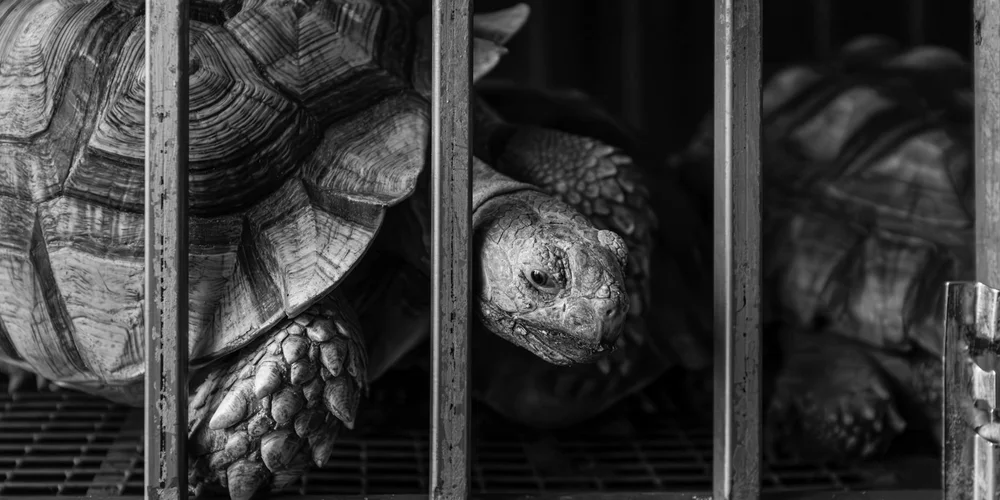
Several factors determine the right enclosure size for your pet. Species is the biggest factor because it dictates whether you need a water-heavy setup or a dry land area. Consider these elements to ensure a comfortable home.
- Species: Aquatic turtles need deep water for swimming, while tortoises require extensive floor space. My Greek tortoise Bronte’s enclosure includes hills and hides to support her thoughtful roaming.
- Age: Juveniles grow quickly, so start with a size that allows for expansion. Hatchlings might do well in smaller tanks, but plan for adult dimensions early.
- Adult Size: Larger species, like some tortoises, need more square footage to move freely. A good rule is 10 square feet per foot of shell length for terrestrial types.
- Behavior: Active climbers or diggers need taller or deeper enclosures. Orwell, my box turtle, enjoys hiding under logs, so I included extra height for substrate depth.
Environmental needs also play a role. Temperature gradients let your pet regulate body heat by moving between warm and cool zones, which I achieve with strategically placed heat lamps. UVB lighting is essential for shell and bone health, and humidity control prevents issues like shell rot, especially in species like box turtles. Turtles can’t produce vitamin D3 without UVB exposure, so a proper UVB setup is critical for calcium absorption and overall health. Without it, they can develop metabolic bone disease.
Species-Specific Enclosure Recommendations
Tailoring the enclosure to your pet’s species ensures they thrive. Based on my experience, here’s a table with guidelines for common turtles and tortoises. Avoid common enclosure mistakes by double-checking lighting, substrate, and basking space. This helps prevent issues like insufficient space or improper heat. Always aim for the minimum dimensions to support natural behaviors.
| Species | Minimum Enclosure Dimensions | Space per Inch of Shell | Basking Area Notes |
|---|---|---|---|
| Russian Tortoise | 4ft x 2ft | 1-2 square feet per inch | Include a flat rock under a heat lamp; Austen loves his sunny spot for warming up. |
| Greek Tortoise | 5ft x 3ft | 1.5-2.5 square feet per inch | Basking area should be dry and elevated; Bronte’s setup has a slight incline for easy access. |
| Box Turtle | 3ft x 2ft | 1-1.5 square feet per inch | Mix of land and shallow water; Orwell’s basking zone includes hiding spots for security. |
Remember, these are starting points. Larger enclosures always benefit your pet’s mental and physical health, reducing stress and encouraging activity.
Age-Based Enclosure Sizing
Enclosure size should evolve as your turtle or tortoise grows. Planning for growth prevents the hassle of frequent upgrades and supports steady development. Being informed about the growth stages, from hatchling to juvenile, helps you make better decisions. Follow these stages for a smooth transition.
- Hatchling Stage: Start with a 10-20 gallon tank for small species. Provide hiding spots and shallow water areas. I raised Orwell in a 15-gallon setup with soft substrate to protect his delicate shell.
- Sub-Adult Stage: Upgrade to intermediate sizes, like a 40-gallon breeder tank or custom enclosure. Increase floor space by 50% to accommodate growing energy levels.
- Adult Stage: Move to the full minimum dimensions for the species. Ensure the enclosure supports lifelong habits, such as digging for tortoises or swimming for turtles.
Steps for planning a growth-adjusted habitat include measuring your pet regularly and choosing modular designs. I use removable partitions in Austen’s enclosure to expand it gradually, which helps him adapt without stress. Always monitor behavior-if they seem cramped, it’s time for a bigger space.
How to Calculate the Right Enclosure Size
Getting the size right isn’t guesswork; it’s a simple calculation based on your pet’s shell length. I’ve found that using a shell-length multiplier is the most reliable method to ensure your turtle or tortoise has room to thrive, not just survive. For box turtles, space and setup matter from day one. This is part of a complete beginner’s guide to caring for box turtles.
The Basic Formula
For most species, the minimum floor space is calculated by multiplying your pet’s shell length.
- Standard Rule: Enclosure Length = 5x shell length | Enclosure Width = 3x shell length.
- Better Practice: Enclosure Length = 10x shell length | Enclosure Width = 5x shell length.
- For height, aim for at least 1.5x the shell length to prevent escapes and allow for decor.
Let’s use my tortoises as examples. Austen, my Russian, has a 6-inch shell.
- Minimum: 30 inches long x 18 inches wide.
- My Preferred Size: 60 inches long x 30 inches wide.
Bronte, my Greek tortoise, is slightly larger at 7 inches.
- Minimum: 35 inches long x 21 inches wide.
- My Preferred Size: 70 inches long x 35 inches wide.
Tools You’ll Need for Measuring
- A soft, flexible measuring tape.
- A notepad and pen to record the measurements.
- A calm pet and a few minutes of patience.
Common Mistakes to Avoid
I’ve made a few of these myself over the years, so learn from my trial and error.
- Measuring Only Once: Turtles and tortoises grow. Measure them annually.
- Ignoring Full Adult Size: Always calculate for the maximum size your species will reach.
- Forgetting About Furnishings: Your calculation is for empty floor space. Rocks, hides, and water dishes take up room.
- Settling for “Minimum”: The minimum is a starting point, not a goal. Bigger is almost always better for their physical and mental health.
Setting Up Your Turtle or Tortoise Habitat

A large, empty box isn’t a home. It’s the carefully chosen components inside that create a healthy and engaging environment.
Essential Habitat Checklist
- Basking Area: A completely dry platform under a heat lamp. It should be large enough for your pet to rest on fully without touching the water (for aquatic turtles) or damp substrate.
- Heating: A basking lamp for a “sun spot” and a ceramic heat emitter or under-tank heater for ambient warmth. Creating a proper temperature gradient is non-negotiable for their digestion and immune function.
- UVB Lighting: This is not optional. It allows them to synthesize vitamin D3, which is critical for shell and bone health.
- Substrate: Use a mix of topsoil and coconut coir for tortoises, and large river rocks or sand for aquatic turtles. Avoid anything they could accidentally ingest.
- Hides: At least two secure hides-one on the warmer end and one on the cooler end-to reduce stress.
- Water Dish: A shallow, sturdy dish large enough for soaking but easy to climb in and out of.
Placement for Perfect Gradients
Think of the enclosure in two or three distinct zones.
- Place the basking lamp and UVB light over one end to create a hot spot.
- The middle of the enclosure should be the ambient temperature zone.
- The end farthest from the heat lamps should be the coolest area, where you’ll place a hide.
When I set up Orwell’s box turtle enclosure, I spent a week fine-tuning the temperatures with digital thermometers before I even introduced him. That patience paid off with a turtle that immediately knew where to go to warm up, cool down, and feel safe.
DIY vs Pre-Made Enclosures
This is a big decision that impacts your budget, your time, and most importantly, your pet’s quality of life.
DIY Enclosures
Pros:
- Cost-Effective: Building a large wooden tortoise table or pond liner setup is often cheaper than a glass tank of the same size.
- Fully Customizable: You can design it to fit a specific space and include built-in features like ramps and planting areas.
- Space Efficiency: You can create massive floor spaces that pre-made options simply don’t offer.
Cons:
- Time-Consuming: Sourcing materials, building, and sealing takes significant effort.
- Potential for Error: Improper sealing can lead to water damage or mold; poor construction can create escape routes.
- Heavy and Permanent: These are rarely easy to move once assembled.
Pre-Made Enclosures
Pros:
- Convenience: You can buy a tank or terrarium and have it ready the same day.
- Safety: Professionally manufactured glass aquariums are designed to hold water and are generally escape-proof.
- Good for Humidity: Glass tanks are excellent at retaining humidity for species that require it.
Cons:
- Expensive: Large tanks with stands can be very costly.
- Limited Sizes and Shapes: You are confined to the dimensions manufacturers offer.
- Poor Ventilation: Some all-glass tanks can trap too much heat and humidity if not modified with screen tops.
Steps for a Simple DIY Habitat
If you’re handy, a basic tortoise table is a great project.
- Select a large, shallow wooden bookcase or build a simple frame from untreated wood and plywood.
- Line the entire interior with a pond liner or seal it with several coats of a non-toxic, water-safe sealant.
- Cut a large opening in the top for your lighting fixtures to sit securely above the basking area.
- Add your substrate, furnishings, and lights. Always let sealed wood air out for at least a week before adding your pet.
Outdoor vs Indoor Enclosures
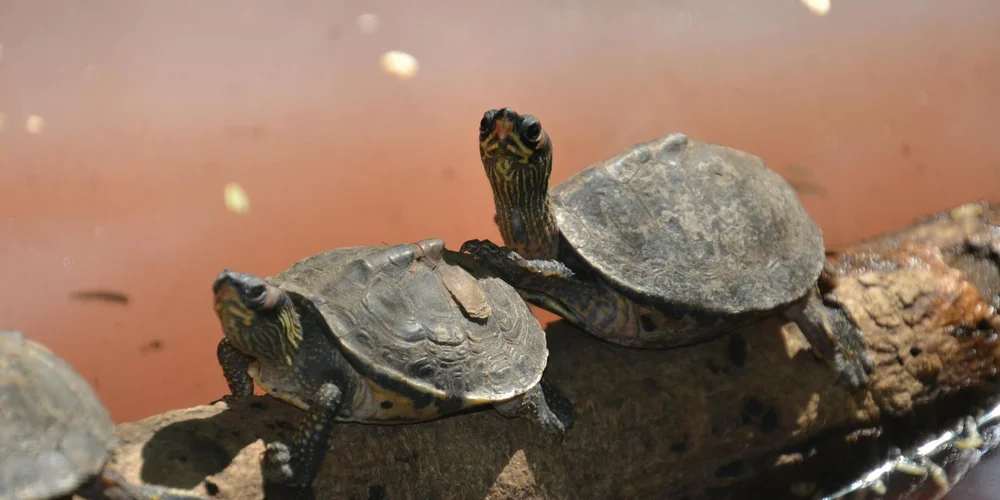
Choosing between an outdoor and indoor home for your shelled friend is one of the biggest decisions you’ll make. An outdoor pen can be a slice of paradise, but it’s only suitable under the right conditions. I’ve found it works best for species that thrive in your local climate year-round.
When an Outdoor Enclosure Shines
My Greek tortoise, Bronte, absolutely blossoms during her summer months outside. Consider an outdoor space if your situation allows for it.
- Climate Considerations: Your local weather must closely match your pet’s natural needs. Mild, warm climates are ideal. You must provide a secure, insulated shelter for overnight temperature drops or sudden rain.
- Size Advantages: The space you can offer outdoors often dwarfs even the largest indoor tanks. This allows for more natural grazing, hill climbing, and exploratory behavior that keeps them mentally stimulated.
- Safety Measures Are Non-Negotiable: An outdoor enclosure demands fortress-level security. This includes dig-proof barriers sunk deep into the ground, a secure lid or roof to deter birds and raccoons, and complete protection from pesticides or other garden chemicals.
The Indoor Enclosure Reality
My Russian tortoise, Austen, lives indoors with us, and his home is a carefully crafted ecosystem. Indoor tanks offer unparalleled control over your pet’s environment, which is a massive benefit. You become the architect of their sun, rain, and soil.
- Total Climate Control: With proper heating and UVB lighting, you can create a perfect habitat regardless of the season blustering outside your window.
- Space and Enrichment: Even in a large indoor tank, you must be creative. I use terraces, hides at different levels, and a variety of textures to maximize the usable area. This prevents a boring, flat landscape.
- Close Observation: Living inside allows you to monitor their health and habits daily. You’ll quickly notice small changes in appetite or behavior that might be missed in a large outdoor pen.
Enclosure Size for Multiple Turtles or Tortoises
Housing more than one turtle is a beautiful but complex endeavor. Simply putting two turtles in a tank meant for one is a recipe for stress and conflict. From watching my own pets, I can tell you that each one needs its own territory, even in a shared space.
Scaling Up for a Group
The math for multiple turtles isn’t just about addition; it’s about multiplication. Follow these steps to ensure everyone has room to breathe.
- Start with the minimum recommended floor space for one animal of your species.
- For each additional turtle, multiply that base number by 1.5. So, for two turtles, you need at least 1.5 times the space, not simply double.
- Always provide multiple basking spots, food dishes, and hiding places to prevent competition over resources.
Managing Social Dynamics
Turtles are not always social butterflies. Overcrowding is the fastest way to see problems emerge.
- Overcrowding Risks: Watch for bullying, food hogging, constant chasing, or shell biting. These are clear signs your pets need more space or need to be separated entirely.
- Enrichment is Your Best Tool: In a multi-pet habitat, you must break up the sightlines. Use plants, rocks, and wooden bridges to create visual barriers. This gives shy individuals, like my box turtle Orwell, places to retreat and feel safe.
- Species-Specific Needs: Some species are more tolerant than others. Always research compatibility before deciding to house turtles together. Mixing very different species is generally not advised.
Debunking Common Enclosure Size Myths
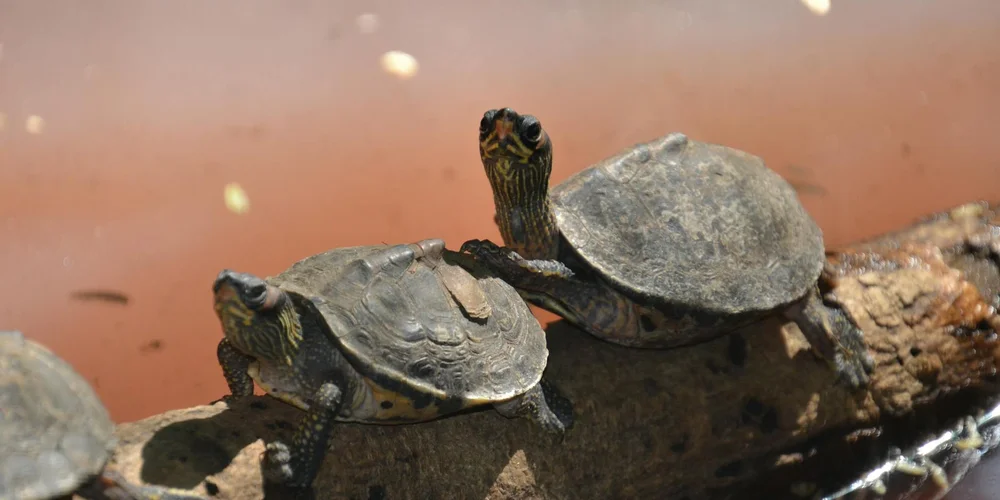
Over the years, I’ve heard every justification for small habitats, often from well-meaning owners who simply received bad advice. Let’s clear the air on a few persistent myths that can hinder your shelled friend’s quality of life.
-
Myth: “A small tank is fine for a juvenile; you can upgrade later.”
Fact: Rapid growth in the first few years makes starting small a costly mistake. My Russian tortoise, Austen, outgrew his “starter” enclosure in under a year. Providing ample space from the beginning supports healthy skeletal development and prevents the stress of frequent, disruptive moves. Research on reptile husbandry consistently shows that restricted space early in life can lead to long-term health and behavioral issues.
-
Myth: “The minimum enclosure size is 5-10 times the animal’s shell length.”
Fact: Treat this as an absolute bare minimum, not a recommendation. For my active Greek tortoise, Bronte, I found that even a 10x-length enclosure felt cramped once I added proper hides, a water dish, and enrichment. Think of the ‘shell length rule’ as the floor, not the ceiling; your goal should always be to provide as much space as you can possibly manage. A larger area allows for crucial temperature and humidity gradients. To translate that into a naturalistic turtle habitat, use proper decor. This means rocks, driftwood, substrate, and live or safe plants that mimic a wild landscape and provide realistic hides.
-
Myth: “Turtles and tortoises aren’t that active, so they don’t need much room.”
Fact: This misconception stems from observing them in enclosures that are too small to permit natural behaviors. In a properly sized habitat, you’ll see a different animal. My box turtle, Orwell, spends his mornings patrolling the perimeter of his enclosure and afternoons digging in a specific corner-behaviors he never displayed in a smaller tank. Adequate space is fundamental for mental stimulation and preventing stress-related lethargy.
Common Questions
How does the adult size of a turtle compare to a tortoise?
Turtles and tortoises vary widely in adult size depending on the specific species. Generally, some tortoise species grow much larger than most aquatic turtles, requiring significantly more land area.
Why do aquatic turtles and tortoises have such different space requirements?
Their needs differ because turtles are primarily swimmers needing deep water, while tortoises are land roamers requiring extensive floor space. This fundamental behavioral difference directly influences the design and dimensions of their enclosures. Proper substrate can support turtle digging and nesting behaviors by providing stability and moisture control, which are essential for successful burrowing. Choosing the right substrate helps turtles express natural digging instincts during nesting and can reduce stress and potential injuries.
Is there a simple size comparison between a turtle and a tortoise enclosure?
A simple comparison is that a turtle’s enclosure is often measured in gallons to account for water volume, while a tortoise’s is measured in square feet for land area. For example, a common Russian tortoise needs a minimum 4ft x 2ft footprint, whereas an aquatic turtle of a similar size needs a tank holding dozens of gallons of water.
Do turtles or tortoises grow faster, and how does that affect their enclosure?
Growth rates are species-dependent, but many popular pet turtle species can grow quite rapidly in their first few years. Planning for the adult size from the start is crucial for both, though a fast-growing turtle may necessitate more frequent tank upgrades. For hatchlings raised in an incubator tank, getting the heat, humidity, and basking distance right is essential. This is part of a complete guide to hatchling turtle care from incubator to tank.
How does the height requirement differ between a turtle and a tortoise enclosure?
Turtle enclosures often require more height to accommodate deep water for swimming and a tall, dry basking area above the water line. Tortoise enclosures, being primarily terrestrial, focus on floor space but still need sufficient height for climbing structures and to prevent escapes. When planning an outdoor setup for your tortoise, prioritize a secure, escape-proof design to create a safe enclosure. Ensure predator protection, shade, and varied terrain for safe outdoor living.
Creating a Forever Home for Your Shelled Friend
Your turtle or tortoise needs an enclosure that supports their natural behaviors and growth, so always aim for more space than the bare minimum. Watching my Greek tortoise Bronte explore her expanded habitat taught me how extra room can boost their confidence and well-being. When you’re setting up a perfect indoor tortoise enclosure, plan for warmth, UV lighting, and safe, accessible enrichment from day one.
Caring for these amazing creatures is a rewarding journey that demands your ongoing attention and learning. Keep asking questions and adapting your approach to ensure your pet enjoys a fulfilling life under your care.
Further Reading & Sources
- r/tortoise on Reddit: Properly Sized Enclosures When You Have No Space or No Money
- DIY Outdoor Box Turtle Enclosure | how to make an outdoor tortoise habitat – Tatiana’s Tiny Zoo
- Enclosures – Big and Small Tortoise Rescue and Sanctuary
- Enclosure size guidelines
Matthew is a dedicated turtle enthusiast and conservationist with over 15 years of experience in reptile care. Known affectionately as "The Leatherback" among his peers, he combines his passion for turtles with a commitment to educating pet owners on responsible turtle care and environmental stewardship.
Tank Size and Type