
Turtle Reproduction, Eggs, and Gender: A Simple Guide
Have you ever watched a turtle nest and felt a mix of wonder and worry about how those eggs will hatch or what determines if they become males or females? From my years caring for tortoises like Austen, I’ve learned that these concerns are shared by many who love these gentle creatures.
This article covers mating behaviors, egg-laying steps, gender determination factors, and conservation insights.
The Fundamentals of Turtle Reproduction
How Turtles Reproduce Sexually
All turtles reproduce sexually, requiring both a male and a female. The male turtle will often exhibit a courtship behavior that can look like fluttering his claws near the female’s face or gently nudging her shell. Mating itself involves the male climbing onto the female’s back, a position that can look awkward but is perfectly natural for them. He will use the curved underside of his shell, called the plastron, to help balance. The actual act of copulation is brief, but the male’s sperm can be stored by the female for several years, allowing her to lay fertile eggs long after a single mating event.
Signs Your Turtle Is Ready to Breed
Watching my own turtles, I’ve learned to spot the subtle cues of breeding readiness. It’s not just about age, but about overall health and environmental signals.
- Increased Activity: You might notice more pacing, especially in females, as they search for a suitable nesting site.
- Changes in Appetite: A female ready to lay eggs may eat less or stop eating entirely for a short period.
- Restless Digging: This is a huge sign. A gravid (egg-carrying) female will start test-digging in various spots with her hind legs.
- Male Pursuit: Males become more persistent in their courtship attempts, which can sometimes look like harassment if there isn’t enough space for the female to retreat.
Recognizing these signs early allows you to provide a proper nesting area, which is critical for the health of your female turtle. If you suspect she may be pregnant, monitor nesting behavior to tell if your turtle is pregnant. A quick vet check can confirm pregnancy and guide you in preparing the right nesting setup.
Turtle Egg Laying and Nesting Behaviors

How Painted and Box Turtles Lay Eggs
My box turtle, Orwell, has a very particular egg-laying ritual. The process is similar for many common pet species like painted turtles. The female will find a spot with soft, easy-to-dig soil, often in a sunny location. She uses her powerful hind legs to meticulously dig a flask-shaped hole, a process that can take hours. Once the hole is deep enough, she will deposit her eggs one by one. After the last egg is laid, she carefully fills the hole back in, patting the soil down with her plastron to disguise the nest from predators. She then abandons the nest, providing no further parental care. This sequence is a classic example of turtle egg-laying and nesting behaviors. Across species, females select sun-warmed, soft soil, dig a chamber, lay eggs, and then abandon the nest to incubate on their own.
What a Turtle Nest Looks Like
If you’re lucky enough to find a wild nest or see where your pet has laid, you might not even notice it. A completed turtle nest is a masterpiece of camouflage.
- The surface is typically level with the surrounding ground, sometimes looking like a slightly disturbed patch of earth.
- There is no pile of dirt or obvious mound; the female packs everything down flat.
- The nest chamber itself is below ground, often deeper than the length of the female’s back legs.
- The eggs are arranged in the chamber, not touching each other, each nestled in its own little pocket of soil.
A hidden nest is a safe nest, which is why a disturbed patch of dirt in your turtle’s enclosure is a major clue.
Protecting Turtle Eggs in the Wild and at Home
Whether in nature or in your backyard, turtle eggs are incredibly vulnerable. In the wild, the best practice is to leave them completely alone; moving them can fatally damage the delicate embryos inside. If you must mark a wild nest for safety, use a small, unflagged stake far enough away not to attract attention. This topic is part of an essential guide on where and why turtles lay their eggs, and it explains how nest location affects hatchling survival. Understanding nesting sites helps protect hatchlings and their habitats.
For a pet turtle that has laid eggs in an enclosure, your approach is different.
- Do Not Disturb Immediately: Wait a day before carefully excavating the eggs. This allows the embryos to settle.
- Mark the Top: Using a soft pencil, make a small, gentle mark on the top of each egg. This mark is vital because you must never rotate the eggs; it can drown the developing turtle.
- Transfer to an Incubator: Place the eggs in a container with slightly moist vermiculite or perlite, keeping them in the same upright position you found them.
- Control Temperature: Incubator temperature not only affects development speed but also determines the gender of the hatchlings for many species, with warmer temperatures typically producing females.
This careful process gives the next generation the best possible start, a responsibility I take very seriously with my own turtles’ potential offspring.
Incubating Turtle Eggs for Successful Hatching
How Long Turtle Eggs Take to Hatch
Turtle eggs don’t hatch overnight—patience is your best friend here. Incubation times vary widely by species and temperature, typically ranging from 60 to 90 days for common pet turtles. For box turtles egg laying season, it typically runs from late spring into early summer, depending on warmth and local conditions. Aligning incubation with that seasonal window can help ensure hatchlings emerge when conditions are favorable. From my experience with Austen, my Russian Tortoise, her eggs took about 70 days to hatch when kept at a steady 85°F. Bronte, the Greek Tortoise, surprised me with a 75-day wait, while Orwell’s Box Turtle eggs hatched closer to 65 days. Warmer temperatures can speed things up, but rushing isn’t wise; nature sets its own pace.
Setting Up an Incubation Environment
Creating a safe incubation space is like building a cozy nest-it needs the right balance of warmth and moisture. Start with a simple incubator, like a plastic container with ventilation holes, and fill it with a damp substrate like vermiculite or perlite. I’ve found that a mix of one part water to one part vermiculite works well for my turtles’ eggs. Follow these steps for a smooth setup. This is the first part of a complete guide to hatchling turtle care guide, and later sections cover transferring hatchlings to a proper tank, feeding, and ongoing habitat maintenance.
- Place the eggs gently in the substrate, ensuring they’re half-buried and not rotated.
- Maintain a stable temperature between 80°F and 86°F, using a reliable thermometer.
- Keep humidity around 80% by misting lightly if needed, but avoid soggy conditions.
Over the years, I’ve learned that consistency is key-sudden changes can harm developing embryos. Always prioritize animal welfare by mimicking natural conditions as closely as possible.
Monitoring Egg Development and Hatchling Care
Watching eggs develop is a delicate process-handle with care to avoid disturbing the tiny lives inside. Use a technique called candling: shine a soft light through the egg in a dark room to check for veins or movement after a few weeks. With Orwell’s eggs, I spotted faint red veins around day 30, a sign of healthy growth. Once hatchlings emerge, they need extra attention:
- Offer shallow, warm water for hydration and soft foods like chopped greens or commercial hatchling pellets.
- Provide a secure enclosure with hiding spots to reduce stress-I use small plant pots for Austen’s babies.
- Monitor for signs of weakness, and consult a vet if hatchlings aren’t eating within a day or two.
Hatchlings are fragile, so gentle handling and a calm environment make all the difference in their survival. I always remind myself that these little ones depend on us for a strong start.
Determining Turtle Gender: From Eggs to Adults
How to Tell if Your Turtle Is Male or Female
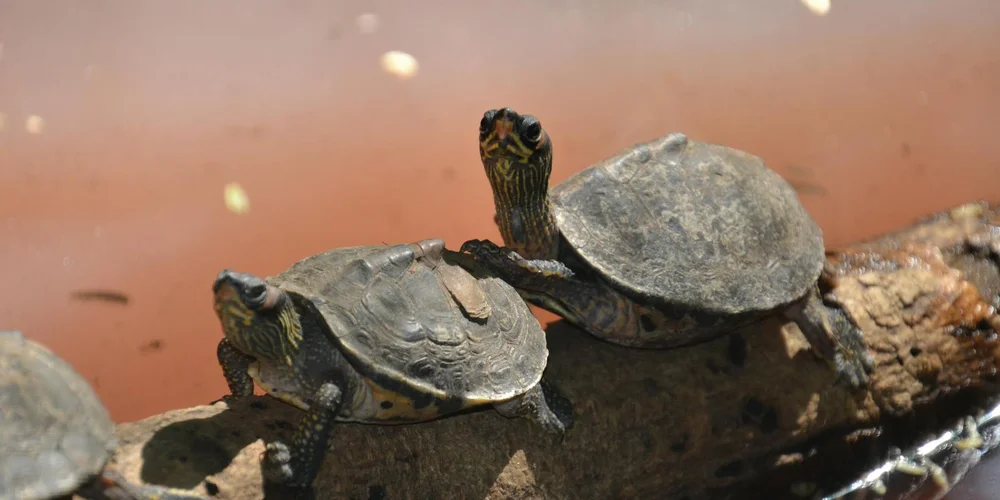
Figuring out your turtle’s gender can feel like solving a gentle puzzle, but a few clear signs make it easier. Males often have longer, thicker tails and longer front claws, while females tend to have shorter tails and more rounded shells. In my crew, Austen’s tail is stubby and her plastron is flat, pointing to her being female, whereas Orwell has a slightly concave plastron and longer claws typical of males. Look for these clues as your turtle grows. If you’re unsure, observe over time or consult a vet to help determine the sex of your turtle.
- Tail length: Males’ tails extend well beyond the shell edge; females’ are shorter.
- Claw size: Males use elongated front claws for mating displays.
- Plastron shape: A concave plastron in males helps them balance during breeding.
Observing these traits over time gives you a reliable way to identify gender without stress. I’ve spent hours watching Bronte’s graceful movements to confirm she’s female-it’s a rewarding part of pet care.
Temperature-Dependent Sex Determination in Turtle Eggs
In the turtle world, temperature plays a surprising role in deciding gender-it’s like nature’s own thermostat. For many species, warmer incubation temperatures (above 86°F) produce females, while cooler ones (below 82°F) yield males. This temperature-dependent sex determination means that how you incubate eggs can influence your turtle family. With Austen’s eggs, I kept the incubator at 84°F to aim for a mix, but it’s a delicate balance; too high or low can lead to health issues. Understanding this helps you make informed choices that support animal welfare and natural diversity. Think of it as tending a garden-the right conditions nurture life in its intended form.
Caring for Gravid Turtles and Their Eggs
Providing a Nesting Box and Optimal Conditions
When my Russian tortoise, Austen, first showed signs of being gravid, I learned that providing a proper nesting area is non-negotiable. A proper nesting box isn’t just a nice-to-have; it’s a critical piece of enclosure furniture that can prevent serious health issues. You’ll need a container at least twice as long and wide as your turtle, filled with a deep, slightly damp mix of topsoil and play sand. For caring gravid egg-carrying turtles, there’s a complete pre-laying guide that walks you through nest site selection, humidity, and timing. Following that guide can help ensure a safe, smooth laying process.
The substrate must be deep enough for her to dig a proper flask-shaped chamber. I found that a depth equal to the length of her shell was perfect. This substrate mix holds its shape for tunneling, preventing a dangerous and frustrating collapse mid-dig. Place the box in a quiet, semi-private area of the habitat where she feels secure from perceived threats.
Diet and Health Management for Egg-Laying Turtles
A gravid turtle is essentially running a physiological marathon, and her nutritional needs skyrocket. Think of eggshell production as a massive drain on her calcium reserves, which you must proactively replenish. I significantly increased the calcium in Austen’s diet by dusting her greens with a pure calcium carbonate powder (without vitamin D3) at nearly every feeding.
Her access to natural, unfiltered sunlight or a high-quality UVB lamp became even more sacred. UVB light is the engine that allows her body to utilize that dietary calcium to form strong eggshells. I also made sure her hydration was optimal, offering daily soaks in shallow, lukewarm water to prevent dehydration, which can complicate the laying process.
Preventing and Addressing Egg Binding
Egg binding, or dystocia, is a life-threatening condition where a turtle cannot pass her eggs. Prevention is always the best medicine, and it starts with perfecting your husbandry long before she’s even gravid. Proper UVB lighting, a calcium-rich diet, and a suitable nesting site are your primary defenses.
Watch for these warning signs that your turtle may be egg-bound:
- Lethargy and a complete loss of appetite
- Straining unsuccessfully for prolonged periods
- Swelling around the cloaca or rear legs
- Abnormal posture or difficulty walking
If you suspect egg binding, this is a dire veterinary emergency that requires immediate professional intervention. Do not attempt to manipulate the eggs yourself, as this can cause severe internal injury.
Ethical Breeding and Reproduction Management

Responsible Breeding Practices for Pet Turtles
Breeding turtles is a serious commitment that extends far beyond the initial clutch of adorable hatchlings. Responsible breeding means having a proven, lifelong plan for every single animal you bring into the world. Before you even consider it, ask yourself if you are prepared to house and care for dozens of turtles for decades if you cannot find them suitable homes.
I advocate for only breeding turtles that are:
- Genetically diverse and unrelated to prevent inbreeding
- Confirmed to be of a species you have expert-level knowledge about
- In peak physical health with no hereditary conditions
You must also have a waiting list of pre-screened, educated adopters. The reptile pet trade is already saturated; bringing more animals into the world without a guaranteed, high-quality home is irresponsible.
Preventing Unwanted Nesting and Breeding
For most pet turtle owners, preventing reproduction is the most ethical and practical path. The simplest and most effective way to prevent breeding is to house turtles of the opposite sex separately. This eliminates the possibility of fertilization and the immense physical strain that gravidity places on a female. To support that care, create a bio-secure environment for your pet turtle. This includes regular cleaning of the enclosure, quarantining new arrivals, and minimizing exposure to potential pathogens.
Even in single-sex groups, you may need to manage environmental cues that can trigger egg-laying behavior in females. Females can, and often do, lay infertile clutches without ever being near a male. To discourage this, avoid providing deep, loose substrate that mimics an ideal nesting site unless you are intentionally trying to encourage laying.
Maintain a consistent photoperiod and temperature, as a sudden “spring-like” increase can signal to her body that it’s time to reproduce. Managing her environment is a key part of preventing the metabolic toll of unnecessary egg production.
FAQs
How does incubation temperature determine the gender of turtle eggs?
For many turtle species, the temperature during incubation directly influences whether embryos develop as males or females. Warmer conditions typically produce females, while cooler ones lead to males, due to temperature-dependent sex determination.
What is the pivotal temperature range for gender in common pet turtles?
The pivotal range often falls between 82°F and 86°F, where temperatures above this tend to yield females and below result in males. It’s essential to maintain stable temperatures to avoid unintended gender outcomes or developmental issues.
Can fluctuating incubation temperatures affect turtle egg gender?
Yes, significant temperature swings during incubation can disrupt gender determination and harm embryo health. Consistent temperatures are crucial for predictable results and successful hatching.
Why do some turtles have temperature-dependent sex determination?
This adaptation helps turtle populations adjust sex ratios based on environmental conditions, aiding long-term survival. In warmer climates, more females may hatch, supporting reproduction, while cooler areas favor males. These patterns are a central focus of turtle population ecology, shaping recruitment and long-term population viability. They also enable ecologists to forecast how turtle populations may respond to climate change.
How can I safely monitor temperature for gender control in pet turtle eggs?
Use a reliable thermometer and incubator to maintain steady temperatures within the desired range for your species. Avoid opening the incubator frequently, as sudden changes can skew gender results and endanger embryos.
Your Role in Turtle Reproductive Health
From raising my Greek tortoise Bronte, I’ve seen how temperature control during incubation can shape hatchling gender in many species. Providing a secure nesting spot with damp soil encourages natural egg-laying and reduces stress for your turtle.
Commit to responsible ownership by always prioritizing your pet’s well-being over convenience or curiosity. Stay engaged with ongoing turtle care education to foster a thriving, lifelong bond with your shelled friend. For many owners, gentle, reward-based training can further strengthen that bond and help your turtle learn simple cues. Keep sessions short and positive, and always prioritize your turtle’s comfort.
Further Reading & Sources
- What causes a sea turtle to be born male or female?
- Tell Me About: Temperature-Dependent Sex Determination – Thompson Earth Systems Institute
- How Temperature Determines Sex in Sea Turtles: Temperature-Dependent Sex Determination Explained – The State of the World’s Sea Turtles | SWOT
- Temperature-dependent sex determination – Wikipedia
Matthew is a dedicated turtle enthusiast and conservationist with over 15 years of experience in reptile care. Known affectionately as "The Leatherback" among his peers, he combines his passion for turtles with a commitment to educating pet owners on responsible turtle care and environmental stewardship.
Nesting Requirements