
Can All Turtles Swim? Aquatic and Land Turtles
You might be asking if every turtle can swim, especially if you worry about providing the right home for your shelled companion. From my years with turtles like Austen, my steady Russian tortoise who prefers dry land, I’ve seen how habitat mistakes can stress these gentle creatures.
This article covers turtle types, swimming abilities, habitat needs, and care tips.
Turtle Anatomy and Swimming Basics
How Turtle Bodies Adapt to Water and Land
I’ve spent years watching my turtles, Austen and Bronte, move with such grace on land, while others I’ve cared for glide effortlessly in water. Turtle bodies are marvels of evolution, finely tuned for their specific habitats. Their shells provide protection but also influence buoyancy and movement. Aquatic turtles often have flatter, streamlined shells to reduce drag, while land turtles like my Russian Tortoise, Austen, have domed shells that help retain moisture and resist predators.
Limbs tell a big part of the story too. Webbed feet or flippers in aquatic species act like paddles, making swimming natural and efficient. In contrast, my Greek Tortoise, Bronte, has stout, elephant-like legs perfect for digging and walking on rough terrain. I’ve noticed how her claws grip the earth, a feature that would hinder swimming but excel on land.
- Shell shape: Flat for water, domed for land
- Limb structure: Webbed for swimming, clawed for walking
- Respiration: Some aquatic turtles can absorb oxygen through skin in water
Always ensure your turtle’s environment matches its anatomy to prevent stress or injury. Providing the right setup respects their natural instincts and promotes well-being. It’s essential to understand the turtle’s anatomy before creating their habitat.
Do All Turtles Swim Naturally?
No, not all turtles are born swimmers, and that’s perfectly okay. Swimming ability depends heavily on the species and their evolutionary background. From my experience, terrestrial turtles like tortoises can drown if placed in deep water, as they lack the adaptations for buoyancy. My Box Turtle, Orwell, avoids water beyond shallow puddles-his reserved nature keeps him safe on dry ground.
Aquatic turtles, however, take to water like fish, using instinctive paddling motions. It’s a myth that every turtle can swim; forcing a land turtle into water risks their health and happiness. I’ve learned to observe each turtle’s behavior-Austen’s steady pace on land versus the agile swimming of aquatic friends I’ve kept.
- Natural swimmers: Aquatic and semi-aquatic species
- Non-swimmers: Most tortoises and some box turtles
- Key factor: Habitat dictates ability
If you’re unsure about your turtle’s needs, consult a vet to avoid accidents. Understanding their limits helps you create a safe, enriching home. Be on the lookout for signs your turtle may need veterinary care, such as lethargy, loss of appetite, or shell and breathing changes. If any of these appear, contact a veterinarian promptly.
Aquatic Turtles: Masters of the Water
What Defines an Aquatic Turtle
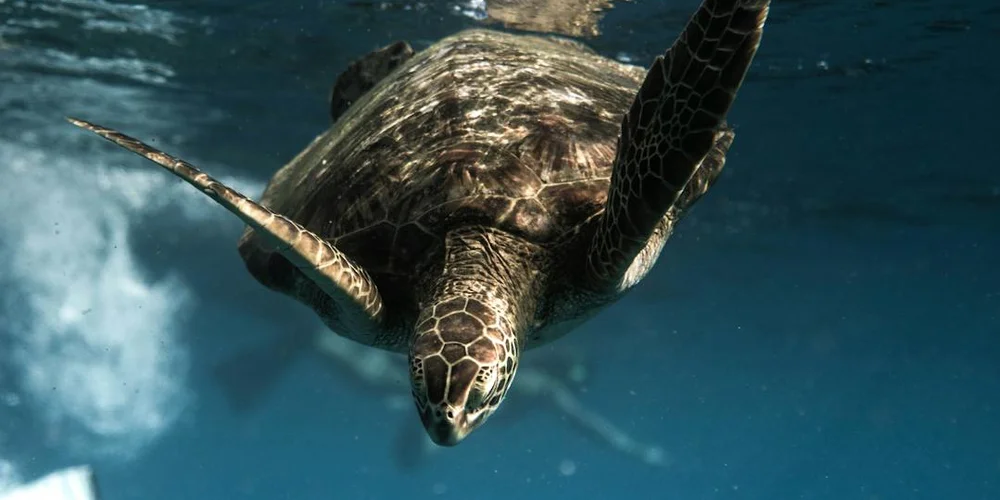
Aquatic turtles are the true water wizards, spending most of their lives submerged or near it. They thrive in environments where swimming is essential for feeding, hiding, and socializing. I’ve cared for a few over the years, and their webbed feet and sleek shells make them agile in ponds and tanks. Unlike my land-loving Bronte, they rarely venture far from water sources.
Their diets often include aquatic plants and small prey, which they catch with ease underwater. These turtles have evolved to hold their breath for long periods, some even sleeping submerged. Long breath-holds are a defining adaptation that supports underwater foraging and rest. This ability lets them stay hidden beneath the surface while they hunt. It’s a lifestyle that demands clean, well-oxygenated water to prevent shell rot or respiratory issues.
- Primary habitat: Water-based, with basking spots
- Physical traits: Flattened shells, webbed limbs
- Behavior: Strong swimmers, often social in groups
Setting up a proper aquatic tank with filtration is non-negotiable for their health. Mimicking their natural world reduces stress and encourages natural behaviors.
Freshwater vs Marine Turtles
While all aquatic turtles love water, freshwater and marine types live in vastly different worlds. Freshwater turtles, like red-eared sliders, inhabit lakes and rivers, whereas marine turtles, such as sea turtles, roam the open ocean. I’ve only kept freshwater species, as marine ones require specialized care and are often protected due to conservation needs.
Freshwater turtles tend to be smaller and more adaptable to captivity, but marine turtles are built for saltwater with glands to excrete excess salt. Marine species face greater threats from pollution and habitat loss, making their welfare a global concern. Advocating for clean waterways helps all turtles, whether in your backyard pond or the deep blue sea, especially marine turtles who are vital to marine ecosystems.
| Feature | Freshwater Turtles | Marine Turtles |
|---|---|---|
| Habitat | Lakes, rivers, ponds | Oceans, seas |
| Size | Generally smaller | Often larger, some over 6 feet |
| Salt Handling | No special glands | Salt-excreting glands |
Choose species that fit your space and commitment level to ensure a happy life. Responsible pet ownership starts with matching the turtle to its ideal environment. Key factors to consider when choosing a turtle species include size, habitat needs, temperature and humidity requirements, and long-term care. Selecting a species that aligns with your space, budget, and daily routine helps ensure a healthy, thriving turtle.
Land Turtles: Limited Swimmers
Why Some Turtles Avoid Water
Not all turtles are built for a life in the water; some are landlubbers through and through. Their anatomy is fundamentally different from their aquatic cousins, making swimming not just difficult, but dangerous. Some turtles live on land while others are aquatic. My Russian tortoise, Austen, has a high, domed shell and stout, column-like legs designed for walking on solid ground. Toss him in deep water, and he’d sink like a stone, struggling to keep his head above the surface.
Their bodies are simply too heavy and not buoyant enough. For a land turtle, a deep water dish can be a genuine hazard, which is why I always provide shallow ones for my crew. They get their hydration from drinking and from the moisture in their food, not from swimming.
Common Land Turtle Species as Pets
If you’re looking for a pet that thrives on solid ground, you have some wonderful options. These species are often called tortoises and are completely terrestrial.
- Russian Tortoise: A popular choice known for their manageable size and hardy nature. My Austen is a perfect example of their gentle, steady personality.
- Greek Tortoise: Similar in care to the Russian, these tortoises, like my graceful Bronte, have beautifully patterned shells.
- Sulcata Tortoise: Be prepared for a giant! These are incredible creatures but require a massive amount of space and specialized care.
- Leopard Tortoise: Recognizable by their stunning, leopard-like shell spots. They are another larger species that needs plenty of room to roam.
Popular Pet Turtles and Their Swimming Abilities
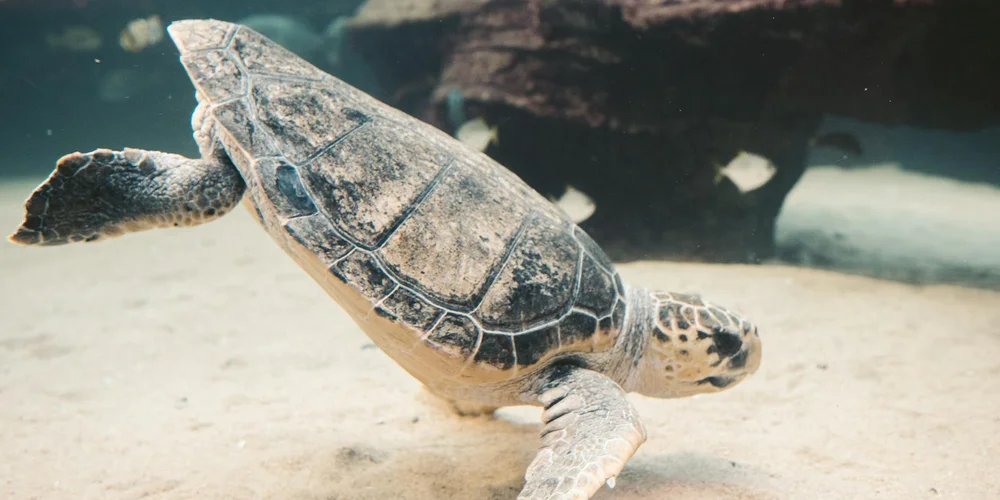
Swimming Capabilities of Common Pet Turtles
This is where things get interesting, as many popular pet turtles need water to be truly healthy and happy.
- Red-Eared Slider: These are champion swimmers. They are almost entirely aquatic, requiring a large tank with deep, clean water for swimming and basking areas to completely dry off.
- Painted Turtle: Another excellent swimmer, painted turtles are a vibrant, active species that spend most of their time in the water.
- Box Turtle: This is the semi-aquatic exception. My box turtle, Orwell, enjoys a shallow soak but is not a swimmer. He needs a terrestrial habitat with a humid hide and a water dish just deep enough to submerse himself, not swim.
- Musk Turtle: These small turtles are fully aquatic and surprisingly adept swimmers, though they often prefer to walk along the bottom of their tank.
Can Baby Turtles Swim?
This is a common question, especially for those who find tiny hatchlings. The answer depends entirely on the species.
Baby aquatic turtles, like sliders, are born with the instinct and ability to swim immediately. They are natural paddlers from day one. However, they are incredibly vulnerable and need calm, shallow water with easy access to a dry basking spot.
In stark contrast, baby land turtles cannot swim. A hatchling tortoise placed in deep water will drown just as quickly as an adult. They are terrestrial from the moment they hatch, requiring a safe, dry enclosure. Always research the specific needs of a species before assuming any turtle, regardless of size, can handle water.
Setting Up a Safe Swimming Environment
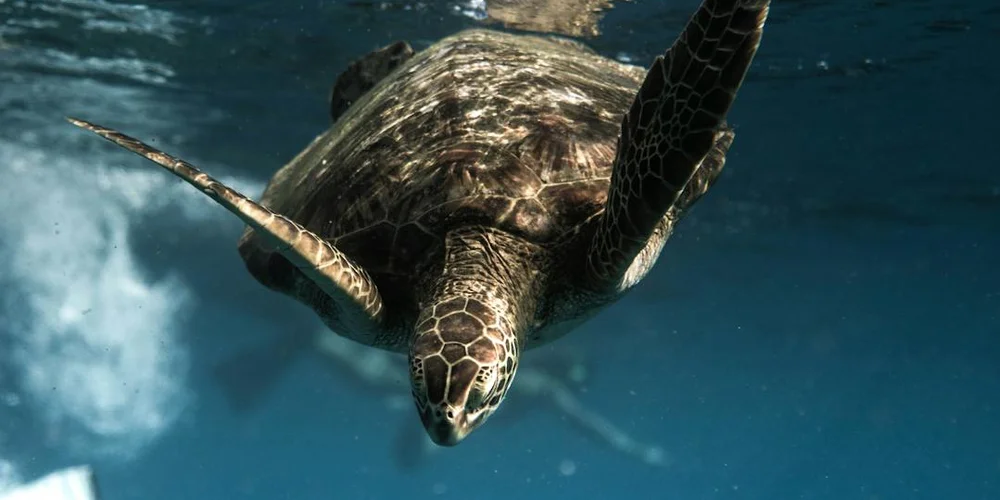
Essential Tank Setup for Aquatic Turtles
Creating a home for an aquatic turtle is about more than just filling a tank with water. You are essentially building a complete, miniature ecosystem that must meet all of their physical and behavioral needs. From my years of caring for various species, I’ve learned that getting the fundamentals right from the start prevents countless issues down the road.
Start with the tank size. A common mistake is choosing a tank that is too small. A good rule I follow is 10 gallons of water for every inch of your turtle’s shell length. For a full-grown Red-Eared Slider, this often means a 75 to 100-gallon tank. They use every bit of that space for swimming and exploring. So, what size tank does a turtle need? In general, follow the 10 gallons per inch rule—the bigger the tank, the more room for exercise and a healthier enclosure.
Your setup must include these non-negotiable elements:
- A powerful canister filter rated for two to three times the volume of your tank.
- A submersible water heater with an adjustable thermostat and a protective guard.
- A dedicated basking platform that is completely dry and easily accessible.
- Full-spectrum UVA/UVB lighting directly above the basking area, replaced every six months.
- A heat lamp focused on the basking spot to create a temperature gradient.
Water Quality and Safety
Think of your turtle’s water as the air they breathe. Poor water quality is a silent, chronic stressor that weakens their immune system and can lead to shell rot and respiratory infections. I test my turtles’ water weekly, and the routine becomes second nature. To keep this routine reliable, I follow a simple maintenance schedule: test weekly, perform partial water changes as needed, and log the results. Setting a consistent schedule helps you catch issues before they harm your turtle.
Chlorine and chloramines in tap water are toxic to turtles. You must always use a water conditioner to neutralize these chemicals before your turtle enters the water. Letting water sit out does not remove chloramines, so a conditioner is non-negotiable.
Maintaining pristine water involves a consistent routine:
- Perform a 25% water change every single week.
- Vacuum the substrate to remove waste and uneaten food during water changes.
- Rinse filter media in old tank water monthly to preserve beneficial bacteria.
- Keep the water temperature stable, typically between 75-80°F for most aquatic species.
Common Swimming Problems and Solutions
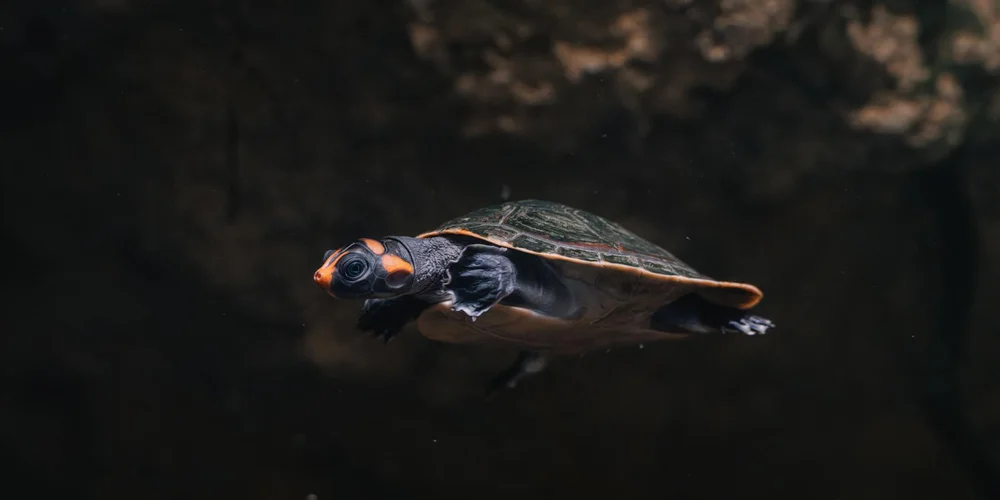
Why Your Turtle Might Struggle in Water
It’s concerning to see a turtle that should be graceful in the water instead listing to one side, sinking, or struggling to surface. This imbalance is often a symptom of an underlying health issue, not a behavioral quirk. I once cared for a rescue turtle who swam lopsidedly due to a previously untreated respiratory infection.
The most common culprit for swimming problems is buoyancy issues. A turtle that floats unevenly or cannot dive may be suffering from gas buildup in its intestines, often linked to diet, or a more serious respiratory infection creating air in its body cavity.
Watch for these specific signs of trouble:
- Consistently listing to one side or tilting backwards.
- Struggling to dive and spending all its time at the surface.
- Paddling frantically with little forward movement.
- A sudden lack of interest in entering the water.
Recognizing and Preventing Drowning
It’s a difficult truth, but yes, turtles can drown. While they are adapted for an aquatic life, they are air-breathing reptiles and can become trapped or exhausted, leading to tragedy. Understanding how and why turtles drown is key to aquatic turtle safety. By recognizing risks and providing proper habitat, caretakers can prevent tragedies. Prevention is entirely in our hands as caretakers.
The biggest risk factor is a tank with decorations or obstacles that can trap a turtle underwater. I am very cautious with any ornament that has narrow openings or tunnels where a turtle could get its shell or limbs stuck. Always ask yourself, “Could my turtle fit in here and not get out?”
To create a truly safe swimming environment and prevent drowning, implement these safeguards:
- Ensure the basking area has a gently sloping or grippy ramp for easy exit.
- Avoid small, enclosed plastic castles or log decorations with small holes.
- Provide a water depth that allows a struggling turtle to easily push off the bottom to reach the surface.
- Never leave a turtle unsupervised in an outdoor pond without a protective fence or ramp.
FAQs
Can turtles swim in chlorine pools?
No, turtles should not swim in chlorine pools as the chemicals can irritate their eyes, skin, and respiratory system. Always use a water conditioner to dechlorinate tap water or provide a filtered, turtle-safe aquatic habitat instead.
Can turtles swim in saltwater pools?
Only marine turtles like sea turtles can swim in saltwater, as they have special glands to excrete excess salt. Sea turtles primarily live in saltwater, though they may move through brackish coastal areas. This contrasts with freshwater turtles, such as red-eared sliders, which would become dehydrated and stressed in saltwater pools, so keep them in freshwater environments.
Can turtles swim fast?
Yes, many aquatic turtles can swim quite fast, with species like softshell turtles reaching speeds over 10 mph in short bursts. Their speed depends on factors like species, health, and water depth, but they generally outpace land turtles in aquatic settings.
Can turtles swim in Minecraft?
In Minecraft, turtles can swim in water and are commonly found in ocean biomes, where they move slowly but naturally. Players can interact with them by using seagrass to breed or lead them, but their swimming is part of the game’s mechanics, not real-life behavior.
Can turtles swim backwards?
Most turtles do not swim backwards due to their limb and shell structure, which favors forward propulsion. However, they can make tight turns or reverse direction by adjusting their paddling, though it is not a common or efficient movement for them.
Ready to Create the Perfect Home?
Remember, the most vital step is matching your turtle’s natural abilities to its home environment. Aquatic turtles need ample water to swim and dive, while terrestrial species require a secure, enriching land habitat to thrive.
Committing to a turtle means committing to a lifetime of learning about its specific needs. I encourage you to keep exploring and asking questions, ensuring your shelled friend enjoys a long, healthy, and happy life with you.
Further Reading & Sources
- Sea Turtles | Smithsonian Ocean
- How fast can a sea turtle swim? | Olive Ridley Project
- Vet Guide 2025: Can Turtles Swim? Aquatic Ability & Care by Dr Duncan Houston (vet 2025)
- Can Turtles Swim? Turtle vs Tortoise Swimming Abilities – All Turtles
Matthew is a dedicated turtle enthusiast and conservationist with over 15 years of experience in reptile care. Known affectionately as "The Leatherback" among his peers, he combines his passion for turtles with a commitment to educating pet owners on responsible turtle care and environmental stewardship.
Aquatic Turtles