
How to Determine the Sex of Your Turtle
Figuring out if your turtle is male or female can feel like solving a quiet, slow-moving mystery. You might be choosing a name, planning their habitat, or just satisfying your own curiosity about your shelled companion.
In this guide, we will cover the key physical signs: shell shape, tail length, plastron concavity, and claw size.
Understanding Sexual Dimorphism in Turtles
What Is Sexual Dimorphism?
Sexual dimorphism is the scientific term for the physical differences between males and females of the same species. In the turtle world, this means males and females often look quite different, even to an untrained eye. It’s not just about size; it’s about specific features shaped by their roles in reproduction. My Russian tortoise, Austen, is a perfect example of a male with his distinctively concave plastron.
Why Sexing Matters for Pet Care
Knowing your turtle’s sex goes far beyond simple curiosity; it directly impacts their health and happiness. Accurate sexing allows you to anticipate and manage behaviors like nesting or aggression before they become problematic. A female might need a special place to lay eggs, even without a male present, to prevent egg-binding, a serious medical condition. Knowing why turtles lay their eggs is a central part of the essential guide on this topic. It helps you create safe nesting spaces and recognize when to seek help. Understanding their biology helps you provide the best possible care for their entire life.
Step-by-Step Physical Examination for Sex Determination

Checking the Plastron for Concavity
The plastron is the flat part of the shell on the turtle’s belly, and its shape is a major clue. Gently hold your turtle and look for a noticeable dip or inward curve in the center of the plastron. This concavity is a classic male trait, designed to help him balance on the female’s domed carapace during mating. My male tortoise, Austen, has a very obvious one, while my female Greek tortoise, Bronte, has a completely flat underside.

Assessing Tail Length and Cloacal Position
This is often the most reliable method for many common pet turtle species. Males typically have longer, thicker tails with the cloaca (the single opening for waste and reproduction) positioned farther down, closer to the tail tip. In females, the tail is shorter and stubbier, with the cloaca located much closer to the base of the tail, near the shell. It’s a very distinct difference once you know what to look for.
Observing Claw Length and Other Features
Take a close look at your turtle’s front claws. Male turtles frequently sport dramatically elongated front claws, which they use for courtship displays and gripping the female’s shell. My Greek tortoise, Bronte, has neat, short claws, while my box turtle, Orwell, has noticeably longer ones. Other features can include eye color in some species, or overall body size, where females are often larger to accommodate egg development.
Species-Specific Sexing Cues
Different turtle species show unique physical traits that help you tell males from females. I’ve found that paying close attention to these details makes sexing much easier and less stressful for your pet. In addition, understanding how a turtle’s body language and coloration changes with mood, health, and environment can enrich your interpretation of these cues. This broader awareness can help you respond to your pet’s needs more effectively.
Sexing Red-Eared Sliders and Similar Aquatic Turtles
For aquatic turtles like Red-Eared Sliders, males often have longer front claws and tails. Their tails tend to be thicker at the base, which is a clear sign of masculinity.
- Males usually have a concave plastron (the bottom shell) to help them mount females during mating.
- Females typically have shorter claws and a flatter plastron for egg-laying.
- In my experience, gently observing these features without handling too much reduces stress on the turtle.
Always handle aquatic turtles with care to avoid injuring their delicate shells. Advocating for their welfare means limiting physical checks to brief, calm sessions.
Identifying Sex in Box Turtles and Tortoises
With my box turtle Orwell, I noticed his eyes are a deeper color, which can hint at his sex. Male box turtles often have red or orange eyes, while females’ eyes are brown or yellow.
- Males may have a more curved plastron to aid in mating.
- Females usually have a flatter, broader shell to accommodate eggs.
- For tortoises like my Russian and Greek ones, males are often smaller with longer tails.
Orwell’s reserved nature taught me to watch for subtle signs over time. Patience is key here, as rushing can scare your turtle and lead to misidentification.
Temperature-Dependent Sex Determination in Some Species
In many turtle species, the temperature during egg incubation decides the sex. Warmer nests often produce females, while cooler ones yield males, a fascinating natural balance. This is a central aspect of turtle reproduction, tied to the fate of their eggs. Hatchling gender often hinges on incubation temperature, a clear example of temperature-dependent sex determination.
- This is common in aquatic turtles and some tortoises.
- It means you can’t change a turtle’s sex after hatching, so focus on providing a stable environment.
I’ve seen how climate shifts affect wild populations, reminding us to protect their habitats. Caring for turtles includes understanding these biological quirks to support their well-being.
Behavioral Clues for Sex Identification

Behavior offers big hints about your turtle’s sex, often clearer than physical traits. Watching how they act daily can reveal a lot without any handling. Do common box turtle behaviors mean their sex? They can hint at it, but aren’t definitive without considering physical traits and other signs.
Mating Displays and Aggression
Males frequently show off with head bobbing or nipping to attract mates. My tortoise Austen will gently nudge others during breeding season, a classic male behavior.
- Aggressive chasing or biting might mean a male is asserting dominance.
- Females tend to be calmer, though they might retreat or hide when pursued.
Always intervene if aggression gets too intense to prevent injuries. Promoting animal welfare means ensuring all interactions are safe and respectful.
Social Dynamics in Groups
In a group, males often compete for attention, while females might form quieter bonds. Observing their social pecking order can help you spot who’s who without stress.
- Males may patrol territories more actively.
- Females might cluster together, especially near nesting areas.
From caring for multiple turtles, I’ve learned that peaceful cohabitation requires space and monitoring. Respecting their natural behaviors reduces conflicts and supports a happy home.
Age and Growth Stage Considerations
When Sexing Becomes Reliable
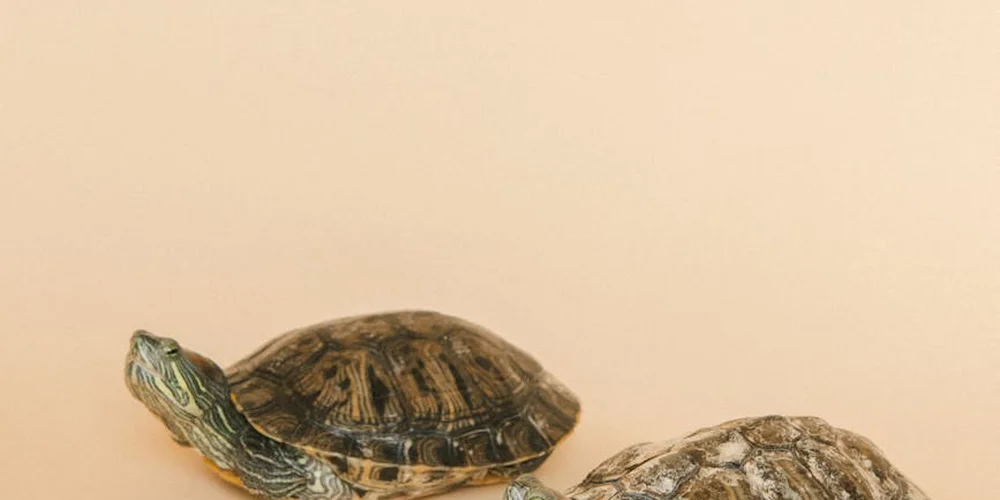
You simply cannot rush nature when it comes to identifying your turtle’s sex. Secondary sexual characteristics, like tail length and claw size, often don’t become pronounced until a turtle reaches sexual maturity. This can take several years, depending on the species. My Russian tortoise, Austen, didn’t show clear male traits until he was nearly five years old.
For most common pet species, you’ll get the most reliable results when the turtle’s shell length reaches 4 to 6 inches. Trying to guess before this stage is often a frustrating exercise in uncertainty. The subtle differences that are obvious in adults are virtually nonexistent in hatchlings. How big they get can often give you clues about their species, but only once they’ve grown.
Handling Young Turtles Safely
Young turtles are delicate, and frequent handling for inspection can cause them significant stress. Your primary goal with a juvenile turtle should always be its health and well-being, not satisfying curiosity about its sex. I learned this the hard way with my box turtle, Orwell, who became quite withdrawn after too much early handling. If you’re trying to tell if your turtle is stressed, look for signs like reduced activity, changes in appetite, or hiding more than usual. If you do notice stress, give it space and seek guidance on humane handling and enrichment.
When you must handle a young turtle, follow these steps for their safety and comfort.
- Wash your hands thoroughly with unscented soap before and after.
- Sit close to a soft, secure surface like a carpeted floor.
- Gently scoop the turtle from below, supporting its entire plastron (bottom shell).
- Keep handling sessions brief, under a minute if possible.
- Always move slowly and avoid sudden gestures.
Confirming Sex with Professional Assistance
Veterinary Sexing Methods
When visual clues are ambiguous or you need a definitive answer, a reptile veterinarian is your best resource. A vet can perform a physical exam that is far more detailed and informed than what we can do at home. They have trained eyes for subtle skeletal differences and shell shapes we might miss.
In some cases, a vet might use advanced techniques.
- Ultrasound: This non-invasive method can sometimes reveal internal reproductive organs.
- Endoscopy: A tiny camera can be used to view gonads directly, offering near-certain confirmation.
- Radiography (X-rays): While not always conclusive for sex, it can show egg development in females.
DNA Testing and Its Uses
DNA testing provides a scientific, laboratory-confirmed method for sex determination. This process typically involves a simple blood draw or even a claw clip performed by your veterinarian, which is then sent to a specialized lab. It’s a highly accurate option, but it’s also the most expensive and time-consuming.
This method is particularly useful in a few specific situations.
- For species with virtually no external differences between males and females.
- When you are managing a breeding program and need absolute certainty.
- If a health issue is suspected to be sex-linked and an accurate diagnosis depends on knowing the sex.
For the average pet owner, this level of confirmation is usually unnecessary. I’ve only ever considered it for one of my turtles when a persistent health puzzle seemed linked to its sex. For most, patience and a vet’s expert eye are perfectly sufficient.
Tailoring Care Based on Your Turtle’s Sex

Once you know your turtle’s sex, you can adjust their care to keep them healthy and happy. This personal touch makes a world of difference in preventing stress and promoting natural behaviors.
Housing and Aggression Mitigation
Male turtles often show more territorial behavior, especially in cramped spaces. Providing ample room reduces conflicts and lets each turtle establish their own safe zone. Temperaments can differ between male and female turtles, though individual personalities vary. Knowing the sex of your turtle can help tailor housing and enrichment to fit their needs.
I’ve seen this with Orwell, my box turtle; he becomes more reserved and might nip if his area feels crowded. Adding multiple hiding spots and basking areas gives everyone a chance to relax without competition.
- Use a larger enclosure than the minimum size recommended for your species.
- Include visual barriers like plants or rocks to break up sightlines.
- Monitor interactions during feeding times to avoid food aggression.
- Separate males during breeding seasons if aggression spikes.
For mixed-sex groups, watch for males persistently pursuing females, which can cause exhaustion. Rotating habitats or creating temporary divisions helps maintain peace without isolation.
Breeding Preparation and Ethical Considerations
Breeding turtles requires careful planning and a commitment to animal welfare. Always prioritize the health of your turtles over the desire to breed them.
With Austen and Bronte, I’ve chosen not to breed them because caring for hatchlings demands extra resources and knowledge. Ethical breeding means ensuring you can find responsible homes for every baby turtle.
- Research your turtle species’ breeding needs, including temperature and diet changes.
- Set up a separate nesting area with soft substrate for egg-laying.
- Plan for veterinary care to handle potential complications.
- Consider adoption first to help reduce overpopulation in rescues.
Many turtles end up in shelters due to impulsive breeding. Advocating for animal welfare means making choices that protect these gentle creatures from neglect.
FAQs
How does incubation temperature determine a turtle’s sex?
In many turtle species, the temperature during egg incubation directly influences whether hatchlings develop as male or female. Warmer nest temperatures typically produce females, while cooler ones result in males, due to a process called temperature-dependent sex determination. This makes understanding turtle egg-laying and nesting behaviors particularly important for conservation efforts.
What are the key physical traits of female turtles?
Female turtles often have shorter, stubbier tails and a flatter plastron compared to males. They may also be larger in body size to support egg production and nesting needs.
Is sex determination the same for sea turtles as for pet turtles?
Sea turtles also rely on temperature-dependent sex determination during incubation, similar to many pet turtle species. Physical differences, like tail length and shell shape, can help identify sex, but sea turtles are often studied in wild settings with specialized methods.
Where can I find detailed guides or PDFs on turtle sex determination?
Reputable sources like veterinary websites, herpetological societies, and academic journals often provide free or purchasable PDFs on this topic. Always verify the credibility of the source to ensure accurate, science-based information.
What behaviors indicate a female sea turtle?
Female sea turtles display nesting behaviors, such as coming ashore to dig nests and lay eggs, which is a clear sign of their sex. They may also show less aggression and different social patterns compared to males in group settings. Understanding when these nesting events occur and when eggs hatch helps researchers map seasonal cycles. This knowledge is essential for protecting nests and hatchlings during peak seasons.
Your Turtle’s Journey: A Gentle Reminder
Identifying your turtle’s sex relies on observing physical clues like tail length, plastron shape, and subtle behavioral cues. With patience and practice, you can confidently recognize these signs, just as I did when learning about my own turtles, Austen and Bronte.
Caring for your turtle means adapting to their specific needs based on their sex to promote well-being. Always prioritize their health by staying curious and committed to learning more about proper turtle care.
Further Reading & Sources
- What causes a sea turtle to be born male or female?
- How Temperature Determines Sex in Sea Turtles: Temperature-Dependent Sex Determination Explained – The State of the World’s Sea Turtles | SWOT
- Tell Me About: Temperature-Dependent Sex Determination – Thompson Earth Systems Institute
- Temperature-dependent sex determination – Wikipedia
Matthew is a dedicated turtle enthusiast and conservationist with over 15 years of experience in reptile care. Known affectionately as "The Leatherback" among his peers, he combines his passion for turtles with a commitment to educating pet owners on responsible turtle care and environmental stewardship.
Mating Behavior