
What Does Turtle Stacking Mean? Unpacking Their Behavior
Published on: January 16, 2026 | Last Updated: January 16, 2026
Written By: Matthew The
If you’ve noticed turtles piling up, you might feel a twinge of concern about their stress levels or social dynamics, wondering if this stacking signals trouble in their world.
We’ll dive into the reasons behind this behavior, debunk common myths, and share care tips based on my hands-on experience with tortoises like Austen and Bronte.
The Basics of Turtle Stacking Behavior
Thermoregulation and Basking Needs
Turtles stack to share body heat and reach warmer spots in their habitat. As ectothermic animals, they depend on external sources like sunlight to regulate their temperature. Stacking helps them conserve energy and stay cozy, especially during cooler parts of the day. I’ve watched my Russian tortoise, Austen, often climb atop others in the morning to catch the first rays of sun. This behavior mimics how wild turtles huddle for warmth. If your turtles stack peacefully while basking, it’s usually a good sign they’re meeting their thermal needs.
Social Dynamics and Hierarchy
Stacking can show who’s in charge within a group. Dominant turtles might take the top positions, while more submissive ones stay below. Observing these patterns helps you understand the pecking order without aggression. In my experience, Orwell, the box turtle, tends to let others stack on him, reflecting his calm and reserved personality. This isn’t about bullying; it’s a natural way turtles communicate status. Over time, I’ve noticed this reduces conflicts in mixed-species setups.
Mating and Courtship Displays
During breeding seasons, stacking can be part of gentle courtship rituals. Males might climb on females to show interest, often paired with head bobbing or gentle nudges. This behavior is typically brief and non-aggressive, signaling readiness to mate. My Greek tortoise, Bronte, has engaged in this with graceful movements that avoid stressing her partner. Always monitor these interactions to ensure they don’t escalate into harassment, which could harm their welfare.
When Stacking Is Normal vs. Problematic
Signs of Healthy Social Behavior
Healthy stacking involves relaxed turtles that take turns and show no distress. Look for these indicators in your pets, especially after engaging in enrichment activities that keep them active and healthy.
- Turtles alternate positions freely without forcing others.
- They remain calm, with normal breathing and open eyes.
- Stacking happens occasionally, not constantly, throughout the day.
A balanced group will have moments of stacking that don’t disrupt eating or resting. With my trio, I see this during basking times, and it never leads to fights. Providing ample space and hiding spots encourages this positive dynamic.
Red Flags for Stress and Aggression
Problematic stacking often involves bullying or constant pressure on one turtle. Watch for these warning signs:
- One turtle is always trapped at the bottom, unable to move.
- Biting, hissing, or shell ramming during stacking.
- Turtles avoiding food or appearing lethargic afterward.
If stacking leads to injuries or fear, it’s time to reassess their environment for overcrowding or lack of resources. I once had to separate a stressed turtle temporarily to prevent harm, which improved everyone’s well-being. Always prioritize their safety by monitoring interactions closely.
How to Manage Stacking in Your Turtle Habitat
Optimizing Basking Sites and Space
When turtles stack, it often signals a shortage of prime basking real estate. I’ve found that adding multiple basking platforms at varying heights can drastically reduce this behavior. Understanding their basking behavior helps explain why they spend so much time out of water. Providing ample, varied basking options supports their thermoregulation and overall health. With my Russian Tortoise, Austen, and Greek Tortoise, Bronte, I observed less piling once I introduced a second flat rock under the heat lamp. Ensure each turtle has enough room to sprawl out without touching others.
- Place basking areas on opposite sides of the habitat to spread out the warmth.
- Use materials like slate or driftwood that retain heat well and offer easy grip.
- Check that platforms are large enough for all turtles to use simultaneously without crowding.
Space isn’t just about floor area-vertical space matters too. Creating tiered basking spots encourages natural climbing and reduces the urge to stack for a better vantage point. In my setup, I use sturdy branches for my Box Turtle, Orwell, who enjoys a elevated perch away from the others.
Adjusting Environmental Factors
Temperature and lighting play huge roles in stacking behavior. Maintaining a precise thermal gradient lets turtles find their comfort zone without competing for the warmest spot. When diagnosing your turtle’s habitat, run a quick lighting, heat, and water checklist. This helps ensure you meet the standard for perfect lighting, heat, and water. I keep the basking area at 85-90°F for Austen and Bronte, while the cooler end stays around 75°F. If the heat is too concentrated, turtles will pile up to share it.
- Use a thermostat to regulate heating elements and avoid hot spots.
- Provide full-spectrum UVB lighting across the habitat to reduce crowding under one source.
- Monitor humidity levels; too dry or too damp can stress turtles and increase stacking.
Light cycles also influence activity. A consistent day-night rhythm mimics natural environments and helps turtles establish individual basking routines. I’ve noticed my group stacks less when the lights simulate sunrise and sunset gradually.
When Separation Is Necessary
Sometimes, stacking stems from aggression or chronic stress. If you see biting, shell nipping, or one turtle always on bottom, it’s time to consider separation. My reserved Box Turtle, Orwell, once hid constantly when stacked, so I moved him to a temporary solo enclosure. Watch for lethargy or loss of appetite-these are red flags.
- Set up a divided tank or separate habitat for the bullied turtle.
- Reintroduce gradually after a few weeks if behaviors improve.
- Consult a vet if stacking leads to injuries or persistent stress signs.
Separation isn’t failure-it’s a welfare step. Prioritizing each turtle’s comfort ensures they thrive without constant competition. In my experience, a brief break often resets dynamics and reduces future stacking.
Species and Age Differences in Stacking
Common Pet Turtle Species Insights
Different species have unique stacking habits rooted in their instincts. Russian Tortoises like Austen tend to stack for warmth and social order, while Greek Tortoises such as Bronte may do it more gracefully as a bonding ritual. Box Turtles, like Orwell, often stack less frequently and prefer solitary basking. Understanding these traits helps you tailor care.
- Russian Tortoises: Often stack in groups; provide ample horizontal space.
- Greek Tortoises: Might stack for short periods; focus on multiple low basking sites.
- Box Turtles: Rarely stack aggressively; ensure hiding spots to avoid stress.
I’ve seen Austen and Bronte stack peacefully, but Orwell stays clear. Observing species-specific behaviors allows you to anticipate needs and prevent conflicts. Mixing species can increase stacking, so I keep mine in compatible pairs.
Juvenile vs. Adult Turtle Behaviors
Age dramatically affects stacking patterns. Juvenile turtles often stack for security and warmth, much like huddling for comfort, while adults may use it to assert dominance. My younger Orwell stacked more as a hatchling but now prefers solitude. Adults like Bronte might stack to establish hierarchy without aggression.
- Juveniles: Stack frequently; ensure smaller, secure basking areas to reduce anxiety.
- Adults: Stack less but more purposefully; monitor for bullying in mixed-age groups.
As turtles mature, their social needs shift. Providing age-appropriate habitats minimizes stress and supports natural development. I adjust basking heights and spaces as my turtles grow, which has curbed unnecessary stacking over time. It’s especially important to pay attention to habitat adjustments for aging turtles.
Health and Safety Tips for Stacking Turtles
Preventing Injuries and Illness
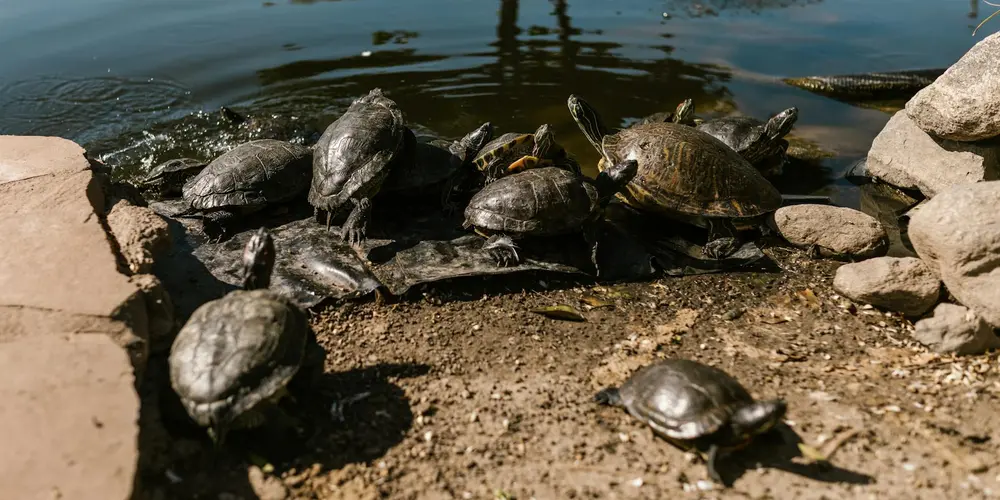
Watching turtles stack can look charming, but it’s a behavior I monitor closely with my own shelled family. The turtle on the bottom bears the physical weight, which can lead to pressure points, shell deformities, or even respiratory infections if it becomes a constant situation. I learned this early on with my Russian tortoise, Austen, who would often end up at the base of a pile. To help others recognize what to look for, I’ve created a visual guide to shell damage showing the different types of shell damage and what they mean. This makes it easier to spot issues early and know when to seek care.
You must create an environment where this isn’t their only option for warmth or security. Ensure your basking platform is large enough and has a gentle, textured slope for easy access. A cramped or difficult-to-reach basking spot almost guarantees stacking as they all compete for the prime real estate.
- Provide multiple, adequately-sized basking areas under the heat lamp.
- Use a reliable thermometer to ensure the basking surface temperature is ideal for your species.
- Check the turtles at the bottom of stacks daily for any scratches, soft spots on the shell, or labored breathing.
Monitoring Group Dynamics
Stacking is rarely a democratic process. You’ll often find one more dominant turtle consistently on top, and a more passive individual perpetually on the bottom. My Greek tortoise, Bronte, is graceful but often gets pushed aside, so I keep a watchful eye on her interactions.
This isn’t just about physical comfort; it’s about psychological stress. The turtle underneath may become too stressed to eat or bask properly, leading to a slow decline in health. It’s a subtle form of bullying that can easily go unnoticed, especially when you don’t understand the signs of stress and mood in turtles.
- Identify the “boss” turtle and the more submissive ones in your group.
- Observe feeding times to ensure the bottom turtle gets its fair share of food.
- Be prepared to permanently separate individuals if the dynamic becomes oppressive or leads to injury.
Enhancing Your Turtle’s Habitat to Reduce Stacking
Enclosure Setup for Minimal Competition
The goal is to design a habitat so comfortable that stacking becomes unnecessary. A spacious enclosure is the single most important factor in preventing competitive behaviors like stacking. Cramped quarters force interaction and conflict, something I meticulously avoid with my trio.
Think beyond just a single hide. Offer a variety of shelters, plants (real or silk), and cork bark rounds to break up the line of sight. This gives every turtle a chance to claim its own little territory and feel secure without having to climb on a friend. Providing adequate hiding and basking spots is essential for turtle well-being.
- Provide at least one hide box per turtle, plus one extra.
- Use terrain like small hills and flat rocks to create visual barriers and private spots.
- Ensure the overall enclosure size meets or exceeds the recommended minimum for your species and number of turtles.
Balancing Resources for Harmony
Stacking is often a symptom of resource scarcity. When key resources like heat, UVB light, or hiding spots are limited, turtles will compete fiercely for them. My box turtle, Orwell, is a genius at finding the warmest spot, which sometimes meant displacing others before I optimized the setup.
The solution is simple in theory but requires attention to detail: redundancy. Don’t have just one of anything critical. By providing multiple sources for what they need most, you eliminate the primary reason for the behavior.
- Use a long, tubular UVB bulb that stretches across a significant portion of the enclosure, not a single spot.
- Place food and water dishes at opposite ends of the habitat to disperse the group during mealtimes.
- Create a temperature gradient so there are several warm areas, not just one intensely hot basking rock.
FAQs
Is turtle stacking always related to social hierarchy?
No, stacking can also occur for reasons like seeking warmth or security without dominance involved. It’s important to observe the context, as peaceful stacking might simply indicate shared comfort rather than a power struggle.
Can stacking behavior change with the seasons?
Yes, turtles may stack more frequently in cooler months to conserve body heat and maintain optimal temperature. During warmer periods, stacking might decrease as they spread out to avoid overheating.
Does stacking affect the turtles’ ability to eat or drink properly?
If stacking is constant, the bottom turtle might struggle to access food and water, leading to stress or malnutrition. These are common turtle feeding mistakes to avoid. Ensure multiple feeding stations to prevent competition and monitor for any turtles being blocked from resources.
Are some turtle species more prone to stacking than others?
Yes, species like Russian tortoises often stack for social and thermal reasons, while others like box turtles may do so less frequently. Research your specific turtle’s natural behaviors to understand their stacking tendencies better.
Can I train my turtles to reduce stacking behavior?
While you can’t train turtles out of instinctual stacking, you can modify their habitat to discourage it by adding more basking spots and hiding areas. Consistently providing a well-structured environment helps minimize unnecessary stacking over time.
Your Turtles’ Stacking Behavior, Simply Explained
When you see your turtles stacking, first check if their habitat provides a proper heat gradient and multiple, spacious basking spots. This simple environmental check often resolves the root cause of the behavior and ensures every turtle has what it needs. If the behavior continues, run a quick behavioral diagnostic checklist to rule out stress, illness, or enclosure problems. This helps explain why my turtle might be acting strange and what to do next.
Caring for these fascinating creatures is a continuous, rewarding journey that deepens with every observation you make. By staying curious and committed to learning, you become the best possible guardian for your shelled companions.
Further Reading & Sources
- Turtle Stacking: Why Turtles Stack and How to Prevent It – All Turtles
- Turtle Stacking – THINK TURTLE CONSERVATION INITIATIVE
- Why do turtles stack? – Quora
- r/turtle on Reddit: The amount of bad turtle advice out there is stunning… like, stacking IS bad, right? I’m not completely crazy?
Matthew is a dedicated turtle enthusiast and conservationist with over 15 years of experience in reptile care. Known affectionately as "The Leatherback" among his peers, he combines his passion for turtles with a commitment to educating pet owners on responsible turtle care and environmental stewardship.
Socialization with Other Turtles