
Do Turtles Get Lonely? Understanding Their Social World
Published on: June 15, 2026 | Last Updated: June 15, 2026
Written By: Matthew The
You look into your turtle’s tank and wonder if your quiet, shelled friend ever feels lonely in there. It’s a question that tugs at the heart of every caring pet owner who wants the absolute best for their animal companion.
After years of living with my tortoises-Austen, Bronte, and Orwell-I’ve learned their social needs are far more nuanced than a simple yes or no. Their world is not like ours, and that’s what makes it so fascinating.
In this article, we’ll explore the signs of turtle loneliness, their specific social needs, and how to provide a fulfilling life for your pet.
Understanding Turtle Loneliness and Social Needs
When you think of loneliness, you might picture a mammal craving companionship, but turtles operate on a different wavelength. Reptiles like turtles don’t experience loneliness in the emotional way mammals do; instead, their social needs are tied to survival instincts like territory and resource sharing. Mammals often seek social bonds for comfort, while turtles focus on environmental cues and basic interactions.
Across turtle species, social requirements vary widely, but most share a need for space and low-stress environments. Basic needs include access to basking spots, hiding areas, and minimal competition for food, which helps prevent stress-induced behaviors. Some turtles tolerate others during basking, while strictly solitary types may show aggression if crowded.
- Provide ample space to reduce territorial disputes.
- Monitor for signs of stress, like hiding or lack of appetite.
- Ensure resources like food and warmth are evenly distributed.
From my years caring for turtles, I’ve seen how Austen, my Russian Tortoise, prefers solitude, calmly exploring his enclosure alone. Bronte, the Greek Tortoise, occasionally mirrors others’ movements, suggesting a low-level social curiosity without true bonding. Orwell, the Box Turtle, stays reserved, reminding me that forcing company can do more harm than good for their well-being.
How Turtles Interact: Solitary vs Social Species
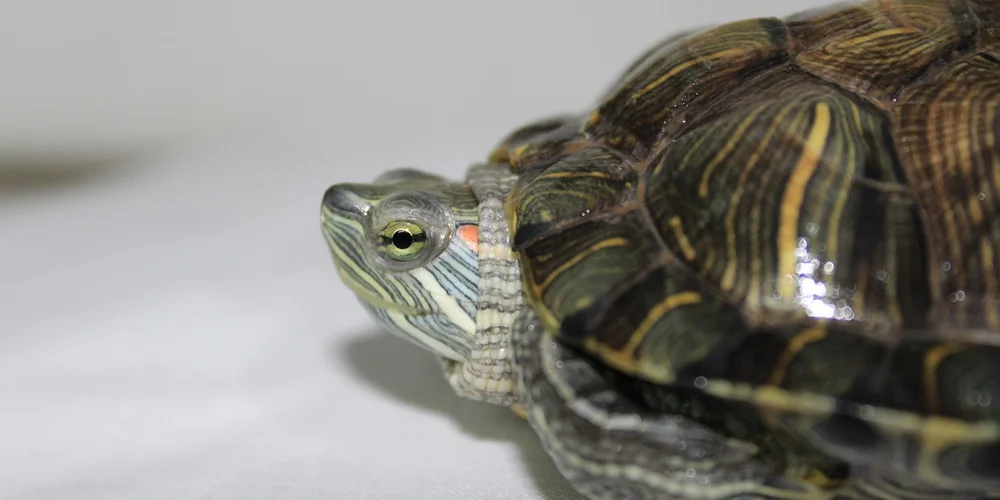
Aquatic turtles, like red-eared sliders, often gather in groups for basking or feeding, but this is more about efficiency than friendship. Terrestrial turtles, such as box turtles, tend to be solitary, patrolling their territories with little interest in socializing beyond mating. Water-dwelling species might appear social as they cluster for warmth, while land-based ones prioritize personal space.
Species-specific differences highlight why one-size-fits-all care fails. Red-eared sliders can coexist in groups if space allows, but box turtles like Orwell thrive best alone, showing stress when housed with others. I’ve noticed Orwell’s intelligent, reserved nature means he avoids contact, whereas more aquatic types might tolerate proximity without true interaction.
- Aquatic turtles: May bask together but compete for resources.
- Terrestrial turtles: Often solitary, with mating as primary contact.
- Observe individual behaviors to gauge social tolerance.
Mating behaviors in turtles involve chasing and nudging, but this is driven by instinct, not emotional connection. Genuine social interaction is rare; what looks like play or bonding is usually competition or environmental adaptation. For instance, during breeding seasons, turtles may seem social, but it’s temporary and functional, not a sign of lasting relationships.
Recognizing Social Stress in Your Turtle
As a turtle owner for over a decade, I’ve learned that these creatures communicate stress in subtle ways. Observing your turtle’s daily habits is key to spotting when something feels off. With my Russian Tortoise, Austen, I noticed he’d retreat into his shell more often when his environment felt overwhelming. This is one of the signs detailed in How to Tell if Your Turtle is Stressed and How to Help.
- Hiding constantly or refusing to bask, even when conditions are ideal.
- Aggressive behaviors like biting or shell-ramming toward tank mates or decorations.
- Loss of appetite or changes in eating patterns, which I saw with Bronte, my Greek Tortoise, during a tank rearrangement.
- Excessive pacing or scratching at tank walls, indicating restlessness.
- Vocalizations like hissing, though rare, can signal discomfort.
Physical signs often accompany behavioral shifts. Look for shell issues, such as softening or unusual discoloration, which can stem from chronic stress. Weight loss, lethargy, or puffy eyes are red flags I’ve monitored in Orwell, my Box Turtle, after introducing a new habitat element.
- Shell abnormalities, like pyramiding or cracks, from prolonged tension.
- Swollen limbs or eyes, often linked to immune responses from stress.
- Changes in skin texture or color, which might fade or darken unnaturally.
To monitor effectively, I keep a simple journal. Note daily activities, feeding times, and social interactions to track patterns over weeks. Spend quiet moments watching your turtle; you’ll start to sense their normal rhythms and spot deviations early. Consider reading your turtle’s eye movements and blinking patterns to gauge mood. These subtle cues complement your journal notes.
- Set aside 10 minutes daily for observation without disturbances.
- Record behaviors in a notebook or app, noting any triggers like loud noises or new objects.
- Compare notes weekly to identify trends and adjust care as needed.
Tank Mate Considerations: Housing Turtles Together
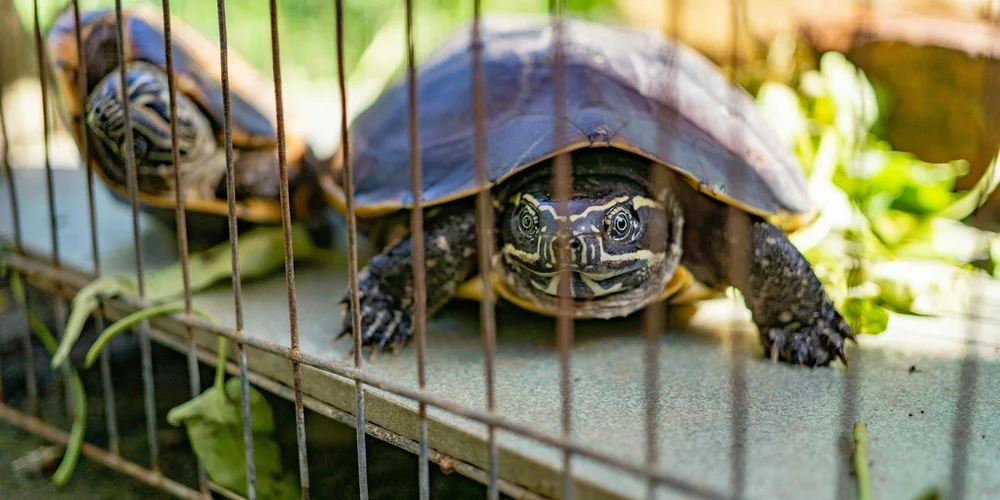
From housing Austen and Bronte together, I’ve seen that not all turtles thrive in groups. Compatibility depends heavily on species, size, and individual personalities. When choosing a turtle species, these are exactly the factors to weigh. Russian and Greek tortoises, like mine, often do well due to similar temperaments, but mixing species can lead to conflicts.
- Match species with similar environmental needs, such as humidity and temperature preferences.
- Consider size differences; larger turtles may bully smaller ones, risking injury.
- Assess activity levels-high-energy turtles can stress out more sedentary types.
Male and female dynamics vary widely. Males tend to be more territorial, especially during breeding seasons, which I’ve observed with Orwell’s reserved nature. Females are generally calmer but may still compete for resources if space is limited.
- Males might display dominance through chasing or mounting, requiring careful supervision.
- Females can coexist peacefully in groups, but watch for nesting-related aggression.
- Mixed pairs need ample space to avoid constant mating pressure, which stresses females.
Introducing new turtles requires patience and planning. Always quarantine newcomers for at least 30 days to prevent disease spread, a step I never skip. If the new turtle is sick, extend quarantine and monitor closely, and consult a reptile veterinarian. Start with visual introductions through a tank divider to gauge reactions without physical contact. This precaution helps prevent disease spread to your existing turtles.
- Place the new turtle in a separate enclosure within the same room for a week.
- Swap items between tanks to familiarize them with each other’s scents.
- Supervise short, controlled meetings in a neutral area, increasing duration if no aggression occurs.
Creating the Right Environment for Social Turtles
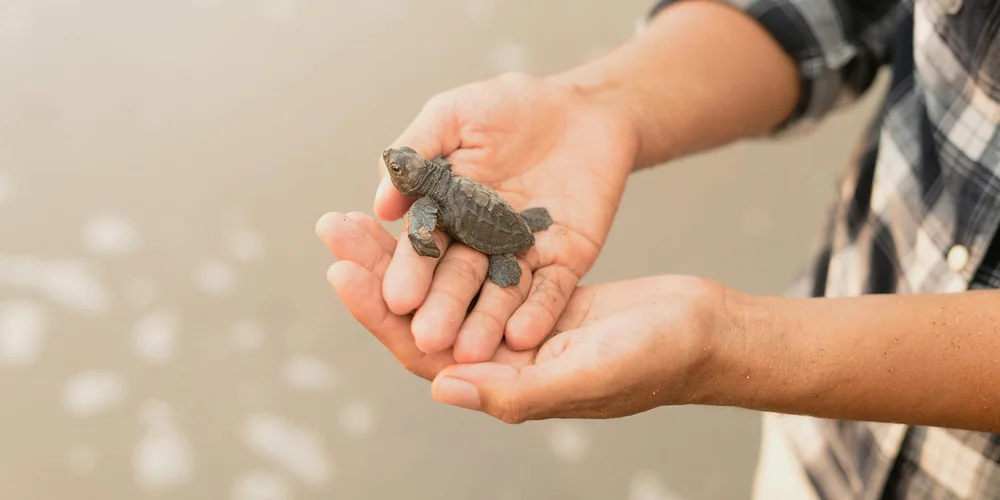
When you house multiple turtles together, their enclosure must feel like a spacious home, not a cramped room. For two medium-sized turtles like my Russian and Greek tortoises, Austen and Bronte, I use an enclosure at least 4 feet by 2 feet to give them room to roam without stress. Bigger is always better to prevent territorial disputes and encourage natural behaviors. (finding the right size) for your turtles is crucial for their well-being.
- Enclosure size should increase with each additional turtle; add 50% more floor space per new resident.
- For aquatic species, like box turtles in water areas, depth matters too-aim for water deep enough to swim but with easy access to land.
Basking spots are like sunny patios where turtles can relax and soak up warmth. I set up multiple basking areas in Austen’s habitat to avoid competition, using flat rocks under a heat lamp for even distribution. This mimics their wild instincts and reduces aggression.
- Provide one basking spot per turtle, spaced apart to prevent crowding.
- Ensure floor space includes hiding spots and open areas for exploration, promoting mental and physical health.
Water quality and temperature gradients keep your turtles healthy and happy. With Orwell, my box turtle, I test water weekly for ammonia and pH levels, as poor quality can lead to illness and stress. This is part of a turtle tank water quality testing maintenance schedule I follow. It includes weekly tests, plus regular water changes and filter checks. A clean environment supports their social interactions by reducing health risks.
- Maintain a temperature gradient: warm end around 85°F for basking, cool end near 75°F for resting.
- Use filters and partial water changes to ensure clarity and safety, especially in shared tanks.
Enrichment for Your Turtle’s Social Well-being
Even solitary turtles need fun activities to feel engaged and less isolated. I’ve found that floating toys, like ping-pong balls in water areas, spark curiosity in Orwell and mimic social play. These simple additions can turn a lonely day into an adventure.
- Try hollow logs or tunnels for hiding and exploring, which satisfy their natural instincts.
- Rotate toys weekly to prevent boredom-my turtles love chasing small, safe objects in their space.
Varying your feeding schedule adds excitement and mental stimulation. Instead of the same routine, I sometimes hide food under leaves or in puzzle feeders for Austen to “hunt,” keeping her mind sharp and active. This approach reduces lethargy and mimics wild foraging.
- Offer food at different times or locations to encourage movement and problem-solving.
- Incorporate live prey or varied diets, like leafy greens and insects, to engage their senses.
UVB lighting and environmental changes are essential for overall well-being. I ensure Bronte gets 10-12 hours of UVB light daily to support shell health and mood, much like sunshine boosts our spirits. Proper lighting helps regulate their behavior and reduces stress from monotony.
- Add live plants or rearrange decor monthly to simulate a dynamic habitat.
- Use full-spectrum bulbs to replicate natural light cycles, promoting healthy activity levels.
Practical Care for Your Turtle’s Social Health
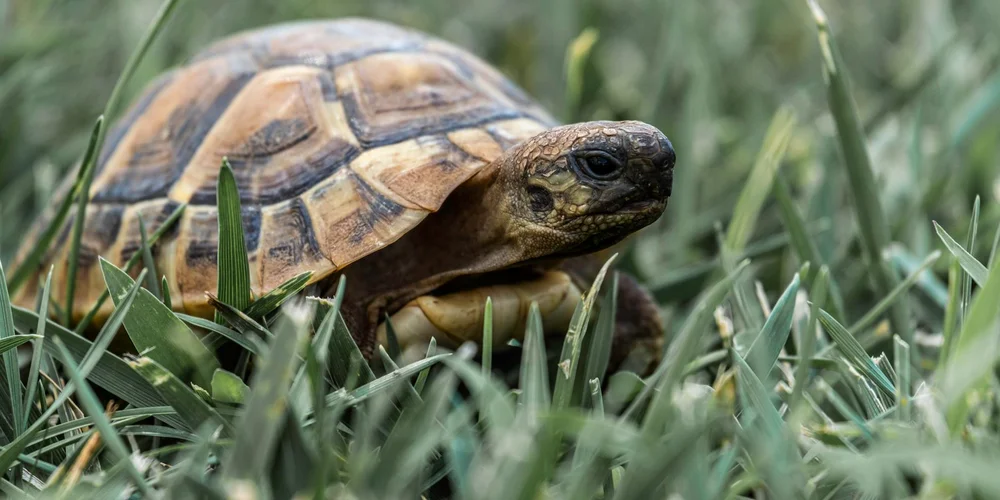
Start by setting up a habitat that respects your turtle’s natural instincts and prevents stress.
- Choose an enclosure size that allows for free movement-aim for at least 10 gallons per inch of shell length for aquatic species, and spacious outdoor pens for terrestrials like my Russian Tortoise, Austen.
- Include multiple hiding spots and basking areas to reduce competition if housing turtles together, which I’ve seen prevent conflicts in my own setups.
- Maintain clean water and proper temperature gradients to support overall health, as poor conditions can mimic social stress.
Watch for signs like lethargy, loss of appetite, or repetitive behaviors-these could signal it’s time to consult a veterinarian for advice on underlying issues.
For long-term observation, keep a simple journal to track feeding habits, activity levels, and social interactions over months.
Regularly note any changes in behavior, such as increased hiding or aggression, to catch problems early and adjust care accordingly.
Common Companionship Myths Debunked
Many believe turtles experience loneliness just like humans, but that’s not accurate based on their solitary instincts.
- Turtles don’t form emotional bonds in the same way; they rely on environmental cues rather than social attachment.
- Human interaction, like gentle handling, can provide stimulation but doesn’t replace the need for species-appropriate habitats.
Ethical care means prioritizing their well-being over our desire for companionship, ensuring we don’t project human emotions onto them.
From raising Bronte, my Greek Tortoise, I’ve learned that forcing group living can lead to stress, so always assess individual needs first.
Species-Specific Social Guidelines
Aquatic turtles, such as red-eared sliders, often tolerate groups in large tanks with ample swimming space and basking spots.
- Provide separate feeding areas to minimize competition and observe for any bullying.
Terrestrial turtles like tortoises generally prefer solitude; my experience with Austen shows they thrive in dedicated enclosures without companions.
- For box turtles like Orwell, offer plenty of cover and monitor interactions closely, as they can be territorial.
Special notes: Russian and Greek tortoises do well alone, while some semi-aquatic species might coexist peacefully with proper setup.
FAQs
What factors influence turtle social behavior?
Species type, individual temperament, and environmental conditions like space and resource availability shape how turtles interact. For instance, aquatic turtles may tolerate groups for basking, while solitary species show aggression in crowded settings. This raises the question: are different turtle species aggressive, and do aggression levels vary by species? Some species are more territorial or competitive over basking spots, mates, or food, while others are more docile.
How many turtles can share a habitat?
The number depends on species size and enclosure dimensions, with larger tanks reducing territorial disputes. Always provide multiple basking and hiding spots to minimize stress and competition among tank mates.
Do turtles benefit from tank mates?
Some species, like red-eared sliders, may coexist peacefully in spacious setups, but many turtles thrive alone to avoid stress. Benefits are limited to resource sharing rather than emotional bonding, so monitor for signs of aggression. For beginners, following a proper red-eared slider care guide helps with enclosure setup, lighting, and diet. These basics help ensure a healthy, stress-free habitat.
Your Turtle’s World: A Final Reflection
From my time with Austen and Bronte, I’ve seen that turtles don’t experience loneliness like humans, but they flourish with a habitat that offers security and stimulation. Focus on creating an enriching environment with proper space, hiding areas, and a consistent routine to support their well-being.
Owning a turtle is a long-term commitment that requires you to stay informed and attentive to their specific needs. Always prioritize their health and happiness by seeking out reliable care guides and connecting with fellow enthusiasts to share insights, especially when comparing the daily care routines for different types of turtles.
Further Reading & Sources
- All About Sea Turtles – Behavior | United Parks & Resorts
- Nesting, Threats, and Social Behaviors of Hawaiian Hawksbill Sea Turtles | NOAA Fisheries
- Sea Turtle Social Structure
- The urban lives of green sea turtles: Insights into behavior in an industrialized habitat using an animal‐borne camera – PMC
Matthew is a dedicated turtle enthusiast and conservationist with over 15 years of experience in reptile care. Known affectionately as "The Leatherback" among his peers, he combines his passion for turtles with a commitment to educating pet owners on responsible turtle care and environmental stewardship.
Socialization with Other Turtles