
Do Turtles Have Fins or Flippers? Understanding Aquatic Adaptations
Have you ever watched a turtle move through water and questioned if those limbs are fins or flippers? This common curiosity often brings worries about misidentifying these creatures or misunderstanding their needs for proper care and appreciation.
In this article, we’ll explore the key differences between fins and flippers, how turtles adapt to aquatic life, and share personal insights from my own turtles Austen, Bronte, and Orwell to give you a clear, reassuring guide.
Defining Fins and Flippers in the Animal Kingdom
Fins are thin, flat structures found in fish, made of bony spines or rays covered with skin. They help with steering, balance, and propulsion in water. Think of fins as natural rudders that keep animals stable while moving. Flippers, on the other hand, are modified limbs seen in marine mammals like seals or turtles, acting like paddles for efficient swimming.
In my years caring for reptiles, I’ve observed how these distinctions matter for animal welfare. Fins lack joints and are rigid, while flippers have bones and joints similar to arms or legs. This difference affects how creatures interact with their environment. Understanding this helps you provide better habitats, whether for a pet turtle or wild species.
- Fins: Common in fish, used for stability and thrust without limb-like movement.
- Flippers: Found in aquatic mammals and reptiles, evolved from legs for powerful strokes.
- Key trait: Flippers allow for more controlled, limb-based motion compared to fins.
Turtle Limb Morphology: Are They Fins or Flippers?
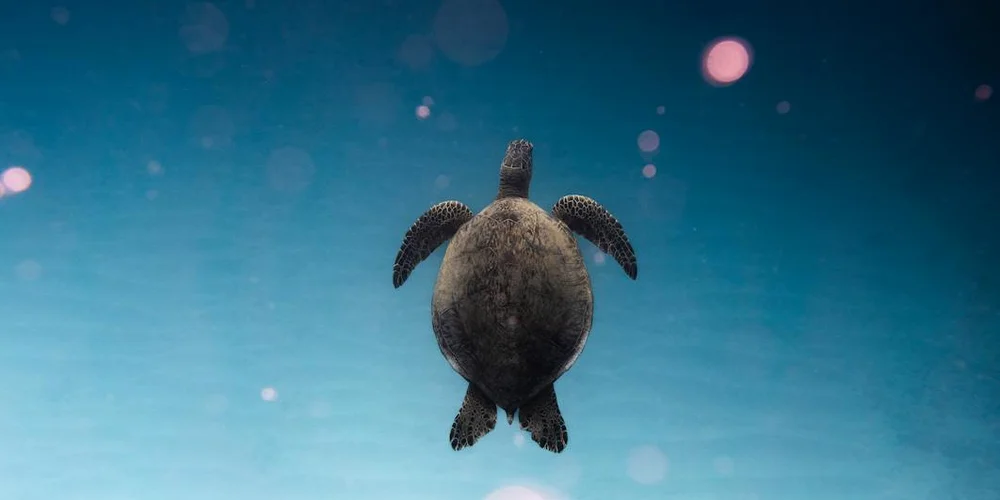
Turtles have flippers, not fins, because their limbs are adapted from ancestral legs with bones, joints, and muscles. This design lets them navigate water with grace and strength. From my experience with pet turtles, I’ve seen how their limb structure supports both swimming and occasional land movement, emphasizing the need for proper enclosures.
Sea turtles rely entirely on flippers for ocean life, while freshwater species show varied adaptations. It’s fascinating to compare this to my tortoises, Austen and Bronte, who have stout legs for land. Considering the pros and cons of aquatic vs semi-aquatic turtles helps explain these differences. In care, fully aquatic species demand ample, clean water and space, while semi-aquatic ones need both water access and dry land. Recognizing these differences ensures you meet each turtle’s unique needs, promoting their health and happiness.
Anatomy of Sea Turtle Flippers
Sea turtle flippers are elongated and paddle-shaped, with fused bones that create a broad surface for swimming. They lack separate toes and have reduced claws, making them ideal for long-distance travel. I’ve watched sea turtles in the wild, and their flippers move with a fluid, sweeping motion that maximizes thrust in water.
These adaptations reduce drag and increase efficiency, much like oars on a boat. Caring for aquatic pets has taught me that such features require spacious tanks to prevent stress. Providing enough room for flipper movement is crucial to mimic their natural behavior and support animal welfare.
- Elongated digits: Fingers and toes are fused into a single, sturdy structure.
- Reduced claws: Minimal claws help with digging nests but not for grasping.
- Strong muscles: Power the flippers for sustained swimming and diving.
Freshwater Turtle Limb Adaptations
Freshwater turtles often have webbed feet or semi-flipper limbs that balance swimming and terrestrial activities. Their toes are connected by skin, allowing for efficient paddling while retaining some ability to walk. My box turtle, Orwell, has webbed feet that let him swim smoothly yet climb onto rocks easily, showing how versatile these adaptations are. This ties into basic turtle anatomy—turtles have a protective shell (carapace and plastron) and limbs adapted for both swimming and walking. These features explain why webbing and semi-flippers are so versatile.
This design helps them thrive in ponds or rivers where they might bask or hunt. In pet care, I’ve found that tanks with both water and dry areas prevent injuries and encourage natural instincts. Ensuring a varied habitat respects their evolutionary journey and reduces captivity-related stress.
- Webbed toes: Increase surface area for better propulsion in water.
- Flexible joints: Allow for walking on land and navigating obstacles.
- Claws present: Aid in climbing, digging, and handling food.
How Aquatic Adaptations Influence Turtle Locomotion
Watching my own turtles, Austen and Bronte, navigate their water dishes offers a small-scale lesson in aquatic engineering. The shape of their limbs directly dictates their swimming style and overall grace in the water. Flippers, like those on sea turtles, function as long, powerful wings. They generate thrust with broad, simultaneous up-and-down strokes, similar to a bird flying through the ocean.
This motion provides incredible efficiency for long-distance travel. My Russian tortoise, Austen, has stumpy, elephant-like legs built for trudging across land. When he paddles, it is a clumsy, energy-intensive doggy-paddle. His legs are simply not designed to be efficient paddles, and it shows in his labored, slow movement through water.
The Role of Limb Shape in Propulsion
Think of it like this: a sea turtle’s flippers are specialized oars, while a freshwater turtle’s webbed feet are more like versatile swim fins. The webbing between a red-eared slider’s toes increases the surface area of its “paddle.” This allows for stronger pushes against the water with each stroke. This design provides a great balance of swimming power and the ability to still walk effectively on land.
- Flippers (Sea Turtles): Built for powerful, wing-like flight through water; inefficient on land.
- Webbed Feet (Freshwater Turtles): Provide strong aquatic propulsion while retaining mobility for terrestrial climbing and walking.
- Reduced Webbing (Semi-Aquatic Turtles): Offer basic swimming ability but prioritize land movement and digging.
Species-Specific Aquatic Adaptations for Pet Turtles
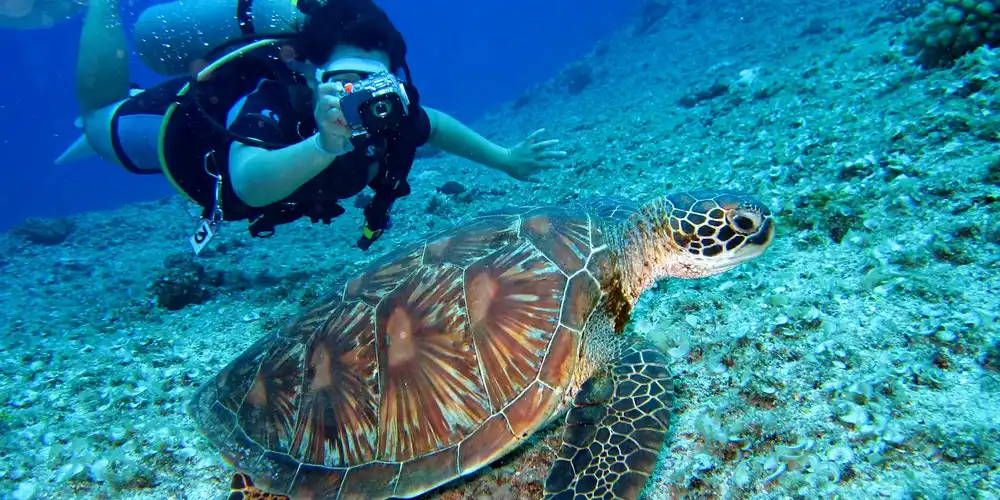
When you choose a pet turtle, you are essentially choosing its preferred lifestyle. The species you bring home will have a body perfectly tailored for its natural habitat, and your enclosure setup must reflect that. I learned this quickly with my box turtle, Orwell, who would much rather burrow in damp soil than swim in deep water. That’s why considering the right species is crucial before getting a turtle.
Marine Turtles vs. Freshwater Turtles in Captivity
First, a critical point: true marine turtles, like the magnificent Green or Loggerhead, are not and should never be kept as pets. Their immense size, complex dietary needs, and migratory nature make them utterly unsuitable for life in an aquarium. Their adaptations are for a life in the vast, open ocean. Understanding where loggerheads live—their nesting beaches, migratory routes, and coastal feeding grounds—helps researchers protect the habitats they depend on. This habitat-focused information on loggerhead sea turtles is essential for effective conservation strategies.
The “aquatic” turtles available in the pet trade are almost exclusively freshwater species. Their bodies represent a brilliant compromise. In nature, many turtles live at the land–water interface, spending time on both land and in water. They bask on a log or shore before slipping back into ponds to swim and hunt for food.
- Red-Eared Sliders and Painted Turtles: These common pets have long claws and strongly webbed hind feet. They are powerful, agile swimmers that still need dry basking areas to completely leave the water and regulate their body temperature.
- Softshell Turtles: With their pancake-flat bodies, leathery shells, and long, tubular snouts, they are built for speed and burying themselves in sandy or muddy substrates. Their highly webbed feet act like flippers, making them some of the fastest and most wholly aquatic freshwater turtles you can care for.
- Mud and Musk Turtles: Smaller and with less webbing, they are bottom-walkers. They prefer to prowl the substrate rather than glide through the water column, and they are less reliant on large swimming areas.
Observing my Greek tortoise, Bronte, I see a creature of the land. Her legs are columnar, made for carrying a heavy shell over rocky terrain. Providing a pet turtle with an environment that matches its physical adaptations is the most fundamental act of responsible care we can offer. It allows them to express their natural behaviors and thrive.
Practical Pet Care Tips Based on Limb Type
Webbed Feet Care for Freshwater Turtles
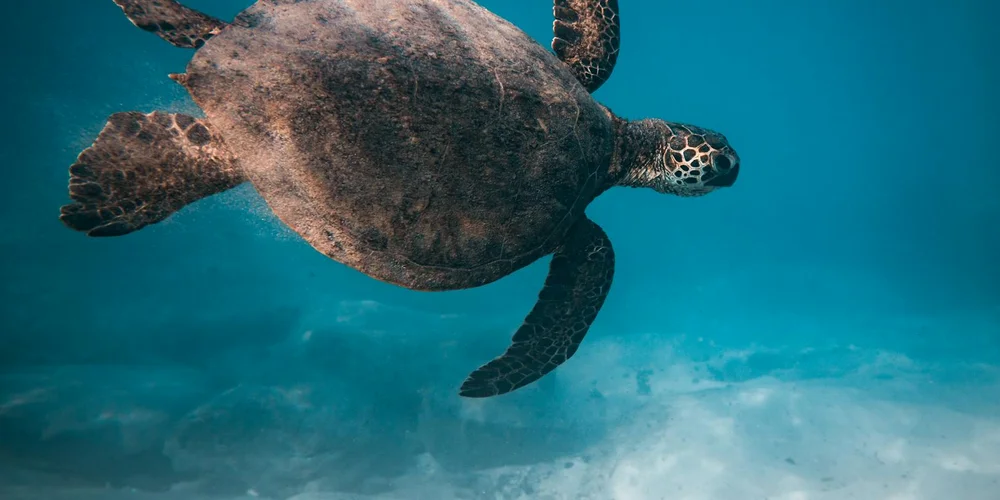
Watching my Russian tortoise, Austen, navigate his terrestrial home is a world apart from caring for a freshwater turtle’s webbed feet. Your turtle’s webbed feet are their primary swimming tools, and their health is directly tied to their habitat setup. I’ve learned through experience that getting the water depth right is the first step to happy, healthy limbs.
A good rule of thumb is to provide a water depth at least 1.5 times the length of your turtle’s shell. This gives them enough room to paddle properly and build muscle. This depth allows for natural swimming behavior, which is essential for their physical and mental well-being. Just make sure the tank is large enough for your turtle.
Don’t forget the basking area. It must be easily accessible with a textured ramp. A smooth, steep ramp can be incredibly difficult for a turtle with webbed feet to climb. A rough, gently sloping surface gives their feet the traction they need to haul out and dry off completely. This prevents nasty skin infections and shell rot.
You also need to think about what’s on the bottom of the tank. Sharp gravel or rough decor can snag and tear the delicate skin between their toes. I always recommend a fine, smooth sand or very large, flat river rocks that are too big to be eaten. This simple choice protects their feet from unnecessary injury.
Common Myths and Facts About Turtle Fins and Flippers
There’s a lot of confusion about what exactly is propelling our shelled friends through the water. Let’s clear the water on a few common misconceptions.
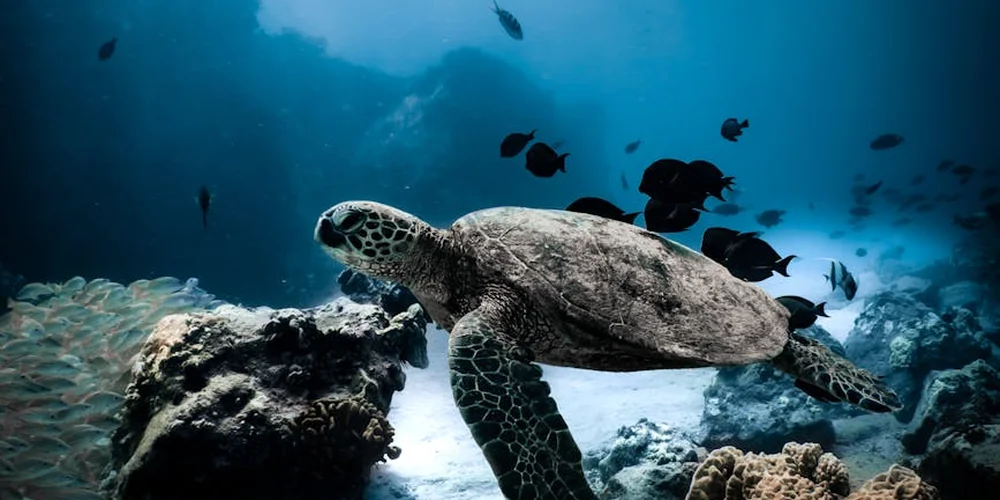
Many people mistakenly call a sea turtle’s front limbs “fins.” This is biologically incorrect. The powerful, wing-like front limbs of a sea turtle are flippers, a highly modified form of the same arm and hand bones that land animals have. They are not fins, which are thin, supported by rays, and lack bones or joints.
You might think all aquatic turtles have the same limbs, but that’s not true. A common snapping turtle has heavily webbed back feet but long, clawed toes on its front feet for digging and tearing food. The limb structure is a direct clue to the turtle’s lifestyle; webbed feet are for swimmers, while clawed, elephantine legs are for walkers. In turtle anatomy, turtle legs and feet explained show how their shapes suit different habitats.
Another persistent myth is that a turtle’s shell is just for protection. In aquatic species, the shell’s shape is integral to hydrodynamics. A streamlined, teardrop-shaped shell works with the flippers or webbed feet to reduce drag and make swimming more efficient. It’s a full-body adaptation, not just an armored box. Biologically, the shell is part of the turtle’s skeleton—the carapace and plastron are formed by fused ribs and vertebrae. The keratinized scutes on top grow with the animal, linking shell anatomy to its function.
FAQs
Do all turtle species have flippers?
No, not all turtle species have flippers; sea turtles have true flippers, while many freshwater turtles have webbed feet or other limb adaptations. This variation depends on their habitat and evolutionary needs for swimming or land movement.
How do flippers help turtles swim faster than fins?
Flippers provide powerful, limb-based propulsion with broad strokes, allowing turtles to generate more thrust and speed in water. In contrast, fins are rigid and less efficient for the complex movements turtles need for agile swimming.
Can turtles with flippers walk on land effectively?
Sea turtles with flippers struggle to walk on land and often drag themselves, as their limbs are optimized for swimming. Freshwater turtles with webbed feet can walk better but are still more aquatic than terrestrial species.
What are the key differences between fins and flippers in aquatic animals?
Fins are thin, ray-supported structures in fish used for stability, while flippers are modified limbs with bones and joints for paddling. This makes flippers more versatile for controlled swimming and occasional land use in turtles.
How do flippers affect a turtle’s ability to hunt for food?
Flippers enable precise maneuvering and swift strikes, helping turtles catch prey like fish or jellyfish in open water. Their limb strength allows for quick direction changes, enhancing hunting efficiency in aquatic environments.
Your Turtle’s Swimming Secrets
Remember, turtles use flippers, not fins, to glide through water, which means you need to provide a habitat with deep swimming areas and dry basking spots. From observing my Russian Tortoise Austen, I learned that their steady movements rely on proper water depth and easy access to land for rest. Understanding why they bask helps explain why they spend so much time out of water. Basking warms the body and aids UVB exposure for shell health.
Always prioritize your pet’s well-being by researching their specific needs and mimicking their natural environment as closely as possible. Keep exploring resources and adjusting care routines to ensure your turtle thrives, just as I do with my Greek Tortoise Bronte’s graceful habits. For a practical overview, the care land aquatic turtles essential guide covers both land-dwelling and aquatic species, offering clear steps for setup, diet, and enrichment. It can help tailor your routines to each turtle’s habitat and needs.
Further Reading & Sources
- Fin and flipper locomotion – Wikipedia
- r/askscience on Reddit: Why is it that all Marine Turtles have flippers, and all freshwater turtles have feet that work on both land and water?
- Do Turtles Have Fins – Everything You Need To Know – The Aquarium Guide
- Flipper (anatomy) – Wikipedia
Matthew is a dedicated turtle enthusiast and conservationist with over 15 years of experience in reptile care. Known affectionately as "The Leatherback" among his peers, he combines his passion for turtles with a commitment to educating pet owners on responsible turtle care and environmental stewardship.
Aquatic Turtles